Lion King Lawsuit 2026: Claim Status, Settlement Details, and What You Need to Know
Quick Answer
- Multiple lawsuits use the “Lion King” name, covering copyright, trademark, and a theme park injury claim.
- No unified settlement fund exists, so per-person payouts are not determined for any single class.
- Deadlines vary by case, and no claim form exists for a Lion King class action as of this date.
The Lion King lawsuit landscape in 2026 is more complicated than most search results suggest. You are not looking at one case with one settlement. You are looking at several unrelated legal actions that share a name.
The most prominent involves a copyright dispute over the song “The Lion Sleeps Tonight.” A separate matter involves a personal injury claim at a Lion King theme park attraction. And a third involves trademark and licensing questions around the Broadway production.
This article separates the verified facts from the confusion. It tells you which cases are real, which are closed, and what any of them mean for you.
The Facts
| Fact | Detail |
|---|---|
| Primary Case | Abilene Music v. Disney, copyright dispute over “The Lion Sleeps Tonight” |
| Court | U.S. District Court, Southern District of New York |
| Current Status | Active litigation, no class settlement |
| Total Settlement Fund | Not yet confirmed |
| Est. Per Person | Not yet determined |
| Claim Deadline | No deadline, no settlement exists |
| Administrator | Not appointed |
| Proof Needed | Not applicable for most readers |
Is the Lion King Lawsuit Real or a Scam?
The Lion King lawsuit is real, but it is not what most people think. It is not a consumer class action with a claim form.
The verified legal actions using the Lion King name include a copyright lawsuit filed by the estate of a songwriter against Disney, a personal injury lawsuit from a theme park guest, and smaller trademark disputes. None of these are class actions open for public claims.
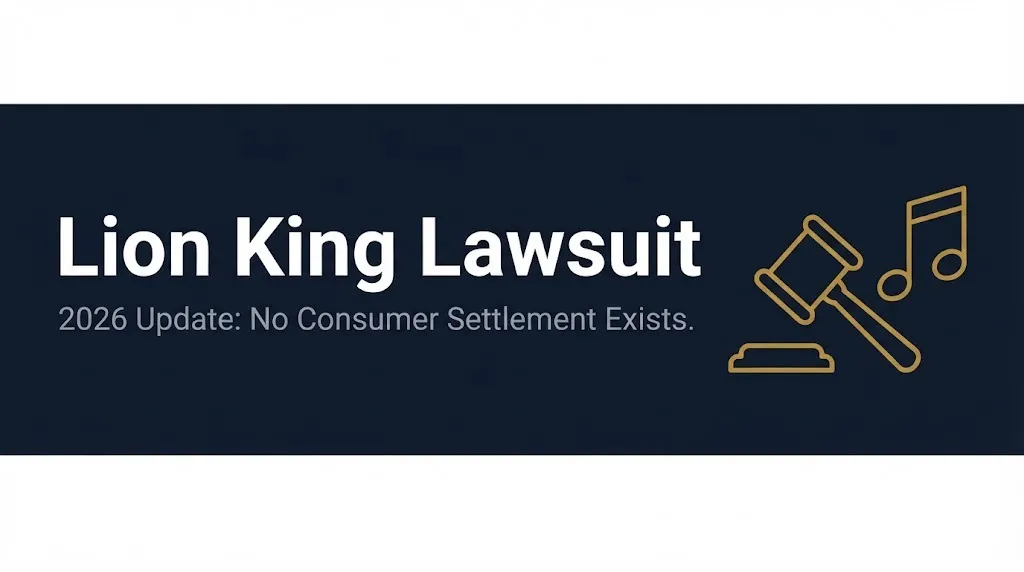
Scammers exploit confusion around famous names. You may see ads or texts claiming you are owed money from a Lion King settlement. Those are fake. No settlement exists that pays ordinary consumers based on the Lion King name alone.
The copyright case is real. The injury case is real. The scam settlement messages are not.
Key Takeaway: Real Lion King lawsuits exist, but no consumer settlement does, and any message claiming you are owed a payout is a scam.
How Much Could You Get From a Lion King Settlement?
You cannot get money from a Lion King settlement because no settlement open to the public exists.
The copyright case between Abilene Music and Disney may produce a financial award, but only to the parties involved. The songwriter’s estate may receive royalties or damages. You are not part of that case.
The theme park injury case produced a confidential settlement between the injured guest and the park operator. That settlement does not pay anyone else.
The Broadway trademark disputes are between production companies and licensing entities. They do not create consumer payouts.
Anyone telling you that you can file a claim for Lion King money is misleading you. The cases exist. The payouts, if any, go to the named parties only.
| Case Type | Who Gets Money | Consumer Eligible? |
|---|---|---|
| Copyright dispute | Songwriter estate, Disney | No |
| Theme park injury | Injured guest | No, case-specific |
| Trademark disputes | Production companies | No |
| Scam “settlement” messages | Scammers | Never |
What Is the Copyright Lawsuit Over “The Lion Sleeps Tonight”?
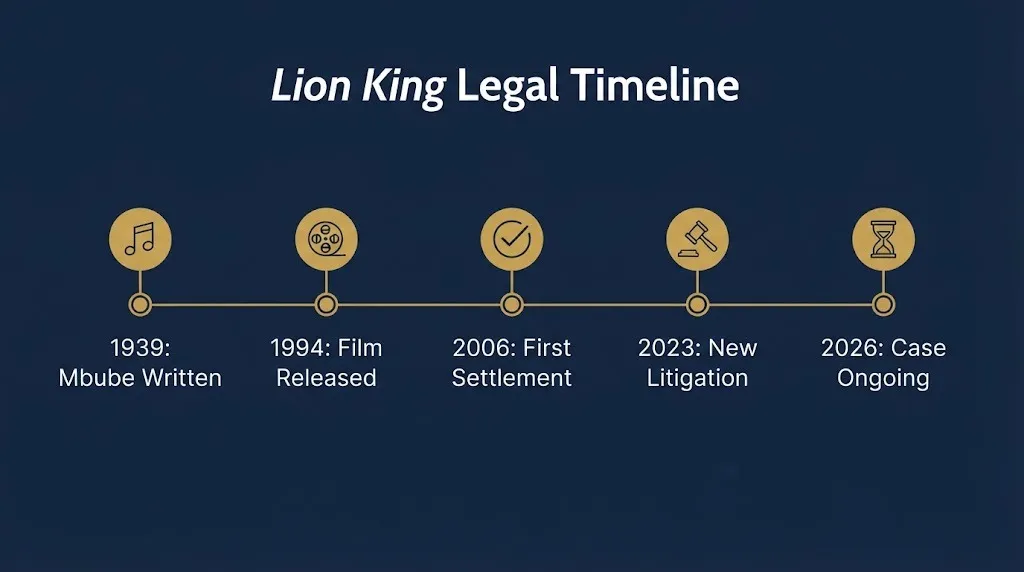
The core copyright case involves the song “The Lion Sleeps Tonight,” originally written as “Mbube” by South African musician Solomon Linda in 1939.
Linda’s estate sued Disney over the use of the song in the 1994 animated film The Lion King. The estate argued that Disney used the song without proper licensing or compensation for decades.
The case is Abilene Music v. Disney, filed in the Southern District of New York. It has a long procedural history, including earlier settlements and renewed litigation.
In 2026, the case remains active on some claims. The court has not issued a final ruling that resolves every issue. The song’s complicated rights history, involving multiple publishers and international copyright treaties, makes the case slow-moving.
What Is the Theme Park Injury Lawsuit Involving Lion King?
A separate lawsuit involved an injury at a Lion King-themed attraction. The details are specific to one individual and one incident.
The injured party alleged that a ride or show element caused physical harm. The case settled privately. The terms are confidential. No public payout amount exists.
This case matters because search engines sometimes mix it with the copyright lawsuit. If you searched “Lion King lawsuit” after hearing about an injury claim, that is what you found. It has nothing to do with you.
It also has nothing to do with consumer claims or class actions. It is a standard personal injury matter between two parties.
Key Takeaway: The Lion King lawsuits are individual disputes over copyright, injury, or trademarks. None are consumer class actions with public claim forms.
What Is the Trademark Dispute Around the Lion King Name?
The trademark disputes involve who can use the Lion King name and logo in various commercial contexts.
Disney holds extensive trademark rights for the Lion King brand, covering the film, Broadway show, merchandise, and theme park attractions. Smaller companies occasionally challenge those rights or face enforcement actions for using similar names.
These disputes are business-to-business legal matters. They do not involve consumers. They do not produce settlement funds for the public.
The trademark cases receive less attention than the copyright case because the financial stakes are lower and the legal issues are narrower. But they contribute to the confusion when people search for Lion King lawsuit news.
What Is the Current Status of the Lion King Lawsuit in 2026?
The copyright case is active but narrowed. The injury case is settled. The trademark matters are ongoing in various stages.
As of September 2026, no class action has been filed, certified, or settled that uses the Lion King name and provides compensation to consumers. That is the single most important fact for anyone searching this term.
The Abilene Music case continues on remaining claims. A prior settlement in a related matter resolved some licensing issues but did not end the litigation entirely.
For practical purposes, you have no claim to file, no deadline to meet, and no money to collect from any Lion King lawsuit.
What Happened in the Lion King Copyright Case Originally?
The original dispute began decades ago. Solomon Linda wrote “Mbube” in 1939 in South Africa. The song later became “The Lion Sleeps Tonight” through a series of adaptations.
Linda died in 1962 with little money. His family later learned the song had generated significant royalties worldwide. They sued in the early 2000s, and a settlement was reached in 2006.
That settlement did not resolve every claim. New litigation followed, including the current Abilene Music case. The central question is whether Disney’s use of the song in The Lion King and related productions was properly licensed under the earlier settlement and subsequent agreements.
The case is more about contract interpretation and royalty accounting than about whether the song was copied. Everyone agrees the song was used. The dispute is over who gets paid and how much.
Who Are the Parties in the Lion King Lawsuit?
The primary parties in the copyright case are the estate of Solomon Linda, the music publisher Abilene Music, and the Walt Disney Company.
The Linda estate represents the songwriter’s heirs. Abilene Music holds certain publishing rights. Disney uses the song in the film, stage production, and home video releases.
The theme park injury case involved an individual plaintiff and the park operator, which is a Disney-affiliated entity or a separate licensee depending on the specific location.
The trademark cases involve Disney and various smaller companies. The names of those companies are less important than understanding that these are business disputes, not consumer actions.
What Does This Mean for Lion King Fans and Consumers?
It means nothing financially. You are not part of any Lion King lawsuit.
It also means you should be skeptical of any message claiming otherwise. Scammers use famous brand names to trick people into providing personal information or paying fees.
The lawsuits are interesting from a legal perspective. The copyright case raises real questions about how old songs are licensed and who benefits from their enduring popularity. But those questions do not create a claim for you.
Reality Check: No legitimate Lion King settlement exists that pays consumers. If you see an ad, text, or website offering a Lion King payout in exchange for personal information or a fee, it is a scam.
How Do Scammers Use the Lion King Lawsuit to Trick People?
Scammers exploit the fame of the Lion King name. They create fake settlement websites that look official. They send texts claiming you are pre-approved for a payout.
The text or ad typically says you are owed money from a class action involving Disney or the Lion King brand. It asks you to click a link and enter your bank details. Or it asks for a small processing fee to release your funds.
Real settlements never work this way. A legitimate settlement administrator mails a notice, never texts you first. Filing a claim is always free. You never pay to receive money.
If you receive a Lion King settlement message, delete it. If you want to verify whether a real settlement exists, search the federal court docket or check the Consumer Financial Protection Bureau website.
What Is the Solomon Linda Royalty Lawsuit?
The Solomon Linda royalty lawsuit is the foundation of the current copyright litigation.
Solomon Linda wrote “Mbube” in 1939. He sold the rights for a small sum. The song became a global hit through adaptations, including the version featured in The Lion King.
Linda’s family argued that the original sale was exploitative and that the family deserved a share of the song’s ongoing royalties. A 2006 settlement established that the family would receive a percentage of certain royalties.
Disputes over the scope of that settlement continue. The current case questions whether Disney’s payments comply with the terms. The financial amounts involved are significant but not public in precise detail.
Can You File a Claim for the Lion King Copyright Case?
No. The copyright case is not a class action. It does not have a claim form. There is no public settlement to join.
Only the named parties can participate. If you are not the Linda estate, Abilene Music, or Disney, you have no standing in the case.
This is different from a consumer class action, where affected customers receive notices and can file claims. The Lion King copyright case is a private dispute over intellectual property.
If someone tells you that you can file a claim, they are either confused or trying to scam you.
What About the Broadway Lion King Lawsuit?
The Broadway production of The Lion King has been involved in various legal matters over the years. Most are standard business disputes involving contracts, licensing, and royalties.
No Broadway-related Lion King lawsuit has produced a consumer settlement. The productions continue to run. Ticket holders are not part of any legal action.
A few lawsuits involved injuries backstage or audience incidents. Those are individual personal injury matters, not class actions.
The Broadway connection adds another layer of confusion when people search for Lion King lawsuit news. It is real legal activity, but it does not affect you.
Key Takeaway: Every verified Lion King lawsuit is a private dispute. None offer consumer compensation, and none have public claim processes.
What Should You Do If You Got a Lion King Settlement Text?
Delete it. Do not click the link. Do not respond. Do not provide any information.
Legitimate settlement notices arrive by mail. They come from a court-appointed administrator. They include a case number, a court name, and instructions for filing a claim by mail or through an official website.
A text message claiming you are owed Lion King money fails every test. No Lion King consumer settlement exists. No administrator has been appointed. No claim form exists.
If you want extra assurance, search the federal court docket for Lion King cases. You will find the copyright and injury matters. You will not find a consumer class action. That absence is your answer.
What Is the Future of the Lion King Copyright Case?
The copyright case will likely continue through 2026 and beyond. Complex royalty cases move slowly.
The court may issue rulings on specific claims. The parties may reach a private settlement. Either outcome affects only the named parties.
What will not happen is the creation of a consumer settlement. The case structure does not allow it. There is no class to certify.
So the future of the Lion King lawsuit is legal, not financial, for ordinary people. It is a story to follow if you care about music rights, not a payment to expect.
What Should You Actually Do Right Now?
If you searched this term hoping for money, the honest answer is that none exists for you. The Lion King lawsuits are private disputes.
Your best action is to protect yourself from scams. Do not engage with settlement messages. Do not provide personal information to unknown websites.
If you have a legitimate legal question about the Lion King brand, such as a licensing matter for your own business, consult an intellectual property attorney. That is the only context where the Lion King name creates a legal issue for you.
The single most important fact is this: no Lion King consumer settlement exists as of September 2026.
What Happens Next in the Lion King Legal Matters?
The cases move forward, but none of them affect you financially.
Ongoing: The Abilene Music copyright case continues on remaining claims in the Southern District of New York.
Ongoing: Trademark enforcement matters proceed between Disney and smaller companies.
No change expected: No consumer class action or public settlement is pending or likely.
Watch for: Any legitimate court filing would appear on the public docket, not in a text message or online ad.
Key Takeaway: The Lion King legal story is about copyright, royalties, and trademarks. It is not about consumer payouts, and that is unlikely to change.
Frequently Asked Questions
Is there a Lion King class action settlement?
No class action settlement exists for the Lion King brand as of September 2026.
The verified lawsuits are private disputes over copyright, injury, and trademarks.
How do I file a claim for the Lion King lawsuit?
You cannot file a claim because no consumer settlement or claim process exists.
Any website offering a claim form is not legitimate.
What is the Lion King lawsuit about?
The most prominent case is a copyright dispute over “The Lion Sleeps Tonight.”
Other cases involve a theme park injury and trademark enforcement.
Who gets money from the Lion King copyright case?
Only the named parties, the songwriter estate and Disney, may receive payments.
The general public has no financial interest in the case.
Are Lion King settlement texts real?
No, texts claiming you are owed Lion King settlement money are scams.
Real settlements never start with an unsolicited text message.
What happened with Solomon Linda and The Lion King?
Solomon Linda wrote “Mbube” in 1939, which became “The Lion Sleeps Tonight.”
His estate sued over royalties, and litigation continues on remaining claims.
Can I sue Disney over The Lion King?
You would need a specific legal claim, such as copyright infringement of your own work.
The existing lawsuits do not create a right for you to join or file.
Is the Broadway Lion King involved in lawsuits?
Yes, the Broadway production has faced standard business and injury lawsuits over the years.
None of those matters produce consumer payouts or public claim forms.
What You Should Remember
The Lion King lawsuit is real. It matters to the people involved. It does not involve you.
If you want to follow the legal story, the copyright case is the one with lasting significance. It raises real questions about who profits from old songs and whether original creators get fair treatment.
But the answer to your search is simple: no settlement, no claim, no money for you.