Crime Victims Compensation 2026: What It Covers, Who Qualifies, and How to File a Claim
Quick Answer
- Crime victims compensation is a government program that pays crime-related expenses like medical bills, counseling, and lost wages.
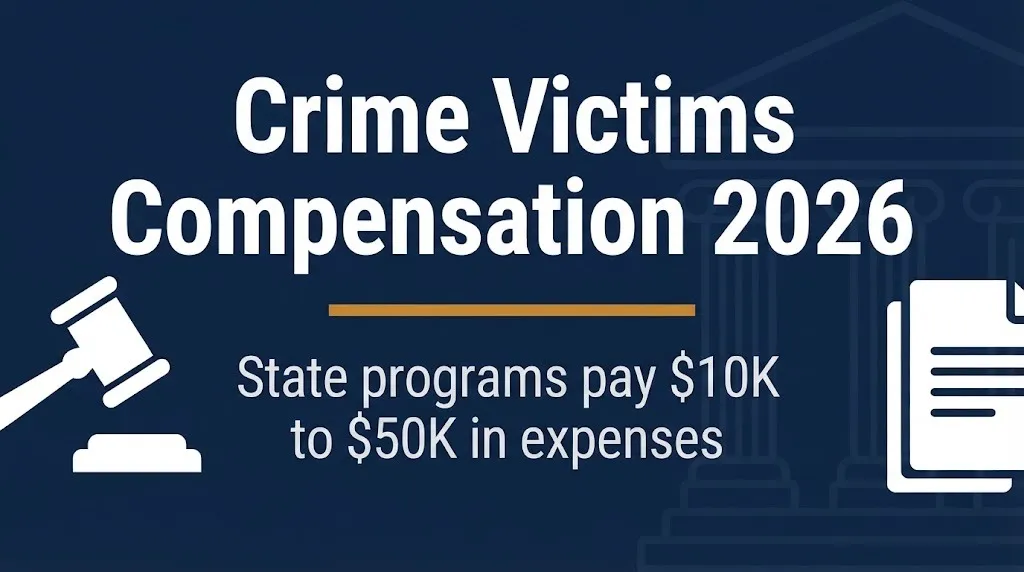
- Most states cap total benefits between $10,000 and $50,000 per victim, depending on the state.
- The most important deadline is filing within 1 to 3 years of the crime, depending on your state.
You were the victim of a crime. The medical bills are piling up. You cannot work. You heard there is a fund that helps people like you.
Here is the direct answer: crime victims compensation is real. Every state runs a program that pays certain expenses for victims of violent crime. The money does not come from the offender. It comes from a state fund.
This article explains what the program covers, who qualifies, how much you may receive, and what deadlines you cannot miss.
The Facts
| Topic | Crime Victims Compensation |
| Status | State-run program in all 50 states |
| Typical Benefit Cap | $10,000 to $50,000 per victim |
| Covered Expenses | Medical, counseling, lost wages, funeral costs |
| Filing Deadline | 1 to 3 years from the crime, varies by state |
| Funding Source | Federal grants and criminal fines, not offender payments |
| Governing Body | State victim compensation boards or agencies |
Is crime victims compensation real?
Yes. Every state operates a crime victims compensation program. It is a government benefit, not a lawsuit settlement.
The program pays crime-related expenses for victims who have no other way to pay. It is not based on the offender’s ability to pay. The offender does not have to be caught or convicted.
The money comes from state funds, supported by federal grants and criminal fines. The program exists to help victims recover, not to punish offenders.
What does crime victims compensation cover?
The program covers expenses directly related to the crime. The exact list varies by state, but most cover similar categories.
Covered expenses typically include:
- Medical and dental bills
- Mental health counseling
- Lost wages from missed work
- Funeral and burial costs
- Crime scene cleanup
- Temporary emergency housing
- Relocation costs in some cases
- Attorney fees in limited situations
The program does not pay for pain and suffering. It does not pay for property loss. It is a reimbursement program for specific bills.
Who qualifies for crime victims compensation?
To qualify, you must be a victim of a qualifying crime, usually a violent crime.
Qualifying crimes typically include:
- Assault and battery
- Homicide
- Sexual assault
- Domestic violence
- Child abuse
- Drunk driving crashes
- Stalking in some states
You must report the crime to law enforcement, usually within a short window. You must cooperate with the investigation. You must file your application within the state deadline.
How much does crime victims compensation pay?
Most states cap total benefits between $10,000 and $50,000 per victim. Some states pay more. A few pay less.
The exact amount depends on your expenses and your state’s rules. The program reimburses actual bills. It does not award a lump sum for suffering.
| State Type | Typical Maximum Benefit |
|---|---|
| Lower-cap states | $10,000 to $25,000 |
| Mid-cap states | $25,000 to $35,000 |
| Higher-cap states | $35,000 to $50,000+ |
Some states have higher caps for catastrophic injuries or homicide survivors.
What is not covered by crime victims compensation?
The program is not a catch-all. Several expenses are excluded.
- Property damage or theft
- Pain and suffering
- Lost or stolen cash
- Legal fees for civil lawsuits
- Expenses covered by insurance or other sources
- Incarceration costs
The program is a payer of last resort. If insurance or another source covers the expense, the compensation program will not pay.
Key Takeaway: Crime victims compensation is a reimbursement program for specific bills, not a general damages award. It pays medical bills, counseling, lost wages, and funeral costs, but not pain and suffering or property loss.
What is the deadline to file a crime victims compensation claim?
The filing deadline varies by state. Most states require you to file within one to three years of the crime.
Some states allow extensions for child victims or for victims who were incapacitated. Some states have shorter deadlines for certain crime types.
The deadline is strict. Missing it usually means your claim is denied. If you are a crime victim, file as soon as possible.
How do you file a crime victims compensation claim?
The process varies by state, but the general steps are the same.
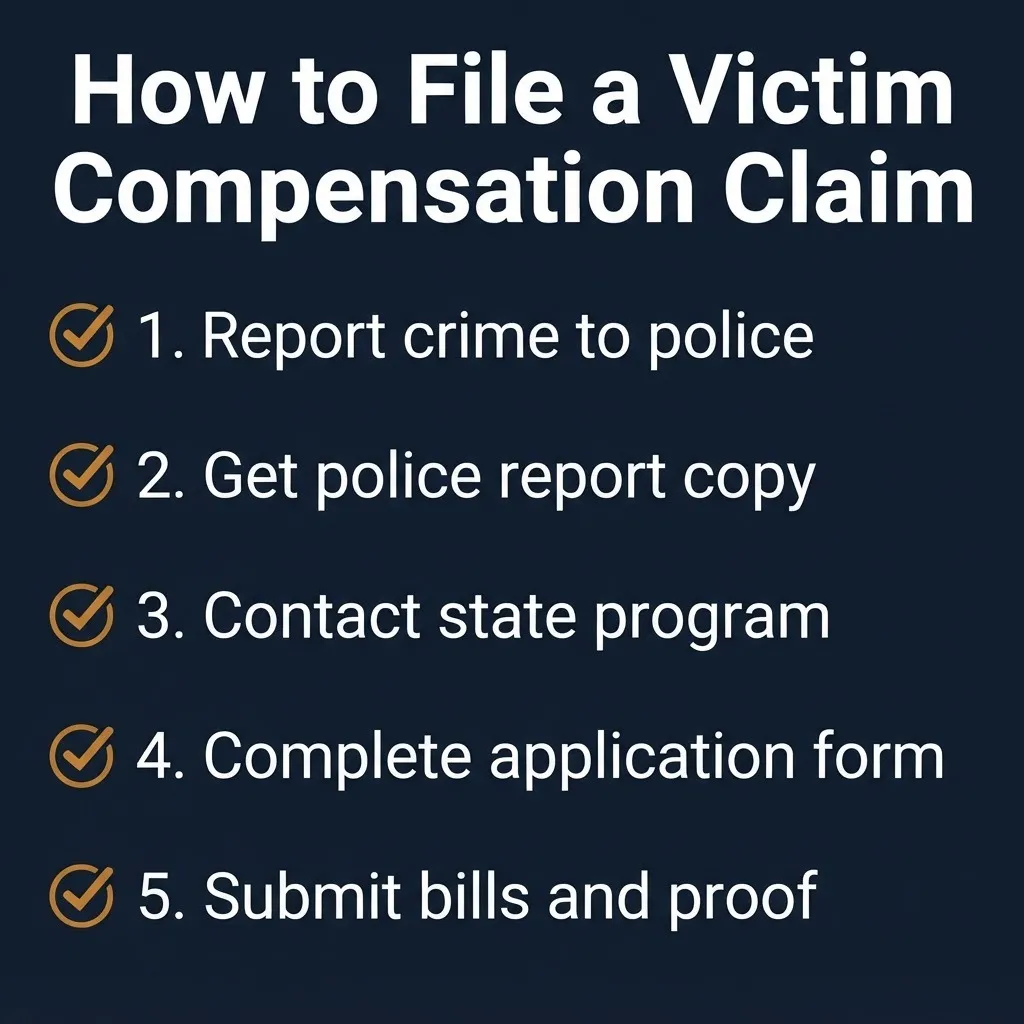
- Report the crime to law enforcement immediately.
- Get a copy of the police report.
- Contact your state’s victim compensation program.
- Complete the application form.
- Submit supporting documents: medical bills, police report, wage loss proof.
- Wait for the program to review and decide.
- Appeal if your claim is denied.
The application is free. You do not need a lawyer to file.
Do you need a lawyer to file a crime victims compensation claim?
No. The application is designed to be filed without a lawyer.
The forms are straightforward. The program staff can help you complete them. Legal aid organizations and victim advocates also assist for free.
A lawyer may help if your claim is denied and you need to appeal. But for the initial filing, you can do it yourself.
Reality Check: No one charges a fee to file a crime victims compensation claim. The application is free. If someone offers to “process” your claim for a fee, walk away. That is a scam.
How long does it take to get crime victims compensation?
Most claims are processed within 30 to 90 days. Complex claims take longer.
The program must verify the crime, review your expenses, and confirm that no other source of payment exists. That takes time.
Emergency awards may be available faster in some states. Contact your state program if you need immediate help with medical bills or funeral costs.
What happens if the offender is caught and convicted?
The offender may be ordered to pay restitution as part of the criminal sentence. Restitution is separate from crime victims compensation.
If you receive restitution after getting compensation, you may have to repay the compensation fund. The program is a payer of last resort. It expects reimbursement if other money arrives.
The rules vary by state. Ask your state program how restitution affects your award.
What is the difference between crime victims compensation and a lawsuit?
Crime victims compensation is a government benefit. A lawsuit is a private legal action against the offender or a third party.
The compensation program pays specific bills quickly. A lawsuit can recover broader damages, including pain and suffering, but takes years and depends on the offender having money.
You can apply for compensation and file a lawsuit. They are not mutually exclusive. But the compensation program may place a lien on any lawsuit recovery.
Key Takeaway: Compensation is faster but limited. A lawsuit is slower but broader. Many victims pursue both, but the compensation fund may seek reimbursement from lawsuit proceeds.
What happens next after you file a crime victims compensation claim?
Once you file, the state program reviews your application and supporting documents.
| Timing | Expected Stage |
|---|---|
| Week 1 to 4 | Application submitted and reviewed for completeness |
| Month 1 to 3 | Program verifies the crime and your expenses |
| Month 2 to 6 | Payment issued for approved expenses |
| Month 6 and beyond | Appeal if denied |
The timeline varies by state and claim complexity.
Frequently Asked Questions
Is crime victims compensation a real program?
Yes, every state runs a crime victims compensation program.
It is a government benefit, not a lawsuit settlement.
How much does crime victims compensation pay?
Most states cap benefits between $10,000 and $50,000 per victim.
The exact amount depends on your expenses and your state.
What crimes qualify for victim compensation?
Violent crimes like assault, homicide, sexual assault, and domestic violence.
Some states also cover drunk driving crashes and stalking.
What expenses does victim compensation cover?
Medical bills, counseling, lost wages, and funeral costs.
It does not cover pain and suffering or property loss.
How long do I have to file a claim?
Most states require filing within one to three years of the crime.
Check your state’s deadline immediately.
Do I need a lawyer to file a victim compensation claim?
No, the application is designed to be filed without a lawyer.
Victim advocates and legal aid can help for free.
Can I get compensation if the offender is not caught?
Yes, the program does not require a conviction.
You must report the crime and cooperate with the investigation.
Crime victims compensation is a real government program that pays specific bills for victims of violent crime. It is not a lawsuit and it does not pay for pain and suffering. But it can cover medical bills, counseling, lost wages, and funeral costs when no other source will.
The most important thing you can do is file early. The deadline is one to three years in most states, but the clock starts on the day of the crime. Do not wait.