University Settlement 2026: The Society of New York Case, Claims, and What Comes Next
Quick Answer
- University Settlement Society of New York is a real nonprofit social services organization, not a settlement fund.
- No verified 2026 class action settlement involving this entity is currently open for claims.
- Any “university settlement” payout notice should be checked against official court records before action.
University Settlement is not one lawsuit. The phrase points to a specific nonprofit in New York City, and to a broader pattern of legal settlements involving universities nationwide.
The University Settlement Society of New York is a real organization founded in 1886. It provides early childhood education, mental health services, and senior programs, mostly on the Lower East Side.
But when people search for “university settlement” in 2026, they are often looking for one of two things. Either they saw a notice about the Society of New York, or they are trying to find a settlement involving a college or university.
This article separates what is verified from what is still rumor. It covers the Society of New York, recent university settlement patterns, how to check if a notice is real, and what to do if you think you may be part of a class.
The Facts
| Item | Details |
|---|---|
| Organization | University Settlement Society of New York |
| Founded | 1886 |
| Legal Status | 501(c)(3) nonprofit |
| Primary Location | 184 Eldridge Street, New York, NY |
| 2026 Open Settlement | Not yet confirmed |
| Court Records | No verified class action found as of March 2026 |
| Claims Administrator | Not yet appointed |
| Deadline | Not yet set |
Is the University Settlement Society of New York a Real Organization?
Yes. The University Settlement Society of New York is a legitimate nonprofit corporation chartered in New York State.
It is not a university. The name comes from the settlement house movement, where reformers lived in poor neighborhoods and offered education and services.
The Society runs Head Start programs, senior centers, mental health clinics, and family support services. It serves thousands of New Yorkers annually.
If you received a notice mentioning this organization, the first step is to verify the notice itself. Scammers sometimes use real nonprofit names to make fake settlement offers look credible.
The New York State Attorney General’s office and the federal court system both publish databases of active class actions. You can search those databases without paying anyone.
What Is a University Settlement in Legal Terms?
A university settlement in legal terms means a resolution between a university and plaintiffs, usually in a class action, civil rights case, or contract dispute.
These settlements cover tuition refunds, data breach claims, campus safety failures, employment disputes, and alleged discrimination.
The settlement becomes binding only after a judge grants final approval. Before that, the case is just a proposal.
Here are the most common university settlement types in recent years:
| Type | Example Context |
|---|---|
| Tuition refund | COVID-era campus closures |
| Data breach | Student records exposed |
| Title IX | Mishandled harassment claims |
| Employment | Wage and hour violations |
| ADA compliance | Inaccessible campus facilities |
Is There a University Settlement Society of New York Lawsuit in 2026?
No verified lawsuit naming University Settlement Society of New York as a defendant has been confirmed in 2026.
That does not mean no legal action exists. Nonprofits face employment claims, contract disputes, and occasional tort claims like any large employer.
But none of those would automatically become a class action with a claims administrator and a public settlement fund. Individual employment disputes stay between the employee and the organization.
If you saw a post or text claiming otherwise, the burden is on the person making the claim. Search the court docket yourself before giving anyone your information.
How Much Could a University Settlement Pay Per Person?
Payouts depend entirely on the case. There is no standard university settlement amount.
A tuition refund case might pay hundreds of dollars per student. A data breach case might pay a small cash amount plus credit monitoring.
Here is a sample of recent university settlement ranges reported in legal news, not specific to any 2026 open fund:
| Case Type | Reported Per-Person Range |
|---|---|
| Tuition refund | $100 to $2,000 |
| Data breach | $50 to $500 |
| Employment | $500 to $10,000 |
| Title IX | Varies widely |
These are historical figures, not predictions. Any 2026 settlement would have its own terms set by the court.
Reality Check: No legitimate settlement asks you to pay a fee upfront to receive money. If someone asks for payment to release your settlement share, that is a scam.
How Do I Check If a University Settlement Notice Is Real?
You check a settlement notice the way you would check a store return policy: read the fine print, confirm the source, and never pay to participate.
Start with the notice itself. A real notice names the court, case number, defendant, and claims administrator. If any of those are missing, be suspicious.
Then search the case number in the federal PACER system or the relevant state court database. Real cases leave a paper trail.
Here are the verification steps:
- Look for a court name and case number on the notice.
- Search that case number in PACER or the state court system.
- Confirm the settlement administrator’s name on the official settlement website.
- Check the Better Business Bureau for administrator complaints.
- Never call the phone number printed on the notice without cross-checking it online.
- Call the clerk’s office of the named court to confirm the case exists.
Key Takeaway: A real settlement notice names a real court, a real case number, and a real administrator. You can verify all three without paying anyone.
What Are the Most Common Recent University Settlement Topics?
University settlements in 2025 and 2026 have clustered around a few recurring legal theories.
The largest category remains tuition and fee refunds. Students argue that online classes or campus closures did not deliver the in-person experience they paid for.
Another growing area is data breaches. Universities hold vast stores of personal data, and breaches trigger class actions under state privacy laws.
Athletic eligibility and antitrust claims also continue to generate settlements, especially around name, image, and likeness rules.
Here are the active categories worth watching in 2026:
- Tuition and mandatory fee refund litigation
- Student data breach class actions
- Title IX and sexual misconduct handling claims
- Disability access and accommodation disputes
- Graduate student union wage claims
Who Is Eligible for a University Settlement?
Eligibility depends on the specific case. Class definitions vary wildly.
A tuition case might include all students enrolled during a specific semester. A data breach case might include anyone whose information was stored on a compromised server.
The class definition appears in the settlement agreement and the court’s preliminary approval order. The notice summarizes it, but the full definition controls who gets paid.
You may be included automatically if you fall within the class definition. Some cases require you to file a claim form. Others use existing records and pay without a claim.
What Does the University Settlement Society of New York Actually Do?
The Society is a multi-service nonprofit, not a legal entity that pays settlements to the public.
It operates youth programs, a community school, mental health clinics, a senior center, and supportive housing.
Its funding comes from government contracts, private donations, and foundation grants. None of that funding is distributed as settlement payouts.
If you are looking for a settlement payout connected to this name, you may have confused the nonprofit with a university case. Check the court docket to see which one you are actually dealing with.
How Do Universities Notify People About a Settlement?
Universities or settlement administrators typically notify class members by mail or email. Notices go to the last known address or email address on file.
Some administrators also place ads in newspapers or online. The ads must be approved by the court.
Here is how a legitimate process usually unfolds:
- Court grants preliminary approval of the settlement.
- Administrator mails or emails notices to the class.
- Notice includes the claim deadline and the official website.
- Class members file claims online or by mail.
- Court holds a final approval hearing.
- If approved, payments go out after the appeal window closes.
Key Takeaway: A real settlement notice arrives by mail or email from a named administrator, points to an official website, and includes a court date. It never asks for payment to participate.
What Should I Do If I Think I Qualify for a University Settlement?
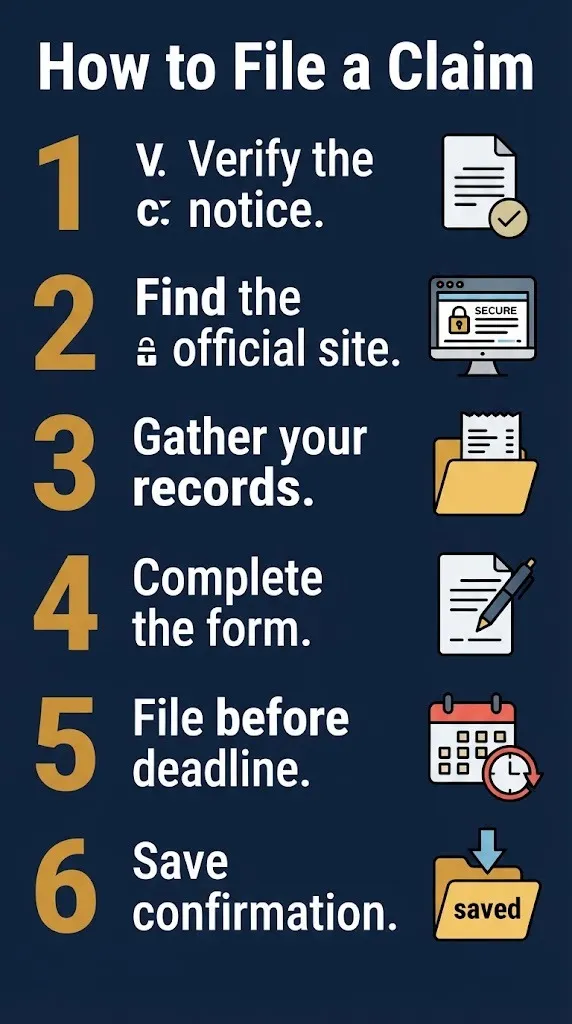
Gather your records first. That means tuition statements, enrollment dates, receipts, emails, and any notices you received.
Then search the case name on the official settlement website. If the administrator has posted a claim form, follow the instructions exactly.
Do not rely on third-party websites that charge fees. Filing a claim in a class action is free.
Here is a simple action plan:
- Keep every notice you receive about the settlement.
- Write down the claim deadline and final hearing date.
- Check the official settlement website for the claim form.
- Gather documents showing you meet the class definition.
- File the claim before the deadline.
- Print or screenshot your confirmation.
- Wait for the court’s final approval and any appeal period.
What Happens Next
Expected 2026: Watch for any new university settlement filings in federal and state courts.
Ongoing: University Settlement Society of New York continues its regular nonprofit programming.
If a settlement is announced: The court will publish a notice with a claims administrator and deadline.
Your move: Search court databases for cases matching any notice you received. Verify before you share data.
The university settlement landscape in 2026 is active but specific. Each case has its own class definition, deadline, and payout formula.
The University Settlement Society of New York is a real nonprofit, but no verified 2026 settlement fund tied to it is open for claims right now.
Your job is to verify any notice against the court record before acting. Real settlements survive scrutiny. Scams do not.