Lawsuit Attorney Near Me 2026: How to Find the Right Lawyer, What It Costs, and What to Expect
Quick Answer
- A lawsuit attorney near you is a local lawyer who handles civil cases like injury, contract, or consumer claims.
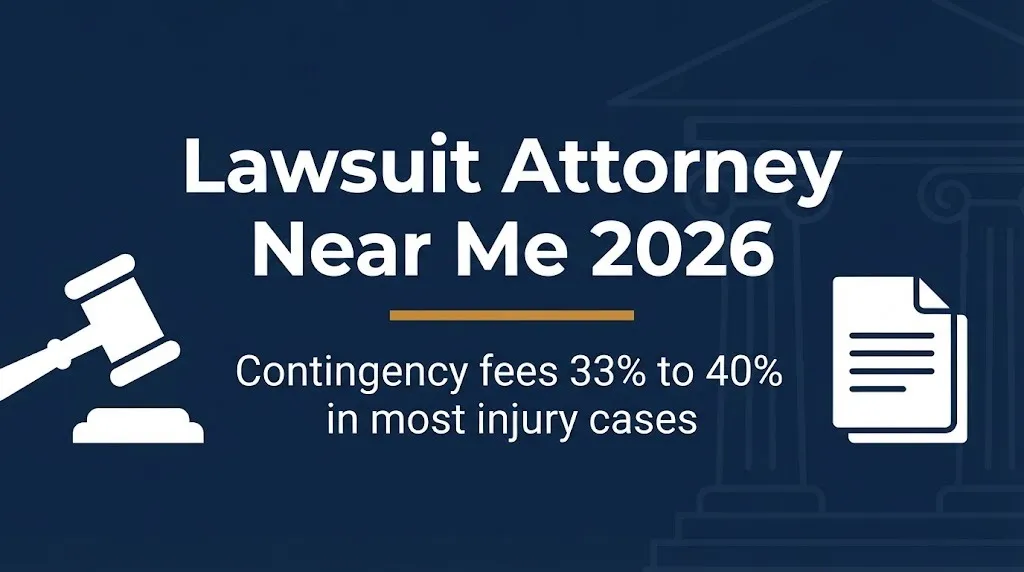
- Most personal injury attorneys charge no upfront fee and take 33% to 40% of the recovery.
- The most important deadline is your state’s statute of limitations, usually one to three years depending on the claim.
You need a lawyer. You typed “lawsuit attorney near me” because you want someone local, someone you can sit across from.
Here is the direct answer: a lawsuit attorney is a lawyer who handles civil lawsuits. That includes personal injury, contract disputes, consumer claims, employment cases, and more. Local matters because court rules and deadlines vary by state and county.
This article explains how to find the right attorney near you, what it costs in 2026, what questions to ask, and how to avoid the wrong lawyer.
The Facts
| Topic | Lawsuit Attorney Near Me |
| Status | No national licensing change in 2026 |
| Typical Contingency Fee | 33% to 40% of recovery |
| Typical Hourly Rate | $250 to $500 per hour for hourly cases |
| Statute of Limitations | 1 to 3 years for most claims, varies by state |
| Initial Consultation | Often free for injury and consumer cases |
| Best Search Tools | State bar directory, local bar association, court records |
Is a lawsuit attorney the same as a lawyer?
Yes. A lawsuit attorney is a lawyer who handles civil litigation. They represent clients in court and in settlement negotiations.
Not all lawyers are lawsuit attorneys. Some lawyers only draft documents or advise businesses. A lawsuit attorney specifically handles disputes that may end up in court.
When you search for a lawsuit attorney near me, you are looking for a litigator in your geographic area.
What types of cases does a lawsuit attorney handle?
Lawsuit attorneys handle a broad range of civil cases.
- Personal injury from car accidents, slips, and medical errors
- Contract disputes between businesses or individuals
- Consumer fraud and deceptive trade practices
- Employment cases like wrongful termination and discrimination
- Real estate and property disputes
- Insurance bad faith claims
- Debt collection defense
If your case involves money or a court order, a lawsuit attorney is the right type of lawyer.
How do you find a good lawsuit attorney near you?
Finding a good attorney is less about rankings and more about fit, experience, and honesty.
Here are the steps.
- Define your case type: injury, contract, consumer, or employment.
- Search your state bar association directory by practice area and location.
- Check your local bar association referral service.
- Read Google reviews and Avvo profiles, but weight them lightly.
- Ask for referrals from other professionals like accountants or real estate agents.
- Interview at least two or three attorneys before deciding.
- Ask each one for a written fee agreement and a case timeline.
This process is like hiring a contractor for a home repair. You compare bids, check references, and ask hard questions.
Key Takeaway: The best lawsuit attorney near you is the one with relevant experience, a clear fee structure, and a realistic view of your case.
How much does a lawsuit attorney cost in 2026?
Cost depends on the case type. Personal injury and some consumer cases work on contingency. Business and contract cases usually bill hourly.
| Fee Type | Typical Range | Common Case Types |
|---|---|---|
| Contingency | 33% to 40% of recovery | Personal injury, consumer fraud |
| Hourly | $250 to $500 per hour | Business, contract, real estate |
| Flat Fee | $1,500 to $15,000 | Simple motions, demand letters |
| Retainer | $3,000 to $25,000 upfront | Ongoing business litigation |
A contingency fee means you pay nothing upfront. The attorney gets paid only if you win or settle.
What questions should you ask a lawsuit attorney before hiring?
The questions matter more than the attorney’s website. Ask direct questions and watch how they answer.
- How many cases like mine have you handled?
- What is your honest assessment of my case?
- Who in your firm will do the day-to-day work?
- What is your fee structure and what is included?
- How long will this case take?
- What is the likely range of total costs?
- Will you take this to trial if needed?
- What could cause this case to go badly?
A good attorney answers directly. A weak one deflects or promises too much.
What is the statute of limitations for a lawsuit?
The statute of limitations is the legal deadline for filing your lawsuit. It varies by claim type and state.
Common deadlines include:
- Personal injury: 1 to 3 years depending on the state
- Breach of written contract: 3 to 6 years depending on the state
- Fraud: 2 to 4 years depending on the state
- Employment discrimination: 180 days to 3 years depending on the claim
The clock usually starts when the injury or breach occurs. In some fraud cases, it starts when you discovered the harm.
Reality Check: No attorney can guarantee a specific outcome. If a lawyer promises you a settlement amount before reviewing your evidence, walk out. Good lawyers talk probabilities, not promises.
What should you bring to the first meeting with a lawsuit attorney?
The first meeting is a two-way interview. Bring every document you have.
Bring the contract, the emails, the photos, the police report, the demand letter. A thick folder helps more than a long story.
The attorney will ask about deadlines, witnesses, and what you want to achieve. They may quote a fee range and give you a rough timeline. You should leave with a clear sense of the next step and what it will cost.
What is the difference between a local attorney and a national firm?
A local attorney knows the local courts, judges, and opposing counsel. That knowledge can matter.

A national firm may have more resources but less local familiarity. For most individual cases, a local lawsuit attorney is the better choice.
Local also means you can meet in person. That matters when you are deciding who to trust with your case.
How do you check if a lawsuit attorney is licensed and in good standing?
Every state licenses attorneys. You can check an attorney’s status through your state bar association.
Here is how.
- Go to your state bar association website.
- Search the attorney by name or bar number.
- Check the license status: active, inactive, or disciplined.
- Look for any disciplinary history.
- Confirm the attorney has no recent suspensions.
This takes five minutes and tells you whether the lawyer is legitimate.
Key Takeaway: Checking an attorney’s license is free and fast. Do it before you sign anything.
What happens next after you hire a lawsuit attorney?
Once you sign a fee agreement, the attorney starts working on your case.
| Timing | Expected Action |
|---|---|
| Week 1 | Attorney sends engagement letter and opens the file |
| Weeks 2 to 4 | Demand letter or complaint filed |
| Months 2 to 6 | Discovery begins, documents exchanged |
| Months 6 to 12 | Depositions, motions, and settlement talks |
| Months 12 to 24 | Mediation and possible trial setting |
Your case may settle at any point. Most do. If it goes to trial, the timeline stretches longer.
Frequently Asked Questions
Is a lawsuit attorney the same as a trial lawyer?
Mostly yes.
Both handle civil litigation, but trial lawyers focus more on courtroom work.
How much does a lawsuit attorney cost?
Personal injury attorneys charge 33% to 40% on contingency.
Hourly cases range from $250 to $500 per hour.
How do I find a lawsuit attorney near me?
Search your state bar directory.
Check local bar referrals and interview multiple attorneys.
What is the deadline to file a lawsuit?
The deadline is your state’s statute of limitations.
It usually ranges from one to three years depending on the claim type.
Do I need a local attorney or can I hire someone from another state?
You need an attorney licensed in the state where the case will be filed.
A local attorney is usually the best choice.
Can I file a lawsuit without an attorney?
You can file pro se, meaning without a lawyer.
It is rarely a good idea for anything beyond small claims court.
What should I do if I cannot afford a lawsuit attorney?
Look for legal aid organizations in your area.
Some attorneys offer payment plans or reduced fees for certain cases.
Finding a lawsuit attorney near you is about more than a Google search. It is about finding someone with the right experience, a clear fee structure, and a realistic view of your case.
The deadline that matters most is your state’s statute of limitations. Find out what it is this week. If it is close, do not wait to make the calls.