Litigation Attorneys Near Me 2026: How to Find, Vet, and Hire the Right Lawyer
Quick Answer
- What it is: A litigation attorney handles civil disputes in court, from contract fights to property cases.
- How to find one: Start with your state or provincial bar association’s lawyer referral service. It is free.
- Cost factor: Hourly rates vary wildly. In Pakistan, expect PKR 12,000 to 75,000 per hour for 2026.
You searched for litigation attorneys near me because you have a dispute that may need a courtroom. Maybe a contract went bad. Maybe someone owes you money. Or maybe you got served with papers.
The search results you will see are mostly directories and ads. Yelp lists general litigation attorneys by city . FindLaw shows individual profiles with experience and consultation offers. Those tools help, but they do not tell you who is actually good.
This article cuts through the listings. It explains where to find real litigation attorneys, what questions to ask before you hire one, how fees work, and what red flags should make you walk away.
The Facts
| Item | Detail |
|---|---|
| Role | Litigation attorney (handles civil disputes in court) |
| Where to find | State/provincial bar referral services, legal aid, vetted directories |
| Typical consultation | Free to paid (varies by firm) |
| Hourly rate (Pakistan, 2026) | PKR 12,000 to 75,000 per hour |
| Hourly rate (U.S. example) | Varies by market; some firms offer free consults |
| Retainer required | Often yes, especially for litigation |
| Key vetting step | Confirm experience in your specific dispute type |
How Do I Find a Litigation Attorney Near Me?
You find a litigation attorney near you by starting with your local bar association’s lawyer referral service. That is the fastest, cheapest, and most reliable first step.
Bar referral services screen attorneys for license status and malpractice history. They match you with lawyers who practice in your area and your type of case. Most are free to use.
Other options include:
- Legal aid offices: If you cannot afford a lawyer, legal aid provides free or low-cost representation for qualifying cases.
- Court self-help centers: Many courthouses have staff who can point you toward resources.
- Vetted directories: FindLaw and similar sites list attorneys by practice area and location . They include experience and consultation details, but you still need to vet the lawyer yourself.
- Word of mouth: Ask other attorneys you trust. A real estate lawyer knows who handles litigation well.
Avoid choosing purely based on the first ad you see. Paid listings are not endorsements. They are advertising.
What Should I Ask a Litigation Attorney Before Hiring?
You should ask about their specific experience with your type of case, their fee structure, and who will actually handle your file.
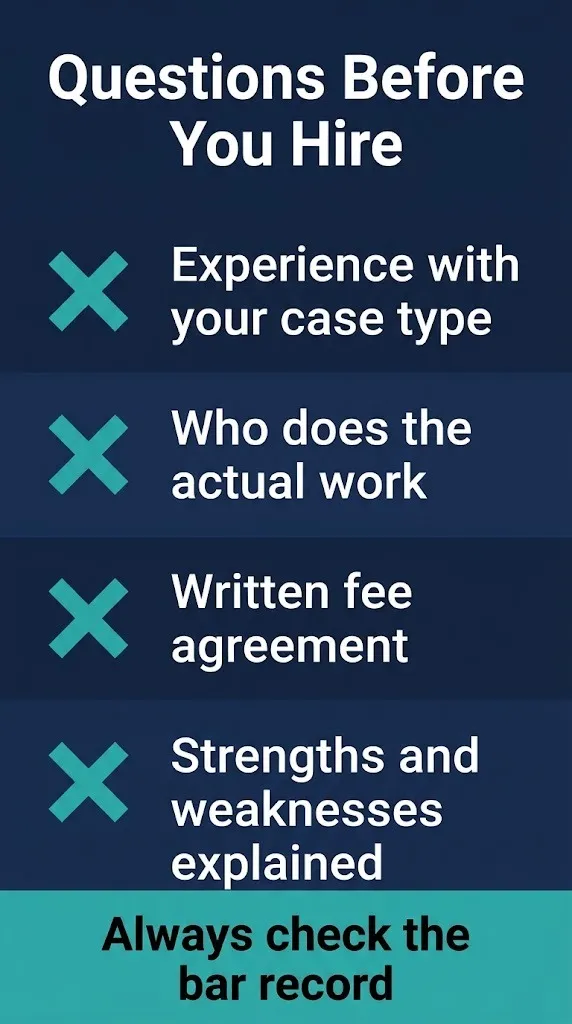
Here is a checklist of questions to bring to your consultation:
- How many cases like mine have you handled? Ask for outcomes, not just years in practice.
- Who will do the work? Will the attorney you meet handle the research and court appearances, or will associates do it?
- What is your fee structure? Hourly, flat fee, contingency, or retainer. Get it in writing.
- What are the estimated total costs? Fees are not the same as expenses. Ask about filing fees, expert witnesses, and discovery costs.
- How will you communicate with me? How often, and through what channel.
- What are the strengths and weaknesses of my case? Be suspicious of any attorney who promises you will win.
The Maryland People’s Law Library recommends asking these exact questions during the interview phase . A good attorney will answer directly. A bad one will dodge.
How Much Do Litigation Attorneys Cost in 2026?
Litigation attorney fees in 2026 vary by country, city, and case complexity. In Pakistan, the unified hourly rate range is PKR 12,000 to PKR 75,000 per hour for all levels of legal professionals.
That range covers junior lawyers to senior partners. The final rate depends on case complexity, specialization, and location . A 30% to 60% travel allowance applies for work outside major cities.
For litigation specifically, the fee structure often includes:
- Initial retainer: Paid upfront before work begins.
- Per-hearing fees: Charged for each court appearance.
- Contingency fees: A percentage of the recovery. In Pakistan, contingency fees are capped at 28% of the total amount recovered, charged only after successful recovery.
In the United States, fees vary by market. Some firms offer free consultations, as seen in FindLaw listings for California attorneys . Others charge for the initial meeting.
Always ask for a written fee agreement. Verbal promises are not enforceable.
Key Takeaway: Litigation fees are negotiable in structure, not in ethics. Get every fee, expense, and retainer term in writing before you sign anything.
What Is the Difference Between a Litigation Attorney and a Trial Attorney?
A litigation attorney handles the entire lawsuit process, from filing to settlement. A trial attorney specifically argues cases in court.
Most litigation attorneys are trial attorneys too, but not all. Some litigators focus on pre-trial motions, discovery, and negotiation. They settle cases before trial.
Here is the practical difference:
| Type | What They Do | When You Need Them |
|---|---|---|
| Litigation attorney | Manages the lawsuit, discovery, motions, settlement talks | Most civil disputes |
| Trial attorney | Presents the case in court before a judge or jury | When settlement fails and trial is scheduled |
| Appellate attorney | Handles appeals after a trial verdict | When you appeal or defend an appeal |
For most people, a litigation attorney is the right starting point. They will bring in trial specialists if the case goes that far.
How Do I Check If a Litigation Attorney Is Licensed and Disciplined?
You check a litigation attorney’s license and discipline history through your state or provincial bar association’s public lookup tool. Every licensed attorney has a record.
Look for:
- Active license status: Are they allowed to practice?
- Disciplinary history: Have they been reprimanded, suspended, or disbarred?
- ** malpractice history:** Some bars publish malpractice judgments.
- Continuing legal education: Are they current on requirements?
The bar lookup is free and takes minutes. Do it before you meet the attorney. If you cannot find them in the bar database, they are not licensed to practice in that jurisdiction.
Do not trust a website bio alone. Anyone can write “licensed attorney” on a page. Only the bar association can confirm it.
Reality Check: A polished website does not mean a good lawyer. Some of the best litigators have terrible websites. Some of the worst have slick marketing. Check the bar record, ask for references, and trust your gut during the consultation.
What Are the Red Flags When Hiring a Litigation Attorney?
The biggest red flags when hiring a litigation attorney are guaranteed outcomes, vague fee explanations, and pressure to sign immediately.
Watch for these:
- “We will win this case.” No ethical attorney guarantees a result.
- “Don’t worry about the fee details.” You should worry. Get it in writing.
- No references. A good attorney has satisfied clients who will vouch for them.
- Pressure to pay a large retainer on the spot. Take time to compare.
- No clear answer on who will handle your file. If the partner you meet will not do the work, ask who will.
- Avoiding questions about weaknesses. A real litigator will tell you what could go wrong.
The Gleam Law blog lists similar red flags for business litigation clients . The same rules apply to individuals.
What Happens Next
Step 1: Use your bar association’s referral service to get three names.
Step 2: Check each attorney’s license and discipline record online.
Step 3: Schedule consultations. Many are free. Ask your checklist questions.
Step 4: Compare fee structures and communication styles. Pick the one who explains your case clearly.
Step 5: Sign a written fee agreement before any work begins.
Frequently Asked Questions
How do I find a litigation attorney near me for free?
Use your local bar association’s lawyer referral service. It is free and screens attorneys for license status.
How much does a litigation attorney cost in 2026?
In Pakistan, hourly rates range from PKR 12,000 to PKR 75,000 depending on seniority and complexity. U.S. rates vary by market.
Do litigation attorneys offer free consultations?
Many do, but not all. FindLaw listings for California attorneys often note free consultations. Always ask before booking.
What is the difference between a lawyer and a litigation attorney?
A litigation attorney is a lawyer who specializes in handling lawsuits and court disputes. All litigation attorneys are lawyers, but not all lawyers litigate.
How do I check if an attorney is licensed?
Use your state or provincial bar association’s online lookup tool. It shows license status and discipline history.
What should I bring to my first meeting with a litigation attorney?
Bring a brief summary of your case, including dates and facts. Bring any relevant documents. Bring your list of questions.
How long does a lawsuit take with a litigation attorney?
It depends on the case. Some settle in months. Others take years. Ask your attorney for an estimated timeline based on your specific dispute.
What if I cannot afford a litigation attorney?
Legal aid offices provide free or low-cost representation for qualifying cases. Court self-help centers can also point you to resources.
The Bottom Line
Finding a litigation attorney near you is not about the first ad you see. It is about checking the bar record, asking the right questions, and getting the fee agreement in writing.
Start with your bar association’s referral service. Vet three attorneys. Pick the one who tells you the truth about your case, not the one who promises a win.
The most important number: in Pakistan, litigation attorney hourly rates start at PKR 12,000 and go up to PKR 75,000. Ask for the range in writing before you hire.