Car Accident Settlement Average 2026: Realistic Payout Ranges and Claim Factors
Quick Answer:
- Car accident settlements are real insurance or legal payouts, not a class action with a fixed fund.
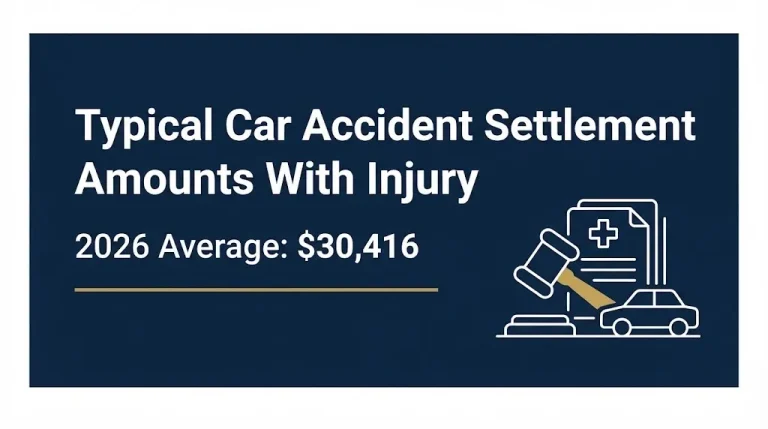
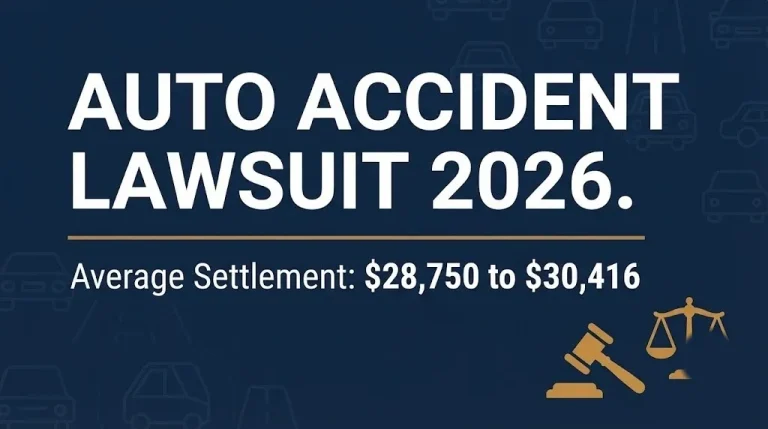
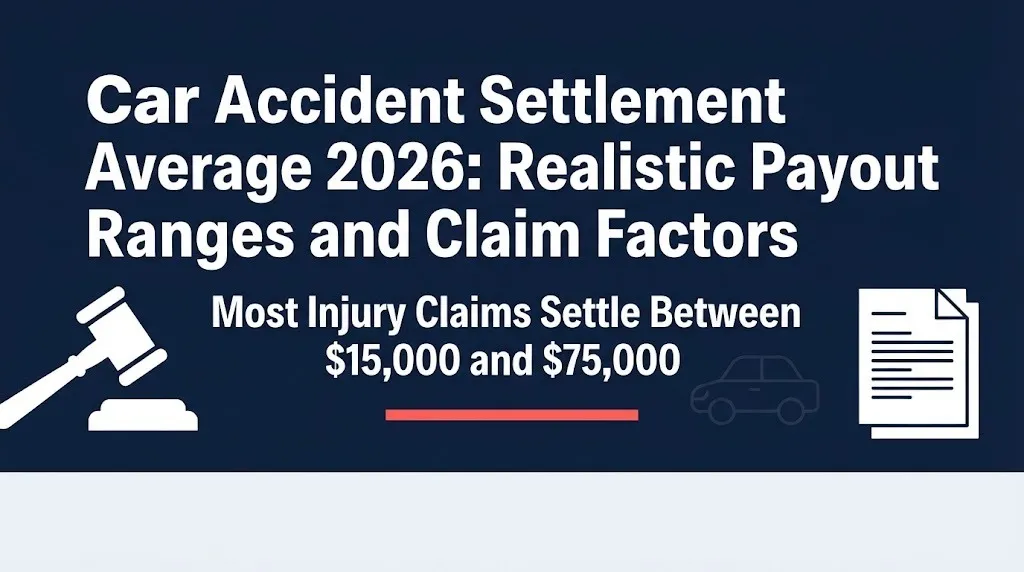
- Average injury settlements typically range from $15,000 to $75,000 depending on medical evidence and liability.
- Your state’s statute of limitations controls your filing deadline, usually 2 to 3 years from the accident.
A car accident settlement in 2026 is not a single number published by any government agency. It’s the amount an insurance company or at-fault driver pays to resolve your injury or property damage claim. The figure depends on your medical bills, lost wages, pain severity, and how clearly the other driver caused the crash.
If you’re searching this term, you probably got a settlement offer, or you’re trying to figure out whether what an adjuster told you is fair. The answer is less about any national average and more about your specific evidence.
This article covers what current data shows, how pain and suffering gets calculated, and what you can do to avoid settling for less than your claim is worth.
The Facts
| Item | Verified Details |
|---|---|
| Claim Type | Personal injury insurance claim, not a class action |
| Average Injury Settlement Range | $15,000 to $75,000 |
| Minor Impact Cases | $3,000 to $15,000 |
| Severe Injury Cases | $100,000 to $500,000+ |
| Statute of Limitations | Varies by state, typically 2 to 3 years |
| Main Value Drivers | Medical bills, lost wages, liability, pain evidence |
| Proof Needed | Accident report, medical records, wage documentation |
Is a car accident settlement real money?
A car accident settlement is real money paid through insurance claims or personal injury lawsuits. It is not a class action settlement with a court-appointed administrator and a fixed payout fund.
Every day, insurance companies resolve car accident claims by paying claimants directly. The process starts when you file a claim against the at-fault driver’s policy or your own coverage, depending on your state’s rules.
If you received a text or email offering a car accident settlement from an unknown source, treat it as suspicious. Real settlements come from insurance companies you filed claims with, attorneys you hired, or courts where you filed lawsuits. Nobody finds you out of the blue and pays you for an accident you never reported.
What is the average car accident settlement in 2026?
The average car accident settlement in 2026 falls between $15,000 and $75,000 for injury claims with documented medical treatment and clear liability. This is not an official government statistic, but it reflects consistent insurance industry and legal data from 2024 through 2026.
The range is wide because accidents vary enormously. A rear-end collision at a stoplight with a few weeks of physical therapy settles for far less than a highway crash with broken bones, surgery, and months of lost work.
Property damage-only claims settle much lower, usually between $2,000 and $10,000 depending on vehicle repair or replacement costs. Those numbers rarely get reported in settlement studies because they’re small and routine.
Key Takeaway: Most injury settlements land between $15,000 and $75,000, but your specific medical evidence and lost wages determine where you fall in that range.
How much compensation can I get for a car accident?
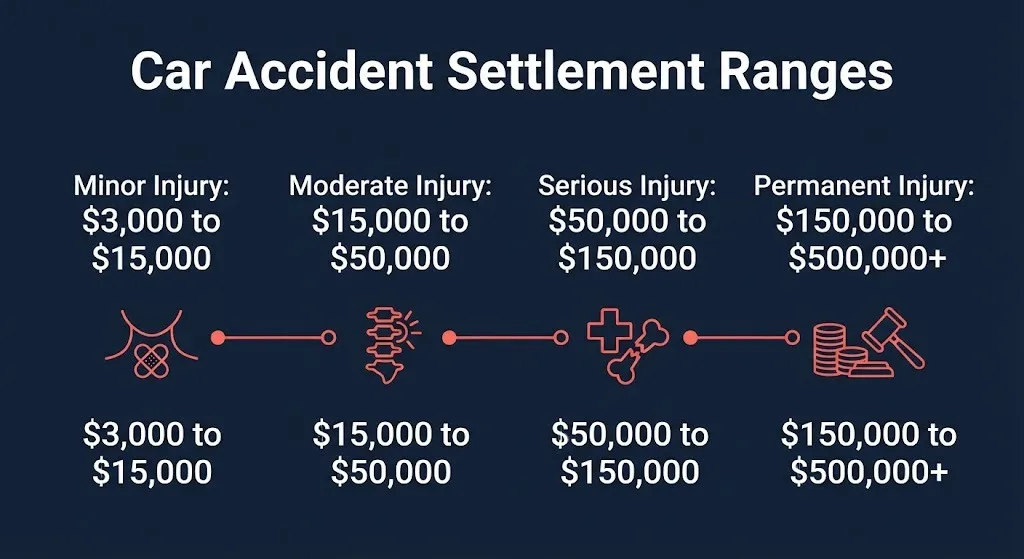
Car accident compensation amounts depend on four verified factors: medical costs, lost income, pain severity, and who caused the crash. A typical moderate injury claim settles between $15,000 and $75,000.
Severe injuries involving surgery, permanent impairment, or long-term disability can exceed $100,000. Cases with clear liability and high policy limits can reach $500,000 or more, though those represent a small minority of claims.
Here’s how compensation typically breaks down:
| Severity Level | Typical Settlement Range |
|---|---|
| Minor soft tissue injury | $3,000 to $15,000 |
| Moderate injury with physical therapy | $15,000 to $50,000 |
| Serious injury with surgery | $50,000 to $150,000 |
| Permanent impairment or disability | $150,000 to $500,000+ |
These ranges assume adequate insurance coverage. The at-fault driver’s policy limit often caps the realistic payout.
What are pain and suffering settlement amounts?
Pain and suffering settlement amounts are calculated as a multiplier or per-diem value added to your economic damages. The most common approach in 2026 is the multiplier method, which multiplies your medical bills by a factor based on injury severity.
For minor injuries, the multiplier is usually 1.5 to 2 times medical costs. For serious injuries with ongoing pain, it can reach 3 to 5 times. If your medical bills total $20,000 and your injury is moderately severe, a 2x multiplier adds $40,000 for pain and suffering, bringing the total demand to $60,000.
The per-diem method assigns a daily rate for every day you experienced pain. If your rate is $200 per day and you had pain for 90 days, pain and suffering totals $18,000. Attorneys use this method less often because it requires clear daily documentation.
Key Takeaway: Pain and suffering is real compensation, not a bonus, and its value depends on how well your medical records document the pain you actually experienced.
How do car accident compensation claims work?
Car accident compensation claims work by filing with the at-fault driver’s insurance company, your own insurer, or a court. There is no central administrator and no single claim form that applies everywhere.
The process starts with reporting the accident and seeking medical care. Then you gather evidence: the police report, medical records, photos, wage statements, and repair estimates. You send a demand letter to the insurer with a specific dollar amount, and negotiation follows.
If the insurer won’t settle fairly, you may file a personal injury lawsuit. Most cases still settle before trial. Only a small percentage of car accident claims ever reach a jury.
How do I file an accident compensation claim?
Filing an accident compensation claim follows a set sequence. Acting fast and keeping records matters more than knowing legal jargon.
Here are the steps:
- Report the accident to the police and get a report number.
- Seek medical care immediately, even if you feel fine.
- Notify your own insurer and the at-fault driver’s insurer.
- Document everything: photos, witness contacts, medical bills, lost wages.
- Send a demand letter with a specific settlement amount.
- Negotiate with the adjuster.
- File a lawsuit if the statute of limitations approaches and no fair offer arrives.
- Sign the release only after you understand it fully.
Each step builds a file. The file is what gets you paid.
Reality Check: No legitimate insurer or attorney will guarantee a specific settlement amount before reviewing your records. Anyone who promises a six-figure payout sight unseen is selling something, not representing you.
What is the average payout for a minor car accident?
The average payout for a minor car accident with no serious injury falls between $3,000 and $15,000. This includes property damage and basic injury compensation.
A fender bender with a few chiropractic visits and no missed work typically settles at the lower end. If you had physical therapy for several weeks and missed some work, the higher end applies.
Insurance adjusters treat minor cases quickly. They know the cost of litigation exceeds the value of most small claims, so they offer a number that makes the case go away. That number is rarely the maximum they would pay.
Key Takeaway: Minor accident payouts are small because the economic damages are small; adding a reasonable pain multiplier is still legitimate.
What factors increase a car accident settlement?
Several factors increase a car accident settlement in predictable ways. The strongest driver is medical documentation of a serious, lasting injury.
Here are the verified factors that push settlements higher:
- Clear liability with the other driver cited
- Serious injuries requiring surgery or hospitalization
- Long recovery periods with documented pain
- Substantial lost wages with employer verification
- Permanent impairment or disability
- High at-fault policy limits
- Strong witness and photographic evidence
The opposite factors push settlements down. Delayed medical treatment, gaps in care, unclear fault, and pre-existing injuries all give insurers reasons to pay less.
What is the statute of limitations for car accident claims?
The statute of limitations for car accident claims varies by state. Most states set the deadline between 2 and 3 years from the accident date.
California gives 2 years for personal injury. Texas gives 2 years. Florida changed its rules in 2023, now giving 2 years for negligence claims. New York gives 3 years. Tennessee gives 1 year, among the shortest in the country.
The countdown usually starts on the accident date. If you miss the deadline, the court can permanently bar your claim. Negotiating with the insurer does not pause the clock. File a lawsuit before the deadline or risk losing everything.
Can I get car accident compensation without a lawyer?
You can get car accident compensation without a lawyer, especially for minor accidents with clear liability and cooperative insurers. Many people settle small claims directly.
If your medical bills are under $5,000, you missed no work, and the other driver was clearly at fault, a direct claim can work. You send your records, ask for a specific amount, and negotiate.
For anything more serious, legal help usually pays for itself. Insurance industry data consistently shows represented claimants receive higher settlements, even after the attorney’s contingency fee. That’s not a guarantee, but it is a pattern worth knowing.
Key Takeaway: Small, simple claims can resolve without a lawyer; cases with real medical costs or lost income usually benefit from representation.
What should I do after a car accident to protect my claim?
What you do in the first 48 hours after a car accident shapes your eventual settlement more than any negotiation tactic.
Seek medical care the same day or the next day. Tell the provider every symptom, even mild ones. Neck pain, headaches, back stiffness, and anxiety all belong in the record. Gaps in treatment are the single biggest reason settlements fall short.
Photograph the vehicles, the scene, and any visible injuries. Get the police report number. Collect witness names and phone numbers. Save every receipt, every prescription, and every note from a doctor.
Missing these early steps is like trying to return a store item without a receipt. It’s possible, but everything gets harder to prove.
What happens next with a car accident claim?
Here’s a typical sequence once you decide to pursue a claim:
Day 1 to 3: Medical evaluation, accident documentation, insurer notification.
Week 1 to 4: Initial treatment, liability determination, property damage resolution.
Month 1 to 6: Continued treatment, wage loss tracking, demand letter preparation.
Month 3 to 12: Negotiation or lawsuit filing if needed.
Month 6 to 24: Settlement release and payment, or litigation proceeds.
This timeline assumes no major disputes over fault or coverage.
Frequently Asked Questions
Is a car accident settlement taxable?
Most car accident settlements for physical injuries are not taxable at the federal level.
Compensation for medical bills and pain and suffering is generally excluded from income.
How long does a car accident settlement take?
Most car accident settlements take 3 to 9 months after treatment ends.
Cases that go to litigation can take 12 to 24 months or longer.
What is a good settlement for a car accident?
A good settlement covers all medical bills, lost wages, and reasonable pain and suffering.
Most people consider $25,000 to $75,000 fair for a moderate injury with solid evidence.
Can I claim for a car accident if I was partially at fault?
Yes, most states allow claims if you were partially at fault.
Your settlement may be reduced by your percentage of fault under comparative negligence rules.
What if the at-fault driver has no insurance?
You can file under your own uninsured motorist coverage if you have it.
Without that coverage, your options narrow to suing the driver directly, which often yields little.
How is pain and suffering calculated?
Pain and suffering is usually calculated as a multiplier of medical bills, typically 1.5 to 5 times.
The per-diem method assigns a daily rate for pain duration.
What is the average settlement for whiplash?
The average whiplash settlement ranges from $3,000 to $25,000 depending on severity and treatment.
Most uncomplicated whiplash cases settle between $8,000 and $15,000.
Should I accept the first settlement offer?
Usually not, because first offers are almost always below the claim’s reasonable value.
Negotiate or consult an attorney before accepting.
Closing
The most important move you can make right now is to document everything and know your state’s deadline. The claim clock is running, and evidence gathered early beats evidence gathered late.
If you already have an offer, compare it against your verified medical bills, lost wages, and a reasonable pain multiplier. If it falls short, negotiate or get representation. The number that matters most is the one in writing on the release.