Lower Back Pain Car Accident Settlement 2026: Average Payouts, Formulas, and How to Claim
Quick Answer
- What it is: A settlement for lower back pain caused by a car accident, covering medical bills, lost wages, and pain and suffering.
- How much can you get? Typical settlements range from $10,000 for minor strains to $500,000+ for herniated discs requiring surgery, depending on severity and proof.
- Key deadline: Most states require filing within 2 to 3 years of the accident. California’s deadline is 2 years. Missing it bars your claim permanently.
What Is a Lower Back Pain Car Accident Settlement?
A lower back pain car accident settlement is a negotiated agreement in which the at-fault driver’s insurance company pays you for medical expenses, lost income, and the physical and emotional toll of your injury, in exchange for releasing them from further liability. About 95% of personal injury claims settle this way without ever reaching a courtroom.
Lower back injuries are the most commonly reported car accident injury in the United States. They range from mild strains that heal in weeks to herniated discs that require surgery and cause lifelong limitations. The settlement value tracks that severity range closely.
If you’re searching for this term, you likely have back pain after a crash and want to know what your case is worth. The honest answer is that no single number applies to everyone. This article breaks down the verified ranges by injury type, the formulas insurers use, the documentation that drives value, and the deadlines you cannot miss.
The Facts
| Detail | Information |
|---|---|
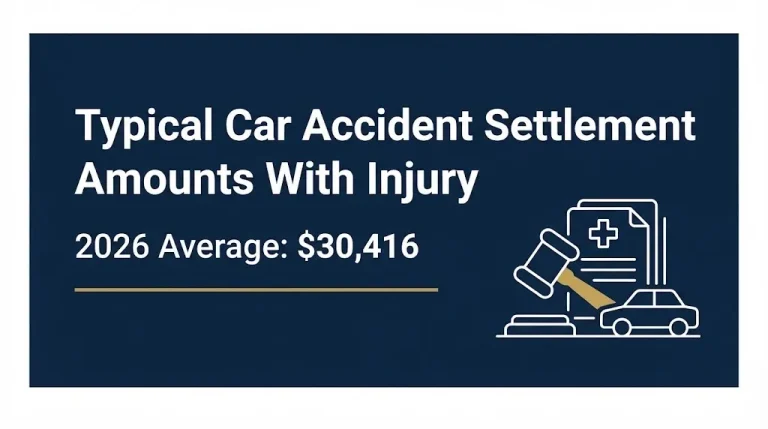
| Average car accident injury settlement | $30,416 (2026) |
| Median back injury award | ~$212,500 |
| Herniated disc range | $50,000 to $100,000+ |
| Soft tissue / minor strain | $2,500 to $50,000 |
| Neck and back injury (general) | $30,000 to $100,000 |
| Surgery cases | 3 to 5 times higher than non-surgical |
| Typical timeline | 12 to 18 months for straightforward cases |
| Filing deadline | 2 to 3 years by state (California: 2 years) |
How Much Is a Lower Back Pain Car Accident Settlement Worth?
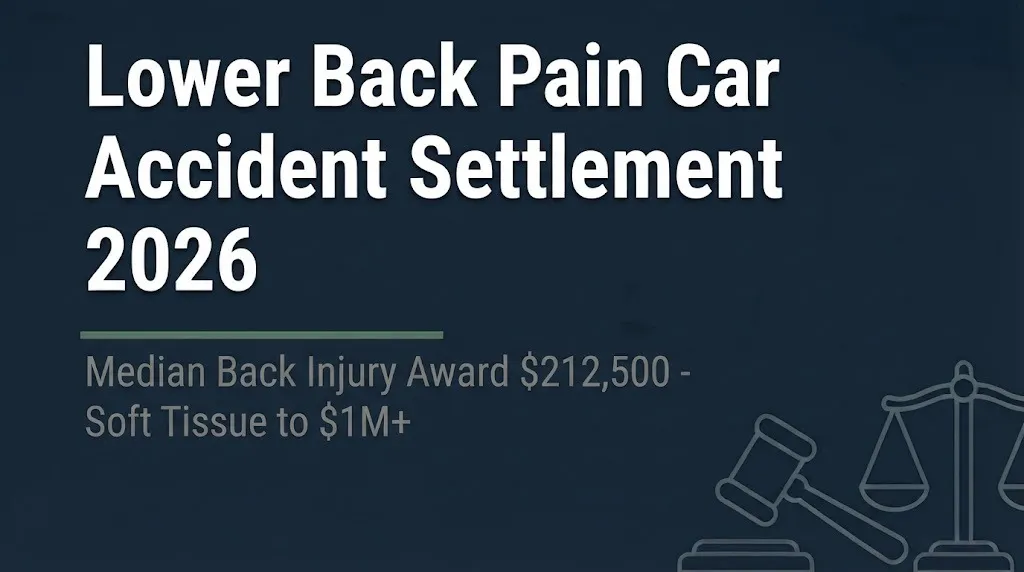
A lower back pain car accident settlement is worth between $10,000 and $500,000 or more, depending on the severity of your injury, the quality of your medical documentation, and the available insurance coverage. The median back injury award reported across industry data sets is approximately $212,500.
Here is the verified range by injury type:
| Injury Type | Typical Settlement Range |
|---|---|
| Minor soft tissue strain | $2,500 to $50,000 |
| Whiplash / soft tissue | $5,000 to $20,000 |
| General neck and back | $30,000 to $100,000 |
| Herniated disc (non-surgical) | $50,000 to $100,000+ |
| Herniated disc (surgical) | $200,000 to $750,000+ |
| Spinal cord injury / permanent disability | $1,000,000+ |
These are ranges, not guarantees. Your specific recovery depends on factors unique to your case. A $20,000 therapy bill with clear daily limitations can settle for $80,000. A $40,000 medical bill with rapid recovery might settle for $30,000.
Key Takeaway: The settlement value of a lower back pain claim is driven by injury severity and proof quality, not by the accident itself. Minor strains settle in the low thousands. Herniated discs requiring surgery routinely exceed $200,000.
What Factors Determine Your Lower Back Pain Settlement Amount?
The settlement amount for lower back pain is determined by four primary factors: injury severity, the strength of your liability evidence, the available insurance coverage, and the quality of your medical documentation. Each factor can push your recovery significantly higher or lower.
Injury severity is the biggest driver. A soft tissue strain that resolves with physical therapy settles far lower than a herniated disc requiring spinal fusion. Surgical cases settle for 3 to 5 times more than non-surgical cases because they demonstrate undeniable severity.
Liability evidence determines whether the insurer believes they would lose at trial. Clear fault from a rear-end collision or a police report assigning blame increases value. Shared fault reduces it proportionally under comparative negligence rules.
Insurance coverage sets the ceiling. California’s minimum bodily injury coverage is $15,000 per person. If the at-fault driver carries only minimum coverage, that caps your recovery unless you have underinsured motorist coverage on your own policy.
Medical documentation is the evidence insurers actually read. Records must show ongoing pain, functional limitations, and a credible treatment plan tying the injury to the crash.
How Is Pain and Suffering Calculated in a Back Injury Settlement?
Pain and suffering in a back injury settlement is calculated using the multiplier method, which multiplies your economic damages (medical bills and lost wages) by a number between 1.5 and 5, depending on injury severity. There is no receipt for pain, so insurers rely on formulas.
Here is how the multiplier works:
| Economic Damages | Multiplier | Pain and Suffering | Total |
|---|---|---|---|
| $20,000 | 1.5 (minor) | $30,000 | $50,000 |
| $50,000 | 3 (moderate) | $150,000 | $200,000 |
| $100,000 | 4 (severe) | $400,000 | $500,000 |
| $200,000 | 5 (catastrophic) | $1,000,000 | $1,200,000 |
The per diem method is an alternative. It assigns a daily dollar amount to your suffering, often $200 to $1,200 per day, and multiplies by the number of days you are expected to experience pain.
Key Takeaway: Pain and suffering often represents the largest portion of a back injury settlement. A $50,000 medical bill with a multiplier of 3 produces $150,000 in non-economic damages, bringing total value to $200,000 before any fault reduction.
What Proof Do You Need for a Lower Back Pain Settlement?
Proof in a lower back pain case requires medical records that objectively document your injury, its cause, and its ongoing impact on your life. Insurance adjusters cannot see your pain. They can only read what your doctors wrote.
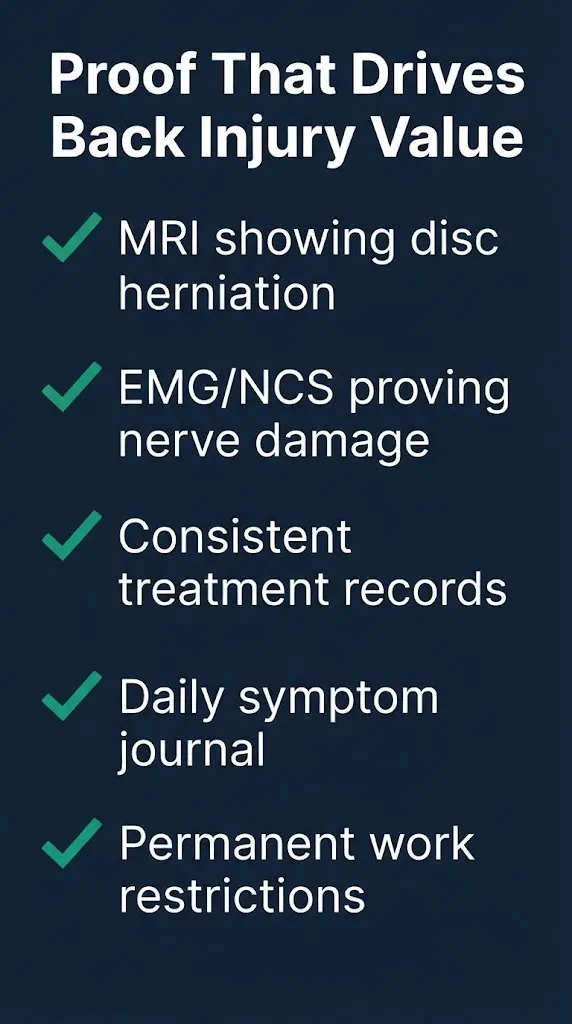
The strongest evidence includes:
- MRI findings showing disc herniation, bulging discs, or nerve compression.
- EMG/NCS testing proving nerve damage if you have radiating leg pain or sciatica.
- Consistent treatment records from physical therapy, chiropractic care, or specialists showing ongoing symptoms.
- A symptom journal documenting daily pain levels and activity limitations.
- Permanent work restrictions documented by a physician if you cannot return to your previous job.
The single most damaging thing you can do is stop treatment for weeks or months and then resume. Adjusters argue that if the injury were truly severe, you would not have taken a break. Gaps in treatment suggest the injury was not as serious as claimed.
Reality Check: You can recover compensation even if you had pre-existing back pain. The eggshell plaintiff rule holds the at-fault driver responsible for aggravating a prior condition. But you must show you were functional before the crash and that the accident worsened your symptoms. Prior MRIs showing the same disc issues before the accident give insurers their strongest defense.
How Long Does a Lower Back Pain Settlement Take?
A lower back pain settlement typically takes 12 to 18 months for straightforward cases, but complex cases involving surgery, disputed liability, or permanent disability can take 2 to 3 years. The most important factor is reaching maximum medical improvement before settling.
Here is the typical timeline:
- Immediate (0 to 2 weeks): Seek medical attention and report the accident to the insurer.
- Treatment phase (2 weeks to 6+ months): Continue consistent care. Attend all appointments.
- Demand phase (3 to 6 months): Once you reach maximum medical improvement, your attorney sends a demand letter.
- Negotiation phase (1 to 3 months): You and the insurer exchange offers. Most cases settle here.
- Payout phase (2 to 4 weeks): Payment issues after the agreement is signed.
Settling before your treatment is complete almost always leaves money on the table. You cannot know your future medical needs or the full extent of your limitations until your doctors say your condition has stabilized.
How to File a Lower Back Pain Car Accident Claim
Filing a lower back pain claim requires documenting your injury, proving fault, and submitting a demand to the at-fault driver’s insurer. Here are the steps:
- Get medical attention immediately. Even if you feel fine, see a doctor within days. Delays hurt your claim.
- Report the accident to the at-fault driver’s insurance company. Open a claim and get a claim number.
- Document everything. Keep all medical bills, receipts, and records. Start a daily symptom log.
- Follow your treatment plan exactly. Do not skip appointments or stop therapy early.
- Wait until you reach maximum medical improvement. Your doctor will tell you when your condition has stabilized.
- Prepare a demand package. Include medical records, bills, lost wage documentation, and a written account of how the injury changed your life.
- Negotiate or file suit. Most cases settle. If negotiations stall, filing a lawsuit often brings the insurer back to the table.
What Happens Next in a Lower Back Pain Claim
Weeks 1-2: Seek medical care. Report the accident. Open an insurance claim.
Months 1-6: Complete treatment. Reach maximum medical improvement.
Months 3-6: Attorney sends demand letter with full documentation.
Months 4-9: Negotiation with the insurance adjuster.
Months 6-18: Settlement reached or lawsuit filed if negotiations fail.
Months 18-36: If litigated, discovery, mediation, and potential trial.
Frequently Asked Questions
What is the average settlement for lower back pain after a car accident?
The median back injury award is approximately $212,500, but typical settlements range from $10,000 for minor strains to over $500,000 for herniated discs requiring surgery.
How is pain and suffering calculated for a back injury?
Insurers multiply your economic damages (medical bills and lost wages) by 1.5 to 5, depending on injury severity. A $50,000 bill with a multiplier of 3 produces $150,000 in pain and suffering.
Do I need an MRI to get a good back injury settlement?
An MRI dramatically strengthens your claim by objectively showing disc herniation, bulging, or nerve compression. Without imaging, adjusters rely on subjective pain reports, which they discount.
Can I still get a settlement if I had prior back problems?
Yes. The eggshell plaintiff rule holds the at-fault driver liable for aggravating a pre-existing condition. You need records showing you were functional before the crash.
How long do I have to file a lower back pain lawsuit?
Most states allow 2 to 3 years from the accident date. California’s deadline is 2 years. Missing the deadline bars your claim permanently.
Should I accept the insurance company’s first offer?
Almost never. Initial offers are routinely far below case value. Insurance companies bet that injured people will accept quickly out of financial pressure.
How much more do settlements pay with an attorney?
Accident victims with attorney representation receive settlements roughly 3 to 3.4 times higher on average, even after legal fees are deducted.
What if the at-fault driver has minimum insurance?
If their policy limit is too low, you may tap your own underinsured motorist coverage. California’s minimum bodily injury coverage is $15,000 per person.