Auto Accident Lawsuit 2026: Settlement Amounts, Timelines, and How the Process Works
Quick Answer
- Auto accident lawsuits are a normal legal process, not a scam, and most claims settle without a trial.
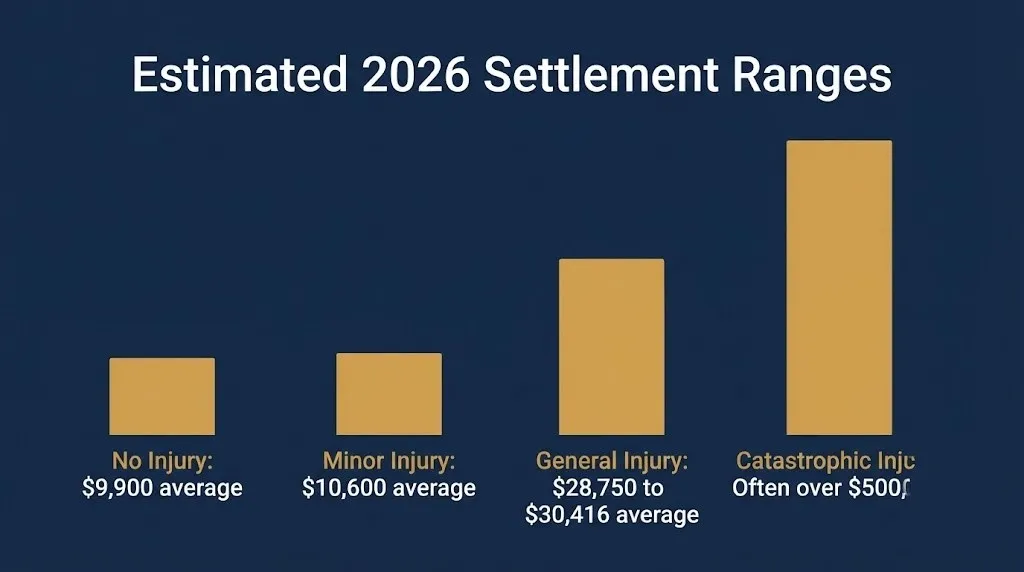
- The average 2026 car accident settlement ranges from roughly $9,900 for no-injury claims to over $500,000 for catastrophic injuries.
- Most states give you 2 to 3 years from the crash date to file a lawsuit, though this ranges from 1 to 6 years depending on the state.
If you’re searching for information on an auto accident lawsuit, you’re likely trying to figure out what your case might be worth or how the process works. There’s no single settlement fund or class action here. This is general guidance on how individual car accident claims get valued and resolved in 2026.
National data from law firms shows the average car accident settlement this year falls between $28,750 and $30,416, though the number that matters most is your state’s filing deadline, typically 2 to 3 years from the crash date. Miss that window, and you lose the right to sue entirely, regardless of how strong your case is.
This article covers what drives settlement amounts, how the legal process actually unfolds, and what deadlines apply. One detail that surprises people: filing an insurance claim does not pause your state’s statute of limitations clock.
The Facts
| Topic | Auto accident lawsuit and settlement process (national guide, not a single case) |
| 2026 Average Settlement | $28,750 to $30,416, depending on data source |
| No-Injury Average | $9,900 (range $500 to $25,000) |
| Minor Injury Average | $10,600 (range $3,000 to $25,000) |
| Catastrophic Injury Range | Often exceeds $500,000 |
| Typical Filing Deadline | 2 to 3 years from the accident date in most states (range 1 to 6 years) |
| Common Payout Formula | Medical bills plus lost wages, multiplied by 1.5x to 5x |
| Attorney Impact | Represented claimants report notably higher average settlements |
Is Filing an Auto Accident Lawsuit Worth It?
Filing an auto accident lawsuit is often worth it when your damages exceed what the insurance company is willing to offer through a direct claim.
Insurance adjusters typically open with offers around 30% to 50% of a claim’s actual value, according to figures used in current 2026 settlement calculators. That initial lowball number is a starting point for negotiation, not a final word on what you’re owed.
Whether a lawsuit makes sense depends on your specific damages, medical costs, lost income, and how clearly fault can be established. A lawsuit doesn’t automatically mean a trial. Most cases still settle before ever reaching a courtroom.
Do Most Car Accident Claims Actually Go to Trial?
No, most car accident claims settle through negotiation and never reach a jury trial.
Filing a lawsuit protects your legal rights and often pressures the insurance company to negotiate more seriously. Attorneys frequently file suit specifically to preserve a claim before the statute of limitations expires, even while settlement talks continue.
Key Takeaway: An auto accident lawsuit is a normal legal process that most often ends in a negotiated settlement, not a courtroom trial.
How Much Is a Car Accident Settlement Worth in 2026?
A car accident settlement’s value depends primarily on your medical costs, lost income, injury severity, and how clearly the other driver was at fault.
National figures from 2026 show wide variation by injury type. Settlement amounts scale directly with how serious the injuries are and how much treatment they require.
| Case Type | 2026 Average or Range |
|---|---|
| No injury | $9,900 average (range $500 to $25,000) |
| Minor injury | $10,600 average (range $3,000 to $25,000) |
| General injury settlements (overall average) | $28,750 to $30,416 |
| Catastrophic injury | Often exceeds $500,000 |
Not yet determined for your case specifically: these are aggregated national figures, not a prediction of what any individual claim is worth. Your actual settlement depends on your own medical records, lost wages, and state law.
What Is the Average Car Accident Settlement Amount?
The average car accident settlement in 2026 falls between $28,750 and $30,416 nationally, according to two separate analyses of law firm data published this year.
One analysis, based on July 2026 figures from five law firms, calculated an average of $28,750. A separate 2026 dataset from a settlement calculator service put the national average at $30,416, citing rising medical costs and inflation as contributing factors.
State-level averages vary even more dramatically. New York cases have averaged around $287,000, while Washington state cases have averaged closer to $26,000, according to a June 2026 state-by-state comparison. That gap partly reflects how state averages blend minor fender-benders with catastrophic injury cases, so a statewide number tells you less than your own case specifics.
How Do Insurance Companies Calculate a Car Accident Settlement?
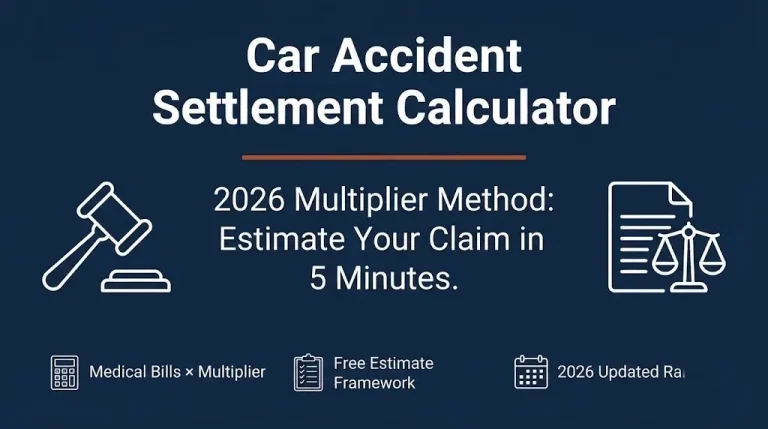
Insurance companies commonly use a multiplier method, taking your medical bills and lost wages, then multiplying that total by a factor between 1.5 and 5.
The multiplier increases with injury severity, permanence, and how clearly documented your damages are. A soft-tissue injury with a full recovery lands toward the low end. A permanent disability lands toward the high end.
Some insurers instead use a per diem method, assigning a daily dollar value, commonly cited between $200 and $1,500 per day, multiplied by your recovery period. Certain factors can push settlement values higher, including attorney representation, drunk driving by the other party, commercial vehicle involvement, or specific crash types like T-bone collisions.
Reality Check: No legitimate insurance company or law firm will pressure you to accept a settlement offer immediately or ask you to pay an upfront fee to “process” your claim. Most personal injury attorneys work on contingency, meaning they only get paid if you win or settle, and initial consultations are typically free.
Does Hiring a Lawyer Increase Your Car Accident Settlement?
Yes, claimants who hire an attorney report notably higher average settlements than those who negotiate directly with insurers.
One 2026 analysis found that represented claimants recovered settlements averaging 3.5 times higher than unrepresented claimants. Other current settlement estimators cite a smaller but still meaningful boost, around 40% higher, when an attorney is involved.
Key Takeaway: Whatever the exact multiplier, most 2026 data points in the same direction: legal representation correlates with meaningfully higher payouts, though results still depend heavily on the facts of your specific case.
How Do You File an Auto Accident Lawsuit?
You file an auto accident lawsuit by having an attorney draft and submit a formal complaint to the appropriate court before your state’s statute of limitations expires.
- Consult a personal injury attorney, typically free for an initial review
- Gather medical records, police reports, and evidence of lost wages
- Have your attorney draft and file a formal legal complaint
- Serve the complaint on the at-fault driver or their insurer
- Enter the discovery phase, including depositions and document exchange
- Continue settlement negotiations, which can run parallel to litigation
- Reach a settlement, or proceed to trial if negotiations fail
Filing the lawsuit itself doesn’t end negotiations. It simply protects your legal right to sue while talks continue.
What Is the Statute of Limitations for a Car Accident Lawsuit?
The statute of limitations for most car accident lawsuits is 2 to 3 years from the date of the crash in the majority of U.S. states, though this ranges from 1 to 6 years depending on the state.
Florida, for example, reduced its deadline from four years to two years after a 2023 tort reform law, a change still shaping filings in 2026. California sets a two-year deadline under its Code of Civil Procedure, which also applies to wrongful death claims stemming from a fatal crash.
Important exceptions:
- Claims involving minors are often paused, or “tolled,” until the child turns 18
- Hit-and-run cases may pause the clock until the at-fault driver is identified
- Claims against government vehicles often carry separate, shorter notice deadlines
- Property damage and injury claims sometimes carry different deadlines within the same state
Insurance companies have no legal obligation to warn you when your deadline is approaching, and settlement negotiations do not pause the clock.
How to Negotiate a Car Accident Settlement With an Insurance Adjuster
You negotiate a car accident settlement by countering the adjuster’s initial offer with documented evidence of your medical costs, lost wages, and pain and suffering.
Insurance adjusters commonly open with an offer well below the claim’s likely value, often cited around 30% to 50% of what a case is ultimately worth. Treating that first number as a starting point, not a final offer, is standard practice.
Steps for Negotiating:
- Do not accept or sign anything before understanding your full damages
- Document all medical treatment, including future anticipated care
- Calculate lost wages and any long-term earning impact
- Present a counteroffer backed by records, not just a verbal request
- Consider consulting an attorney before finalizing any offer
How Long Does a Car Accident Lawsuit Take to Settle?
A car accident lawsuit typically takes several months to over a year to resolve, depending on the complexity of the case and how contested liability is.
The discovery phase, including depositions and interrogatories, commonly takes six to twelve months on its own. Negotiations follow discovery and can extend the timeline further, particularly in cases involving disputed fault or serious injuries.
Not yet determined for any individual case: exact timelines depend heavily on court schedules, case complexity, and whether both sides are willing to negotiate rather than litigate to trial.
What Happens After You File a Car Accident Lawsuit?
After you file a car accident lawsuit, the case moves into a discovery phase where both sides exchange evidence before any settlement talks intensify.
Discovery includes formal document requests, written questions called interrogatories, and sworn testimony through depositions. This phase establishes the factual record both sides will use to argue liability and damages.
Key Takeaway: Filing your lawsuit before the statute of limitations expires protects your case, even if you expect it to eventually settle rather than go to trial.
What Is the Difference Between a Car Accident Claim and a Lawsuit?
A car accident claim is a request for compensation filed directly with an insurance company, while a lawsuit is a formal legal case filed in court.
Most car accident cases start as insurance claims. If the insurer’s offer doesn’t adequately cover your damages, or if fault is disputed, the case can escalate into a formal lawsuit. Many claims resolve at the insurance-claim stage without ever becoming a court case.
Filing a lawsuit generally requires legal representation and formally engages the court system, which activates rules like the discovery process and the statute of limitations deadline.
What Factors Affect Your Car Accident Settlement Amount?
Several factors directly affect your car accident settlement amount, with medical costs and injury severity carrying the most weight.
| Factor | Effect on Settlement Value |
|---|---|
| Medical expenses | Higher documented costs generally increase settlement value |
| Lost wages | Missed work and reduced earning capacity add to the total |
| Injury permanence | Permanent or long-term injuries push the multiplier higher |
| Fault clarity | Clear liability strengthens negotiating position |
| Insurance policy limits | Settlements can’t exceed available coverage in many cases |
| Legal representation | Represented claimants report higher average settlements |
| Accident type | Commercial vehicle and DUI-involved crashes often settle higher |
What Is Comparative Negligence and How Does It Affect Your Settlement?
Comparative negligence is a legal rule that reduces your settlement based on your own percentage of fault in the accident.
States apply this rule differently. In a pure comparative negligence state, you can recover damages even if you’re 90% at fault, though your payout shrinks by that percentage. Other states use modified comparative negligence, which bars recovery entirely if you’re found more than 50% or 51% at fault, depending on the state.
This rule matters directly for negotiation. If an insurer argues you share partial fault, that argument is often really an attempt to reduce your payout under your state’s comparative negligence formula, not necessarily a factual dispute about what happened.
What Damages Can You Recover in an Auto Accident Lawsuit?
You can generally recover both economic and non-economic damages in an auto accident lawsuit, depending on your state’s laws and the facts of your case.
Economic damages cover measurable financial losses, including medical bills, vehicle repair costs, and lost income. Non-economic damages cover harder-to-quantify harm, including pain and suffering and loss of enjoyment of life.
Common Categories of Recoverable Damages:
- Medical expenses, both past and anticipated future treatment
- Lost wages and reduced future earning capacity
- Property damage to your vehicle
- Pain and suffering
- Emotional distress
- Wrongful death damages, in fatal accident cases
Some states cap non-economic damages, particularly in specific case types, so available compensation can vary significantly by jurisdiction.
What Happens Next
Immediately after a crash: Report the accident, seek medical evaluation, and document the scene if possible.
Within days to weeks: Report the claim to your insurer, since most policies require prompt notice separate from the statute of limitations.
Within months: Consult an attorney if the insurer’s offer doesn’t reflect your actual damages.
Before your state’s deadline: File a formal lawsuit if needed to preserve your legal rights, typically within 2 to 3 years of the crash in most states.
Ongoing: Discovery and negotiation phases, which commonly take six months to over a year before resolution.
Frequently Asked Questions
How much is a car accident settlement worth?
Settlement value depends on your medical costs, lost wages, and injury severity.
National 2026 averages range from about $9,900 for no-injury claims to over $500,000 for catastrophic injuries.
Your actual settlement value depends on the specific facts of your case.
What is the average car accident settlement in 2026?
National data puts the 2026 average between $28,750 and $30,416, depending on the source.
This figure blends a wide range of injury severities and case types.
State averages vary dramatically, from around $26,000 to over $280,000.
How long do I have to file a car accident lawsuit?
Most states give you 2 to 3 years from the accident date to file a lawsuit.
Some states allow as little as 1 year, while others allow up to 6 years.
Exceptions exist for minors, hit-and-run cases, and claims against government vehicles.
Does hiring a lawyer really increase my settlement?
Yes, represented claimants report meaningfully higher average settlements in 2026 data.
One analysis found a 3.5 times higher average for represented claimants.
Results still depend heavily on your case’s specific facts and documentation.
Do car accident lawsuits always go to trial?
No, most car accident lawsuits settle through negotiation before reaching trial.
Filing suit often protects your rights and pressures insurers to negotiate seriously.
A lawsuit and a trial are not the same thing.
How does comparative negligence affect my payout?
Comparative negligence reduces your settlement based on your percentage of fault.
Some states bar recovery entirely if you’re found more than 50% or 51% at fault.
Rules vary significantly by state, so check your specific state’s negligence law.
What is the difference between a claim and a lawsuit?
A claim is a request filed directly with an insurance company, while a lawsuit is filed in court.
Most cases start as claims and only become lawsuits if negotiations stall.
Many claims resolve without ever escalating to formal litigation.
How long does the car accident lawsuit process take?
The discovery phase alone commonly takes six to twelve months.
Total resolution time depends on case complexity and how contested liability is.
Simple claims can resolve faster, while disputed or severe injury cases often take longer.
Check your specific state’s statute of limitations before assuming you have time to decide. That single deadline, typically 2 to 3 years from the crash date, determines whether you keep the legal right to pursue compensation at all.