Las Vegas Trust Litigation Lawyers in 2026: What Nevada Law Actually Requires
Quick Answer
- Nevada trust disputes are governed mainly by NRS Chapters 163, 164, 165, and 153, not general civil rules alone.
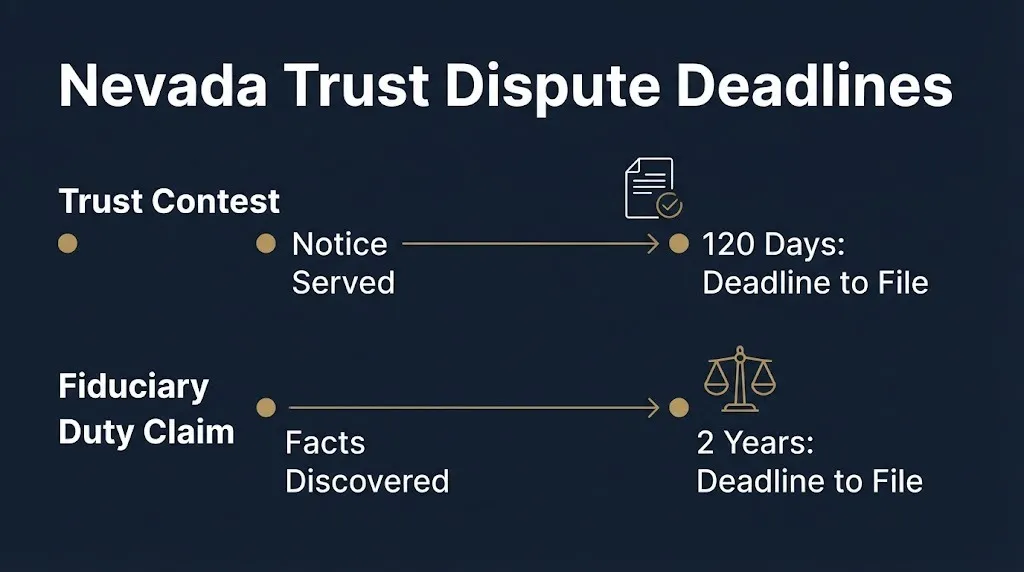
- A trust contest generally must be filed within 120 days of proper notice, one of the shortest windows in the country.
- Breach of fiduciary duty claims not involving fraud now face a 2-year limitations period under SB 404, running from discovery of the facts.
If you’re searching for a trust litigation lawyer in Las Vegas, you’re likely a beneficiary who suspects a trustee mismanaged assets, or a family member who wants to challenge a trust amendment signed shortly before someone died. Either way, Nevada’s deadlines move faster than most people expect.
This guide breaks down what Nevada trust litigation actually involves, which statutes control your timeline, and what to check before you hire someone to represent you. One detail surprises most readers: Nevada courts will enforce a no-contest clause even without bad faith, unless your challenge fits a specific statutory safe harbor.
The Facts
| What You Need to Know | Verified Answer |
|---|---|
| Governing statutes | NRS Chapter 163 (Uniform Trust Code), 164 (administration), 165 (fiduciary accounts), 153 (testamentary trusts) |
| Primary Clark County venue | Eighth Judicial District Court, Probate Division |
| Trust contest deadline | 120 days from proper notice under NRS 164.021, once notice is served |
| Breach of fiduciary duty deadline | 2 years from discovery, for non-fraud claims, under 2025’s SB 404 |
| No-contest clause enforceable | Yes, generally, unless a statutory safe harbor under NRS 163.00195 applies |
| Typical attorney fee structure | Hourly billing is standard for trust litigation; contingency fees are less common and case-dependent |
| Average case cost or fund size | Not applicable, this is not a class action or settlement matter |
Every dispute is fact-specific. Treat any deadline or dollar figure you see elsewhere as a starting point, not a substitute for reading your own trust’s notice paperwork.
What is trust litigation in Nevada
Trust litigation is the court process for resolving disputes over how a trust was created, amended, or administered. It covers everything from validity challenges to fights over a trustee’s conduct.
In Clark County, most trust matters route through the Eighth Judicial District Court’s Probate Division. Outside Clark County, petitions generally go to the district court of the county where the trust is administered or where the settlor lived.

Four statutory chapters do most of the work in a Nevada trust case:
- NRS 163, the Nevada Uniform Trust Code, covering creation, modification, and termination.
- NRS 164, administration of trusts, covering trustee duties and required accountings.
- NRS 165, fiduciary accounts and reporting obligations.
- NRS 153, testamentary trusts created under a will.
These statutes create a defined, technical path. Deadlines are short, and missing one can end a valid claim before it’s heard.
Who needs a trust litigation lawyer in Las Vegas
Trust litigation lawyers represent either side of a dispute: beneficiaries challenging a trust or a trustee, and trustees or estate planners defending a valid trust against a challenge.
People who typically need representation include:
- Beneficiaries who suspect a trustee mismanaged or misused trust assets.
- Family members who believe a trust amendment was signed under undue influence or while the settlor lacked capacity.
- Trustees facing an accusation of breach of fiduciary duty.
- Beneficiaries who received a notice starting the 120-day contest clock and need to evaluate it fast.
- Anyone weighing whether a legal challenge could trigger a no-contest clause in the trust.
A trust dispute isn’t automatically hostile litigation from day one. Many start as a request for information or an accounting, and only escalate if the trustee doesn’t respond.
What does trust litigation cost in Las Vegas
There’s no single verified statewide fee schedule, so not yet determined is the honest answer for any specific dollar amount. Costs depend on the complexity of the trust, how contested the facts are, and whether the case settles or goes to a hearing.
What is confirmed is the general fee structure used in this practice area.
| Fee Model | How It Typically Works |
|---|---|
| Hourly billing | The standard model for most trust litigation matters in Nevada |
| Flat fee | Sometimes used for narrow, defined tasks like a single accounting review |
| Contingency | Less common in trust disputes than in personal injury cases, and case-dependent |
| Fee-shifting from the trust | Courts can sometimes order fees paid from trust assets, depending on the outcome and the trust’s terms |
Think of hiring a trust litigation attorney like hiring a contractor for a home repair with unknown scope. The initial consultation should clarify the likely fee model before work begins, not after.
Key Takeaway: Nevada trust litigation runs on statute-driven deadlines, not open-ended timelines, so the type of dispute you have determines how fast you need a lawyer.
How to find a qualified trust litigation attorney in Las Vegas
Finding the right attorney means checking specific qualifications, not just searching a directory listing.
- Confirm the attorney is licensed and in good standing with the State Bar of Nevada.
- Ask how many trust or probate litigation matters they’ve handled in the Eighth Judicial District Court specifically.
- Ask whether they handle both trust contests and fiduciary duty claims, since the statutes and strategy differ.
- Request a clear explanation of their fee structure in writing before you sign an engagement letter.
- Ask how they calculate your specific deadline, since it depends on when and how you were noticed.
- Check whether they’ve litigated cases involving your specific issue, such as undue influence, a no-contest clause, or a trustee accounting dispute.
- Ask about their approach to settlement versus litigation, since many trust disputes resolve before a hearing.
A consultation is also your chance to see whether the attorney explains Nevada’s specific statutes clearly, rather than giving generic advice that could apply in any state.
How long do you have to contest a trust in Nevada
Nevada gives you 120 days to contest a trust, but that clock only starts once you receive proper notice under NRS 164.021.
The notice must include specific required content: the settlor’s identity, the trustee’s contact information, and a boldface warning statement about the 120-day deadline. The Nevada Supreme Court has already ruled on what counts as adequate notice.
In In re Estate of Horst Revocable Trust, the state’s highest court held that a trustee’s notice must include all trust provisions affecting the beneficiary to actually trigger the 120-day period. If the notice was incomplete, the clock may not have started at all.
What can pause or prevent the 120-day clock from starting:
- The notice didn’t include all required statutory content.
- The person contesting proves they never received actual notice.
- The notice omitted a relevant trust amendment affecting that beneficiary.
If you’re unsure whether you were properly noticed, that question alone is worth an attorney consultation before you assume you’re out of time.
How long do you have to sue a trustee for breach of fiduciary duty
For most breach of fiduciary duty claims that don’t involve fraud, Nevada now applies a 2-year statute of limitations under Senate Bill 404. The clock runs from when the aggrieved party discovered, or reasonably should have discovered, the facts giving rise to the claim.
This is a legislative change reported in Nevada private wealth practice coverage for 2026, part of a broader package that also touched grantor trust tax reimbursement rules. It shortens the exposure window compared to older, longer limitations periods that applied to some fiduciary claims.
Claims involving fraud or intentional misrepresentation are treated differently and are not subject to this shortened 2-year window. If your case involves an allegation of intentional wrongdoing, the applicable deadline calculation changes.
Key Takeaway: Two separate clocks can apply to the same trust dispute, a 120-day window for contesting validity and a 2-year window for fiduciary duty claims, so identifying which one applies to your facts matters immediately.
Reality Check
No legitimate attorney or court will pressure you into signing an engagement agreement the same day you call, and a real Nevada trust notice always states its deadline in bold, separate text under NRS 164.021, not buried in fine print. Be cautious of anyone who claims a fixed dollar recovery before reviewing your specific trust documents, since trust litigation outcomes depend entirely on the facts of each case, not a standard payout.
What types of trust disputes get filed in Nevada courts
The cases Nevada courts see most often fall into a small number of recurring categories.
Trust contests (validity challenges): These argue the trust, or an amendment, should be set aside due to lack of capacity, undue influence, fraud, or improper execution at signing.
Breach of fiduciary duty: A trustee is legally required to act in beneficiaries’ best interests. Claims allege the trustee mismanaged assets, self-dealt, or failed required accountings.
Accounting disputes: Beneficiaries petition the court under NRS 165 when a trustee won’t provide a required accounting of trust assets and transactions.
Trust interpretation disputes: These arise when trust language is genuinely ambiguous and the parties disagree on what the settlor intended.
No-contest clause disputes: These focus on whether a beneficiary’s legal action triggers forfeiture under NRS 163.00195, or fits a protected safe harbor.
Are no-contest clauses enforceable in Nevada trusts
Yes, Nevada law specifically directs courts to enforce no-contest clauses in trusts under NRS 163.00195, generally without regard to the beneficiary’s good or bad faith.
That said, the statute carves out protected actions that don’t count as a “contest,” even if the trust’s language is broad. A beneficiary generally does not forfeit their share simply by:
- Seeking a court’s interpretation of ambiguous trust language.
- Enforcing the clear and unambiguous terms of the trust.
- Bringing a good-faith, probable-cause challenge to the trust’s validity itself.
Nevada courts have also addressed related issues under NRS 137.005 for wills, where similar safe harbors exist for testamentary trusts. Because enforcement is strict outside these carve-outs, anyone considering a challenge to a trust with a no-contest clause should get the language reviewed before filing anything.
What happens after you file a trust litigation petition in Nevada
Filing a petition under NRS 164.015 gives the district court jurisdiction over the internal affairs of the trust, including administration, distribution, and disputes between trustees and beneficiaries.
If an interested person contests a revocable trust’s validity, that person becomes the plaintiff and the trustee is the defendant, a specific procedural structure set out in the statute. The court can consolidate a trust contest with a related will contest petition when both exist.
General next steps once a petition is filed:
- The court reviews the petition and sets initial proceedings.
- Both sides typically exchange documents and evidence relevant to the dispute.
- A hearing may be scheduled, and in some contest matters a jury may issue an advisory opinion.
- The court issues a ruling, which is appealable to the Nevada Supreme Court.
How does Nevada’s trust-friendly reputation affect litigation
Nevada is frequently described in legal industry coverage as a “trust-forward” jurisdiction, largely because of its flexible decanting authority under NRS 163.556 and its spendthrift trust protections under NRS 166.
That flexibility cuts both ways in litigation. Broad trustee powers can make it harder to challenge routine administrative decisions, but they don’t eliminate the underlying fiduciary duties courts apply, which Nevada courts have grounded in the Restatement (Third) of Trusts.
Spendthrift trust disputes bring their own limitations questions. In litigation referencing NRS 166.170, courts have had to determine whether that statute’s limitations period applies at all to a given claim, showing how fact-specific these deadline questions really are.
Key Takeaway: Nevada’s flexible trust statutes make it an attractive jurisdiction to create a trust, but that same flexibility means disputes often turn on technical statutory interpretation rather than general fairness arguments.
What Happens Next
If you just received a trustee’s notice: confirm the date of service and calendar 120 days from that date immediately.
If you suspect a breach of fiduciary duty: document when you first discovered the facts, since that date starts the 2-year clock under SB 404.
Before filing anything: have an attorney review whether a no-contest clause in the trust could affect your specific planned action.
Once a petition is filed: expect a period of document exchange and potential hearings in the Eighth Judicial District Court’s Probate Division, with timing varying case by case.
Frequently Asked Questions
How long do I have to contest a trust in Las Vegas?
Nevada generally gives you 120 days to contest a trust once you’ve received proper notice under NRS 164.021.
The notice must meet specific statutory requirements, or the deadline may not have legally started.
Do I need a lawyer for a trust dispute in Nevada?
Nevada trust statutes are technical and deadline-driven, so most beneficiaries and trustees retain an attorney experienced in NRS Chapters 163 through 165.
Self-representation is legally possible, but the short contest window makes early legal review important.
What court handles trust litigation in Las Vegas?
Most Clark County trust matters are filed in the Eighth Judicial District Court’s Probate Division.
Cases outside Clark County are generally filed where the trust is administered or where the settlor resided.
Can a no-contest clause stop me from challenging a trust in Nevada?
A no-contest clause is generally enforceable under NRS 163.00195, but statutory safe harbors protect certain actions, like seeking interpretation of ambiguous terms.
A good-faith challenge based on probable cause that the trust is invalid may also be protected, depending on the facts.
How much does a trust litigation attorney cost in Las Vegas?
There’s no single confirmed statewide rate, since cost depends on case complexity and the specific firm’s billing model.
Hourly billing is the standard structure in this practice area, and some fees may be paid from trust assets depending on the outcome.
What counts as breach of fiduciary duty by a trustee in Nevada?
A trustee breaches fiduciary duty by failing to act in beneficiaries’ best interests, which can include mismanaging assets, self-dealing, or refusing a required accounting.
Most non-fraud breach claims now face a 2-year statute of limitations under SB 404, running from discovery of the facts.
What is the difference between a trust contest and a fiduciary duty claim?
A trust contest challenges whether the trust or an amendment is valid, based on issues like capacity or undue influence at signing.
A fiduciary duty claim challenges how a trustee managed the trust after it became effective, and the two follow different statutory deadlines.
Can I get a trustee removed in Nevada?
Nevada courts can address trustee removal and related relief through petitions under NRS 164.015 and related sections of the Uniform Trust Code.
Whether removal is appropriate depends on the specific misconduct alleged and the evidence presented to the court.
Trust deadlines in Nevada move fast, and the 120-day contest window doesn’t wait for you to feel ready. If you received a trustee’s notice or suspect a fiduciary breach, confirm your exact deadline and consult a Nevada-licensed trust litigation attorney before that window closes.