Tax Litigation Lawyer in 2026: What the Court Record Actually Shows About Tax Dispute Resolution
Quick Answer
- Is it legit? Yes, tax litigation lawyers handle disputes through FBR ADR committees, Commissioner Appeals, ATIR, and High Court writ petitions.
- How much could you recover? Not yet determined; amounts depend on the specific assessment, penalties, and whether ADR or litigation succeeds.
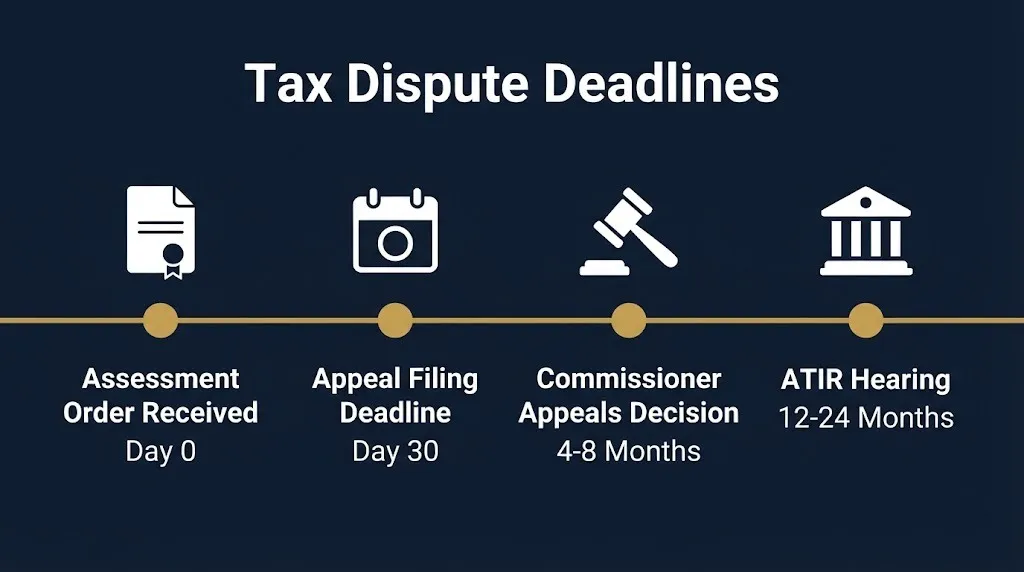
- Most important deadline: Appeals must generally be filed within 30 days of receiving an assessment order or demand notice.
The tax litigation process in Pakistan offers multiple paths for challenging FBR assessments, but the timeline you’re working with is unforgiving. If you’ve received a demand notice, the difference between resolving your dispute and facing coercive recovery often comes down to whether you file within the statutory window. That window is typically 30 days from receipt of the order.
This article covers what a tax litigation lawyer actually does in 2026, how much the process costs, which forums handle different disputes, and what the court record shows about realistic outcomes. You’ll also find verified timelines and fee ranges from practitioners currently working these cases.
The Facts
| Case Type | Tax assessment challenges, FBR audit defense, recovery proceedings |
| Status | Active across Commissioner Appeals, ATIR, High Courts, FBR ADR |
| Fund Size | Not applicable (individual taxpayer disputes) |
| Est. Per Person | Varies; legal fees range from PKR 100,000 to PKR 400,000+ |
| Claim Deadline | Generally 30 days from assessment order or demand notice |
| Administrator | FBR, Commissioner Inland Revenue (Appeals), ATIR, High Courts |
| Proof Needed | Assessment order, demand notice, evidence supporting your position |
What Does a Tax Litigation Lawyer Do in 2026?
A tax litigation lawyer represents taxpayers in disputes with the Federal Board of Revenue and provincial tax authorities, handling everything from audit responses to constitutional petitions. The work spans administrative proceedings, appellate tribunals, and High Court writs .

The role divides into two main phases. At the administrative level, your lawyer responds to FBR notices, prepares stay applications against recovery, and represents you before the Commissioner Inland Revenue. If that fails, the litigation phase begins with appeals to the Appellate Tribunal Inland Revenue and potentially the High Courts .
In 2026, lawyers also navigate the FBR’s Alternative Dispute Resolution mechanism. This allows taxpayers to resolve disputes through a committee rather than prolonged litigation. The committee includes FBR officials, a retired judge, and a taxpayer-nominated professional .
How Much Do Tax Litigation Lawyers Cost in Pakistan?
Tax litigation fees in Pakistan vary by matter complexity and forum, with practitioners reporting ranges from PKR 100,000 for ADR applications to over PKR 400,000 for ATIR representation. Single notice responses typically cost less than full audit defense .
Here’s what the current fee structure looks like based on practitioner disclosures:
| Matter Type | Typical Fee Range | Timeline |
|---|---|---|
| Single notice reply | Fixed fee | 7-30 days |
| FBR audit defense | Stage-based | 6-12 months |
| Commissioner Appeals | PKR 150,000-250,000 | 4-8 months |
| ATIR appeal | PKR 150,000-400,000 | 12-24 months |
| High Court reference | Stage-based | 18-36 months |
Initial consultations range from free promotional offers to PKR 8,000 for a 60-minute session. Stay applications, which must be filed urgently to prevent bank attachment, typically cost less than full appeal representation .
Key Takeaway: Tax litigation costs scale with forum level, but the 30-day appeal deadline matters more than fee shopping because missing it forfeits your right to be heard.
What Is the FBR Alternative Dispute Resolution Process?
The FBR’s Alternative Dispute Resolution mechanism is a committee-based settlement process that lets taxpayers resolve disputes without going through full tribunal or court litigation. It operates under the Income Tax Ordinance 2001 and Sales Tax Act 1990 .
A taxpayer submits an application to FBR specifying the dispute and requested resolution. FBR constitutes a committee with an FBR member, a retired judge, and a taxpayer-nominated professional. The committee examines the matter and records recommendations that become binding once the taxpayer withdraws related litigation .
The ADR route makes sense when you want faster resolution than ATIR’s 12 to 24-month backlog allows. However, not all disputes qualify. FBR retains discretion over committee composition, and uptake has been mixed. Taxpayers should weigh ADR against the strength of their case on regular appeal .
A June 2026 Sindh High Court order confirmed that recovery proceedings remain in abeyance while ADR is pending. The court disposed of a petition after the department stated no coercive measures would follow during ADR, with interim orders continuing until conclusion .
How Do You File a Tax Appeal in Pakistan?
Filing a tax appeal requires meeting strict statutory deadlines and submitting the right documents to the correct forum. The first appellate level is the Commissioner Inland Revenue (Appeals), followed by the ATIR and then High Courts .
Here’s the step-by-step process:
- Receive and review the assessment order. Note the date of receipt, which starts the 30-day clock.
- File a stay application if needed. This prevents coercive recovery while your appeal proceeds.
- Prepare the appeal memorandum. Include grounds of appeal and supporting evidence.
- Submit to Commissioner Inland Revenue (Appeals). File within 30 days of order receipt.
- Attend hearings. First appellate hearings typically occur 4-6 months after filing.
- Escalate to ATIR if needed. Second appeals face 12-24 month timelines due to backlog.
- File High Court reference only on pure questions of law. This adds 18-36 months.
Missing the 30-day deadline forfeits your right to be heard at that stage, triggering ex parte procedures where FBR decides without your input .
Reality Check: No legitimate tax lawyer guarantees a specific outcome or asks you to pay “recovery fees” upfront. Tax litigation is about procedural compliance and evidentiary strength, not shortcuts. If someone promises to make your tax debt disappear for a percentage, that’s a scam.
Which Forum Handles Your Tax Dispute?
Forum selection depends on the dispute type, amount, and whether you’ve exhausted lower appellate remedies. The Commissioner Appeals handles most first-level challenges, while ATIR and High Courts take specific categories .
The Commissioner Inland Revenue (Appeals) is your first stop for assessment disputes under Section 127 of the Income Tax Ordinance. This forum handles amendment orders, penalty challenges, and recovery disputes. Hearings typically occur 4 to 6 months after filing, with decisions often issued within 8 months .
The Appellate Tribunal Inland Revenue handles second appeals from Commissioner decisions. ATIR’s primary challenge is backlog, with hearings delayed 12 or more months. During pendency, tax demands remain enforceable unless stayed .
High Court references under Section 133 are rare and limited to pure questions of law. Constitutional petitions under Article 199 challenge illegal recovery, unlawful freezing, or procedural irregularities. These proceedings add 18 to 36 months to resolution .
What Happens After the Federal Constitutional Court’s Super Tax Ruling?
The Federal Constitutional Court’s January 28, 2026 judgment in M/s DG Khan Cement Company Limited v. Federation of Pakistan upheld super tax provisions under Sections 4B and 4C as intra vires the Constitution. This decision reversed earlier High Court rulings that had struck down Section 4C .
The FCC declared Section 4C a standalone tax on income, independent of the tax levied under Section 4. This means super tax applies as enacted for tax year 2015 and onwards at prescribed rates .
However, the ruling did not resolve everything. A March 2026 Islamabad High Court judgment held that no right of adjustment of withholding taxes against Section 4C liability can be claimed. Commentators argue this decision ignored statutory provisions under Sections 4C(5A), 147(10), and 170(3)(a) that mandate refund or adjustment of excess tax paid .
The practical effect: corporate taxpayers facing super tax demands must navigate conflicting interpretations about refund rights. A constitutional petition filed by TRG Pakistan Limited in April 2026 challenged coercive recovery during pending rectification applications, showing the issue remains active in High Courts .
How Long Does Tax Litigation Take in 2026?
Tax litigation timelines in Pakistan range from 7 days for simple notice responses to over 36 months for High Court references. The forum you’re in determines the wait, and ATIR backlog is the primary driver of delays .
| Forum | Typical Timeline |
|---|---|
| Single notice reply | 7-30 days |
| Commissioner Appeals | 4-8 months |
| ATIR | 12-24 months |
| High Court reference | 18-36 months |
| FBR ADR | 60-180 days |
ATIR’s backlog means hearings scheduled for 2026 may not occur until 2027 or later. During this pendency, your tax demand remains enforceable unless you’ve obtained a stay .
The FBR ADR mechanism offers the fastest resolution path at 60 to 180 days, but eligibility is limited and FBR retains discretion over committee composition .
What Are the Risks of Tax Litigation?
The biggest risk in tax litigation is missing statutory deadlines, which forfeits your right to contest the assessment. Other risks include continued enforcement during appeal, cost accumulation, and adverse precedent if your case reaches High Court .
FBR has statutory authority under the Income Tax Ordinance 2001 to attach bank accounts, freeze deposits, and initiate recovery if tax remains unpaid 30 days after an assessment becomes final. A timely stay application to ATIR or the High Court is your remedy, but stay applications become more difficult once attachment occurs .
Costs accumulate at each stage. A case that starts with a simple notice response can escalate to ATIR and High Court proceedings costing several hundred thousand rupees over two or three years. Taxpayers should assess whether the disputed amount justifies the expense .
The July 2026 Lahore Tax Bar Association complaint about alleged backdating and unsigned ATIR orders highlights procedural risks. The Committee requested independent investigation into an order rejecting a condonation application that was allegedly issued over a month after its stated date .
Key Takeaway: The 30-day appeal deadline is the single most important fact in tax litigation; missing it forfeits your rights regardless of case merit.
What Happens Next
Expected Q4 2026: FBR ADR committees continue processing pending applications with 60-180 day statutory timelines.
Expected Q1 2027: ATIR hearings scheduled in 2026 backlog work through the system, with 12-24 month delays persisting.
Expected 2027: High Court references on super tax refund and adjustment issues work through appellate queues following the FCC ruling.
Ongoing: Stay applications remain critical for taxpayers facing coercive recovery during appeal pendency.
Frequently Asked Questions
Is tax litigation worth the cost?
It depends on the disputed amount and the strength of your legal position. If the tax demand exceeds PKR 500,000 and you have documentary evidence supporting your position, litigation or ADR may be justified. For smaller amounts, the fee-to-recovery ratio may not favor proceeding.
Can I file a tax appeal without a lawyer?
You can file in person before Commissioner Appeals and ATIR, but the procedural requirements, statutory deadlines, and evidence standards make professional representation advisable. FBR ADR applications also benefit from legal drafting expertise.
What happens if I miss the 30-day appeal deadline?
Missing the deadline forfeits your right to be heard at that stage, and FBR may proceed with ex parte determination. Condonation of delay requires strong, justifiable legal grounds, which courts grant sparingly .
Can FBR attach my bank account during appeal?
Yes, unless you obtain a stay. FBR has statutory authority to attach bank accounts and freeze deposits if tax remains unpaid 30 days after assessment becomes final. Stay applications should be filed before attachment notices issue .
How do I apply for FBR’s ADR mechanism?
Submit an application to FBR specifying the dispute, statement of facts, and points for resolution. Include copies of the assessment order under challenge, evidence supporting your position, and details of any pending appeal. FBR then constitutes a committee .
Can overseas Pakistanis pursue tax litigation from abroad?
Yes, via a Mission-attested power of attorney to a Pakistani lawyer or trusted representative. The ADR mechanism and appellate forums accept representation through authorized counsel .
What’s the difference between tax litigation and tax ADR?
Tax litigation proceeds through Commissioner Appeals, ATIR, and High Courts with adversarial hearings and formal judgments. ADR uses a committee-based negotiation process aiming for settlement rather than judicial determination. ADR is faster but discretionary .
How do I check the status of my tax appeal?
Contact your representing lawyer or the relevant forum’s registry. Commissioner Appeals and ATIR maintain cause lists and case files accessible to authorized representatives. FBR’s online systems may provide limited tracking for ADR applications.