Indirect Compensation 2026: Definition, Types, and the $8 Million NextEra Settlement
Quick Answer
- Indirect compensation means non-cash benefits like health insurance, retirement plans, and paid leave that an employer pays for on your behalf.
- It is distinct from direct compensation, which is your salary, hourly wages, bonuses, and commissions.
- An $8 million settlement against NextEra Energy resolved claims that the company failed to disclose indirect compensation paid to Fidelity, with average payouts of about $400 per employee.
What Is Indirect Compensation and How Does It Work?
Indirect compensation is the value of non-wage benefits your employer provides, including retirement contributions, health insurance premiums, and paid time off. It is called “indirect” because the money does not land in your paycheck as cash.
The U.S. Department of Labor treats indirect compensation as a critical component of total compensation for retirement plan reporting. Under ERISA Schedule C rules, plan service providers must disclose indirect compensation, which includes commissions, finder’s fees, float revenue, and soft dollar payments.

Think of it like this. Your direct pay is the cash you see. Indirect compensation is the money your employer spends to keep you insured, retired, and rested. Both count toward your total compensation.
What Is the Difference Between Direct and Indirect Compensation?
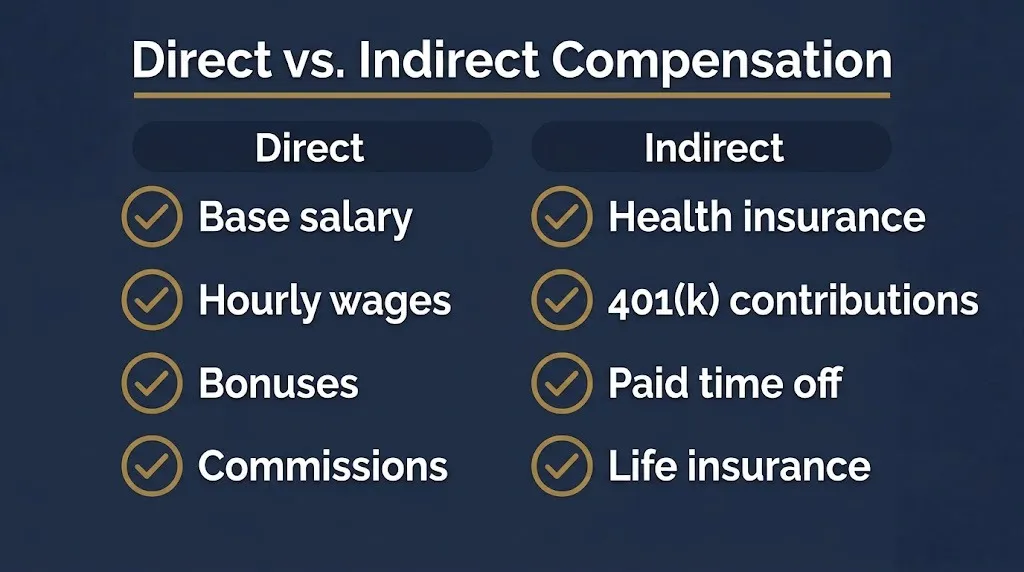
Direct compensation is the money you receive as wages, salary, bonuses, or commissions. Indirect compensation is everything else of value that your employer provides, from health insurance to retirement matching to paid vacation days.
Here is a breakdown of common examples:
| Direct Compensation | Indirect Compensation |
|---|---|
| Base salary | Health insurance premiums |
| Hourly wages | 401(k) or pension contributions |
| Bonuses | Paid time off and holidays |
| Commissions | Life and disability insurance |
| Overtime pay | Employee assistance programs |
| Tuition reimbursement |
Direct compensation is subject to income tax and payroll taxes. Many forms of indirect compensation are either tax-deferred or tax-exempt, which is why employers and employees both value them.
What Types of Indirect Compensation Do Employers Offer?
Employers offer several categories of indirect compensation, ranging from statutory benefits to voluntary perks. The Canada Human Rights Commission breaks these into benefits, paid time off, and indirect payments.
Common types include:
- Health and dental benefits: Medical, prescription, vision, and dental coverage
- Disability coverage: Short-term and long-term disability insurance
- Life insurance: Employer-paid life and accidental death coverage
- Retirement plans: 401(k), pension, or group RRSP contributions
- Paid time off: Vacation, holidays, sick leave, and floating days
- Employee assistance programs: Counseling and wellness services
- Flexible benefit credits: Employer-funded accounts for benefits selection
Some employers also offer non-monetary compensation like stock purchase discounts, childcare services, or professional development opportunities.
Key Takeaway: Indirect compensation covers the benefits your employer pays for but you do not see as cash, including insurance, retirement, and paid leave.
Why Did NextEra Energy Pay $8 Million Over Indirect Compensation?
NextEra Energy agreed to pay $8 million to settle a class action claiming the company failed to properly disclose indirect compensation paid to Fidelity, its retirement plan recordkeeper. The settlement covers approximately 20,000 employees, with average payouts of about $400 per worker.
The lawsuit alleged that NextEra’s 2016 and 2018 compensation disclosures listed Fidelity’s indirect compensation as “$0” and provided only a formula rather than an actual amount. The plaintiffs argued this was insufficient disclosure under ERISA rules, and that NextEra “did not know the true amount of compensation paid to Fidelity”.
NextEra did not admit liability as part of the settlement. The company agreed to establish a settlement fund for affected employees.
The case was filed in the U.S. District Court for the Southern District of Florida. Plaintiffs’ attorneys’ fees were capped at 33% of the gross settlement amount.
Reality Check: No one texts you offering to release NextEra settlement funds for a fee. The settlement was administered through a court-approved process. Filing is always free. If someone demands payment to “process” your claim, it is a scam.
How Is Indirect Compensation Calculated for Pay Equity?
Indirect compensation is calculated based on the actual cost to the employer, not the perceived value to the employee. The Canada Human Rights Commission guidance says calculations should use employer contributions and premiums.
For health and dental benefits, the value can be calculated using single coverage premium amounts. For paid time off, value is linked to the employee’s salary or employer contributions to the leave plan. For indirect payments, the calculation should be based on cost to the employer.
The same approach should be used across all job classes for consistency. If you use single coverage premiums for one job class, use them for all.
This matters for pay equity laws that require employers to calculate total compensation. If indirect compensation is undervalued, it can skew pay equity analysis and hide disparities.
How Does Indirect Compensation Affect Your Taxes?
Indirect compensation has different tax treatment depending on the benefit. Health insurance premiums paid by your employer are generally excluded from your taxable income. Employer 401(k) contributions are tax-deferred until withdrawal.
Paid time off is not taxed as a separate benefit because your salary already reflects your total pay. Disability and life insurance premiums may be taxable if the employer pays them and the benefit exceeds certain limits.
The distinction between direct and indirect compensation matters for tax withholding. Direct compensation is subject to income tax, Social Security, and Medicare taxes. Many indirect benefits receive favorable tax treatment, which is why employers use them to attract talent.
What Are the Legal Risks Around Indirect Compensation?
The biggest legal risk is failure to disclose indirect compensation in retirement plan filings. ERISA requires plan fiduciaries to report all compensation paid to service providers, including indirect compensation.
The NextEra case shows what happens when disclosures are incomplete. Plaintiffs alleged the company reported “$0” when it did not know the actual amount. That gap led to an $8 million settlement.
Employers also face pay equity risks. If indirect compensation is not properly valued, it can create or hide pay gaps between job classes. The Canadian Pay Equity Act requires employers to calculate total compensation, including indirect elements, in dollars per hour.
Third risk: tax misclassification. If per diem payments are treated as non-taxable reimbursements when they are really wages, employers can face IRS penalties and FLSA liability.
What Happens Next for Indirect Compensation Rules in 2026?
Here is the expected timeline for indirect compensation rules:
Ongoing 2026: ERISA Schedule C reporting requirements remain in effect. Plan service providers must disclose indirect compensation.
Ongoing 2026: Pay equity laws in Canada and some U.S. states require total compensation calculations that include indirect elements.
Late 2026: IRS and DOL continue enforcement of wage classification rules that distinguish reimbursements from wages.
January 2027: New tax year begins. Indirect compensation tax treatment remains unchanged for most benefits.
Frequently Asked Questions
What is indirect compensation?
Indirect compensation is the value of non-wage benefits your employer provides, including health insurance, retirement contributions, and paid time off.
What is the difference between direct and indirect compensation?
Direct compensation is cash wages, salary, and bonuses. Indirect compensation is benefits like insurance, retirement plans, and paid leave.
Is indirect compensation taxable?
It depends on the benefit. Health insurance premiums are generally excluded from income. 401(k) contributions are tax-deferred. Some disability and life insurance benefits may be taxable.
What was the NextEra Energy indirect compensation settlement?
NextEra paid $8 million to settle claims that it failed to disclose indirect compensation paid to Fidelity. About 20,000 employees received an average of $400 each.
How is indirect compensation calculated?
Based on the actual cost to the employer, using employer contributions, premiums, and allocated benefit amounts.
Why do employers offer indirect compensation?
To attract and retain talent, reduce turnover, and provide tax-advantaged benefits. Indirect compensation can also help employers compete when direct pay increases are capped.
What are examples of indirect compensation?
Health insurance, dental coverage, retirement plan contributions, paid vacation, sick leave, life insurance, disability coverage, and employee assistance programs.
Does indirect compensation count toward pay equity?
Yes. Pay equity laws in Canada and some U.S. jurisdictions require total compensation calculations that include indirect elements like benefits and paid time off.
Check Your Benefits Statement and Know Your Total Compensation
Indirect compensation is real money your employer spends on you. The NextEra settlement shows that failure to disclose it can cost millions. Check your benefits statement and retirement plan disclosures to see what your employer pays on your behalf.
If you are evaluating a job offer, look beyond the salary. Total compensation includes benefits, retirement matching, and paid leave. Those numbers matter just as much as your paycheck.