Civil Litigation in 2026: What It Means, What It Costs, and When You Need an Attorney
Quick Answer
- Civil litigation means resolving a non-criminal legal dispute through court, and less than 1% of federal civil cases go to trial.
- Attorney costs vary: $150 to $550 per hour, or 25% to 40% contingency in injury and consumer cases.
- Federal civil filing fee is a confirmed $405, current as of the December 2023 fee schedule still in effect in 2026.
You searched “civil litigation” because something happened, a contract dispute, an unpaid debt, a property fight, and you’re trying to understand what the process actually involves. Here’s the direct answer: civil litigation is the formal legal process for resolving disputes between private parties, without criminal charges involved.
This affects far more people than most realize. Federal courts recorded over 346,000 civil case terminations in the year ending September 2025, yet barely 1,681 of those cases ever reached trial.
This guide covers what civil litigation actually costs, how long it takes, and how to find the right attorney, using verified fee schedules and federal court data instead of guesswork. One detail that surprises most people: nearly 95% of civil cases settle before anyone sets foot in a courtroom.
The Facts
| Definition | The legal process for resolving non-criminal disputes between private parties |
| Federal filing fee | $405 ($350 statutory plus $55 administrative, per U.S. Courts fee schedule) |
| Trial rate | Roughly 0.4% of terminated federal civil cases reach trial (FY2025) |
| Settlement rate | Approximately 95% of civil cases resolve before trial, per multiple legal-industry studies |
| Attorney hourly rate | $150 to $550 per hour, national average around $349 (2025 Clio data) |
| Contingency fee range | 25% to 40% of recovery, common in injury and consumer cases |
| Retainer range | $1,000 to $15,000, depending on case complexity |
| Median time to disposition | Roughly 6 to 9 months for most federal civil cases (varies by district) |
Nothing above is estimated without a source. Rates and fees vary by state and firm, and this table reflects national ranges, not a fixed number.
What Is Civil Litigation, Exactly?
Civil litigation is the legal process of resolving disputes between individuals, businesses, or organizations through the court system, without criminal penalties involved. It covers contract disputes, property conflicts, personal injury claims, and employment issues.
Unlike criminal law, where the government prosecutes someone for breaking the law, civil litigation involves private parties seeking money, an action, or a court order. One party sues, one party defends, and a judge or jury decides.
Key Takeaway: Civil litigation is about resolving private disputes for compensation or a specific outcome, not punishing a crime.
What Is a Civil Litigation Attorney?
A civil litigation attorney is a lawyer who represents clients in non-criminal lawsuits, handling everything from initial investigation through trial or settlement. They can represent either side, the person suing or the person being sued.
Their core responsibilities span the entire legal process:
- Investigating the facts and gathering evidence
- Drafting and filing legal pleadings
- Managing discovery, including depositions and document requests
- Negotiating settlements on the client’s behalf
- Representing clients at trial if the case doesn’t settle
- Handling post-trial motions or appeals if needed
Civil litigation attorneys often specialize within the field, focusing on areas like contract disputes, personal injury, real estate, or employment law, even though the broader label covers all of them.
What Does “Civil Litigation Attorney” Actually Mean in Practice?
The term “civil litigation attorney” means a licensed lawyer authorized to represent clients in court for non-criminal disputes, distinct from a transactional lawyer who mainly drafts contracts. The distinction matters because not every lawyer litigates.
Some attorneys spend their careers negotiating deals and never step into a courtroom. A civil litigation attorney’s job specifically includes appearing before judges, arguing motions, and, when necessary, trying a case in front of a jury.
Reality Check: Hiring a civil litigation attorney does not mean your case is heading to trial. The vast majority settle first. If someone pressures you into an expensive retainer by implying a courtroom fight is guaranteed, get a second opinion before signing anything.
How Much Does a Civil Lawsuit Attorney Cost?
Civil lawsuit attorney costs range from $150 to $550 per hour, or 25% to 40% of any recovery under a contingency arrangement. Which structure applies depends heavily on the type of case.
| Fee Structure | Typical Range | Common Use Case |
|---|---|---|
| Hourly billing | $150 to $550/hour | Contract disputes, business litigation, defense work |
| Contingency fee | 25% to 40% of recovery | Personal injury, some consumer claims |
| Flat fee | $500 to $5,000 | Simple, well-defined matters |
| Retainer | $1,000 to $15,000 | Complex or ongoing litigation |
The national average hourly rate sat at roughly $349 in 2025, according to Clio’s Legal Trends Report, with corporate and intellectual property litigation running highest. California civil litigation attorneys often charge $350 to $550 per hour, reflecting the state’s higher cost of legal services.
A retainer isn’t the total cost. It’s a deposit the attorney draws down as they bill hours, and it often needs replenishing once exhausted.
Key Takeaway: Contingency fees mean you pay nothing upfront, but hourly billing gives you more control over which tasks the attorney spends time on.
How Much Does It Cost to File a Civil Lawsuit?
Filing a civil lawsuit in federal district court costs $405, made up of a $350 statutory fee and a $55 administrative fee. This has been the confirmed federal rate since the fee schedule took effect on December 1, 2023, and remains current in 2026.
State court fees vary significantly. California’s 2026 statewide civil fee schedule, for example, charges:
| Case Type | Filing Fee |
|---|---|
| Unlimited civil case (over $35,000) | $435 |
| Limited civil, $10,000 to $35,000 | $370 |
| Limited civil, under $10,000 | $225 |
If you can’t afford the fee, both federal and state courts allow a fee waiver application for plaintiffs who show financial hardship. In federal court, this is done through an in forma pauperis declaration.
How Do You File a Civil Lawsuit?
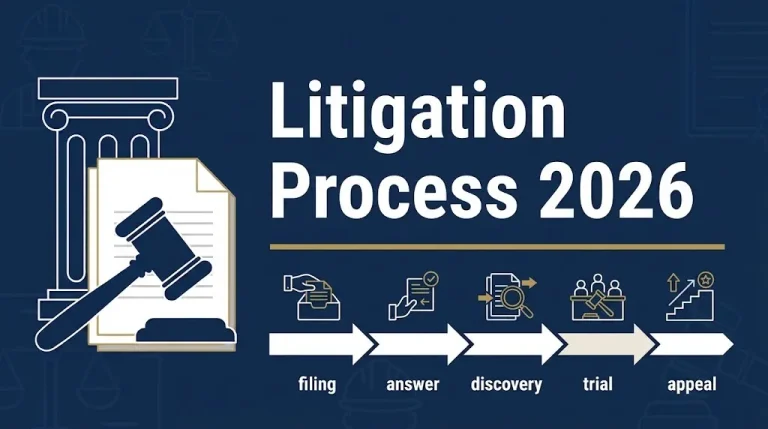
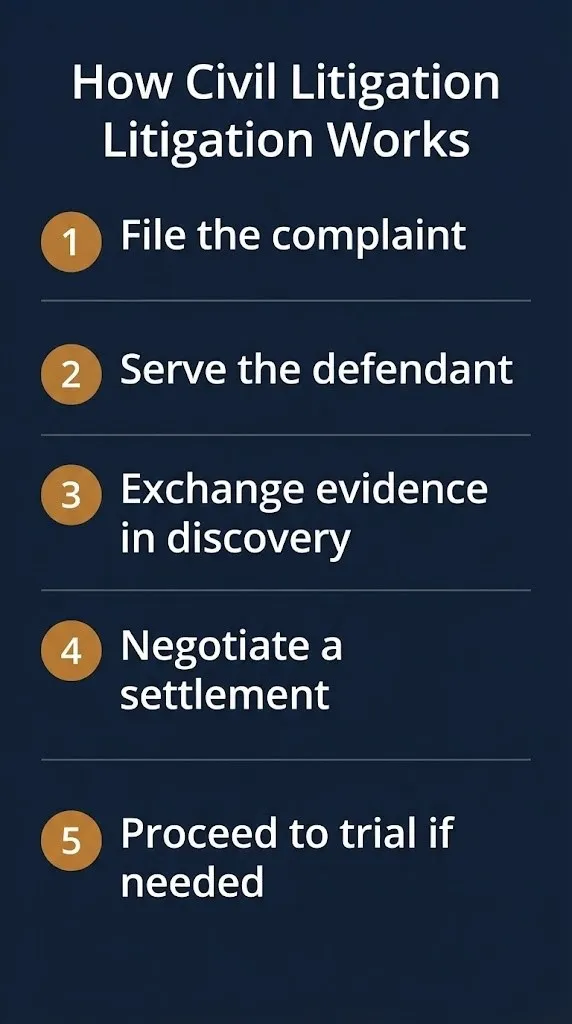
You file a civil lawsuit by drafting a complaint, submitting it to the appropriate court, paying the filing fee, and formally serving the defendant. This process differs slightly by state and court, but the core steps stay consistent.
- Determine the correct court, based on the dispute’s location and dollar amount.
- Draft the complaint, stating your legal claims and the relief you’re seeking.
- File the complaint with the court clerk and pay the filing fee.
- Serve the defendant with the complaint and summons.
- Wait for the defendant’s response, typically 21 to 30 days.
- Proceed through discovery, exchanging evidence with the other side.
- Attempt settlement negotiations, which resolve most cases before trial.
- Prepare for trial only if a settlement isn’t reached.
Small claims court exists as a lower-cost alternative for smaller disputes, with limits varying by state, and typically doesn’t require an attorney at all.
How Long Does Civil Litigation Take?
Civil litigation typically takes several months to a few years, depending on case complexity and the court’s caseload. Federal data shows meaningful variation by district and case type.
Federal civil case data for the period ending September 2025 shows a median time from filing to disposition of roughly 6 to 9 months in most districts, though this varies widely. Cases that proceed all the way to trial take considerably longer, often 30 to 60 months in the districts with heavier backlogs.
Think of it like a home renovation with a contractor: a simple repair wraps up quickly, but a full remodel with permits and inspections stretches on for months, sometimes longer than anyone initially expects.
Key Takeaway: Case timelines depend more on complexity and court backlog than on the strength of your claim.
Do Most Civil Cases Actually Go to Trial?
No, the overwhelming majority of civil cases settle or resolve before trial, without ever reaching a jury. Federal court data confirms this directly.
According to U.S. Courts civil case termination data for the 12 months ending September 2025, out of 346,705 total civil case terminations, only 1,681 reached trial, a trial rate of roughly 0.4%. That’s down sharply from the 1990s, when trial rates ran several times higher.
Separate industry research puts the broader settlement rate, across state and federal courts combined, at approximately 95% of civil cases resolving before trial.
Reality Check: No attorney can guarantee a trial win, and most cases never get that far anyway. If a lawyer promises a courtroom victory before even reviewing your evidence, treat that as a warning sign, not reassurance.
What Happens During the Discovery Phase?
Discovery is the pre-trial phase where both sides exchange evidence, take depositions, and gather information relevant to the case. This is often the longest and most expensive part of civil litigation.
During discovery, attorneys typically use several tools:
- Written interrogatories, which are formal written questions
- Requests for production of documents
- Depositions, where witnesses answer questions under oath
- Requests for admission, asking the other side to confirm or deny specific facts
Discovery frequently produces the evidence that pushes both sides toward settlement, since it reveals how strong or weak each party’s case really is before trial risk becomes real.
How Do You Choose the Right Civil Litigation Law Firm?
You choose the right civil litigation law firm by matching their specific experience to your type of dispute and confirming their fee structure upfront. A firm skilled in business contract disputes isn’t necessarily the right fit for a personal injury claim.
Questions worth asking before hiring:
- How many cases like mine have you handled to resolution?
- What’s your fee structure, and is it negotiable?
- Who on your team will actually work my case day-to-day?
- What’s a realistic timeline given your current caseload?
- What costs, beyond your fee, should I expect?
Larger firms often have more resources for document-heavy discovery, while smaller firms sometimes offer more direct attorney access. Neither is automatically better, it depends on your specific case.
What Is the Statute of Limitations in Civil Litigation?
A statute of limitations is the legal deadline for filing a specific type of civil lawsuit, and it varies by state and case type. Missing this deadline typically bars you from filing entirely, regardless of how strong your claim is.
Common civil case types with statutes of limitations include:
| Case Type | Typical Range |
|---|---|
| Personal injury | 1 to 6 years, varies by state |
| Breach of written contract | 3 to 10 years, varies by state |
| Property damage | 2 to 6 years, varies by state |
Exact deadlines depend entirely on your state and the specific claim, so confirm the applicable limit with an attorney or your state’s court website before assuming you have time.
What Happens Next
Ongoing: Federal district courts continue processing civil filings under the current $405 fee schedule, unchanged since December 2023.
2026, ongoing: Trial rates remain near historic lows, continuing a decades-long trend toward settlement over courtroom resolution.
As needed: If you’re facing a specific dispute, the next concrete step is confirming your state’s statute of limitations before delaying further.
As needed: A consultation with a civil litigation attorney, often free or low cost, is the fastest way to learn whether your specific claim has merit.
Frequently Asked Questions
What’s the difference between a civil litigation attorney and a criminal defense attorney?
A civil litigation attorney handles private, non-criminal disputes seeking compensation or a specific court order. A criminal defense attorney represents someone facing government prosecution and potential incarceration. The two rarely overlap in practice, since they involve entirely different courts and procedures.
How much does it cost to hire a civil litigation attorney?
Costs range from $150 to $550 per hour, or 25% to 40% on contingency, depending on the case type. Retainers for complex litigation often run $1,000 to $15,000 upfront. The exact number depends on your location, case complexity, and the attorney’s experience level.
Do I need a lawyer for a civil lawsuit?
Not always. Small claims court is designed for people representing themselves without an attorney. For larger or more complex disputes, an attorney significantly improves your chances of a favorable outcome. Many attorneys offer a free initial consultation to help you decide.
How long does a civil lawsuit typically take to resolve?
Most civil cases resolve in a matter of months, though contested cases can take one to several years. Federal data shows median disposition times of roughly 6 to 9 months in most districts. Cases that proceed to trial take considerably longer due to court scheduling and discovery.
What percentage of civil lawsuits actually go to trial?
Less than 1% of federal civil cases reach trial, based on 2025 U.S. Courts termination data. The vast majority settle, get dismissed, or resolve through other pre-trial means. This trend has held steady for years, driven by cost, time, and uncertainty on both sides.
Can I file a civil lawsuit without an attorney?
Yes, this is called filing “pro se,” and it’s allowed in both state and federal courts. Small claims court is specifically designed for this, with simplified procedures. Complex civil cases are harder to navigate without legal training, so weigh the stakes carefully.
What is the filing fee for a civil lawsuit?
The federal district court filing fee is $405, confirmed under the current U.S. Courts fee schedule. State court fees vary, often based on the dollar amount of your claim. Fee waivers are available for plaintiffs who can show financial hardship.
What happens if I miss the statute of limitations?
Missing the statute of limitations typically means you lose the right to file that specific claim entirely. Deadlines vary significantly by state and case type, so don’t assume a standard timeframe applies. Confirm your specific deadline with an attorney as early as possible in your situation.
Bottom Line
If you’re facing a potential lawsuit, confirm your state’s statute of limitations first, since that deadline doesn’t wait for you to decide. A free consultation with a civil litigation attorney is usually the fastest way to understand your options.
Federal filing fees remain fixed at $405 as of this writing, and most civil disputes resolve well before trial. Start with a real conversation about your specific facts before assuming what the process will cost.