Lawsuit Attorneys and Civil Litigation Law in 2026: What Consumers Need to Know Before Hiring
Quick Answer
- Lawsuit attorneys handle civil cases from filing through trial or settlement.
- Most plaintiff attorneys work on contingency, meaning you pay nothing upfront.
- Statute of limitations deadlines vary by state and claim type, often one to three years.
If you are considering a lawsuit or received a settlement notice, you need to understand what lawsuit attorneys do and how civil litigation law works. You may be wondering whether you need a lawyer, what it will cost, and how long the process takes.
The verified answer is this: lawsuit attorneys are licensed professionals who represent clients in civil disputes. Civil litigation law covers everything from contract disputes to personal injury to consumer class actions. One surprising detail: most civil cases never reach trial. They settle.
The Facts
| Fact | Details |
|---|---|
| Case | No single case, general civil litigation practice |
| Status | Ongoing, governed by state and federal rules |
| Fund Size | Varies by individual case |
| Est. Per Person | Depends on case value and fee agreement |
| Claim Deadline | Varies by state and claim type |
| Administrator | Court system, not a claims administrator |
| Proof Needed | Documents, witnesses, expert testimony |
What Does a Lawsuit Attorney Do?
A lawsuit attorney represents clients in civil legal disputes. They file complaints, conduct discovery, negotiate settlements, and try cases before judges or juries.
The work breaks into phases. First, the attorney evaluates whether you have a viable claim. Then they investigate the facts and gather evidence. Next comes filing, discovery, and motion practice. Finally, the case settles or goes to trial.
Most lawsuit attorneys specialize. A personal injury lawyer handles accidents and injuries. A consumer class action lawyer handles defective products and deceptive practices. A workers compensation attorney handles workplace injuries.
Key Takeaway: The right attorney for your case is one who practices in the specific area of law your case involves.
What Is Civil Litigation Law?
Civil litigation law is the body of rules and procedures that governs non-criminal legal disputes. It covers lawsuits between individuals, businesses, and government entities.
The process is governed by rules of civil procedure. In federal court, the Federal Rules of Civil Procedure control. Each state has its own version.
Civil litigation includes pretrial discovery, motions, settlement conferences, and trial. The burden of proof in most civil cases is preponderance of the evidence, meaning more likely than not.
How Much Do Lawsuit Attorneys Cost?
Lawsuit attorneys charge in one of three ways: contingency fees, hourly rates, or flat fees. The structure depends on the case type.
| Fee Type | How It Works | Common Case Types |
|---|---|---|
| Contingency | Percentage of recovery, no upfront fee | Personal injury, class actions |
| Hourly | Billed by the hour, retainer required | Business disputes, defense work |
| Flat fee | Set amount for defined scope | Uncontested matters, simple filings |
Contingency fees typically range from 33 to 40 percent of the recovery. Some states cap fees in certain case types.
Key Takeaway: Most plaintiff-side lawsuit attorneys work on contingency, so you pay nothing if you lose.
When Do You Need a Lawsuit Attorney?
You need a lawsuit attorney when the stakes are high, the law is complex, or the other side has a lawyer. You may not need one for small claims court, where procedures are simplified.
Here are situations where a lawyer is usually necessary:
- Your claim involves serious injury or significant money.
- The defendant denies liability or files counterclaims.
- You need expert testimony or complex evidence.
- You received a settlement offer and do not know if it is fair.
- The statute of limitations is approaching.
What Is the Difference Between a Lawyer and a Lawsuit Attorney?
A lawyer is anyone licensed to practice law. A lawsuit attorney is a lawyer who handles litigation, meaning court cases.
Some lawyers never go to court. They draft contracts, advise businesses, or handle estate planning. Lawsuit attorneys focus on disputes.
The term “attorney” and “lawyer” are often used interchangeably in the United States. Both require a law degree and bar admission.
How Do You Find a Good Lawsuit Attorney?
You find a good lawsuit attorney by checking their experience, track record, and communication style. Do not pick a lawyer based on a billboard or a website alone.
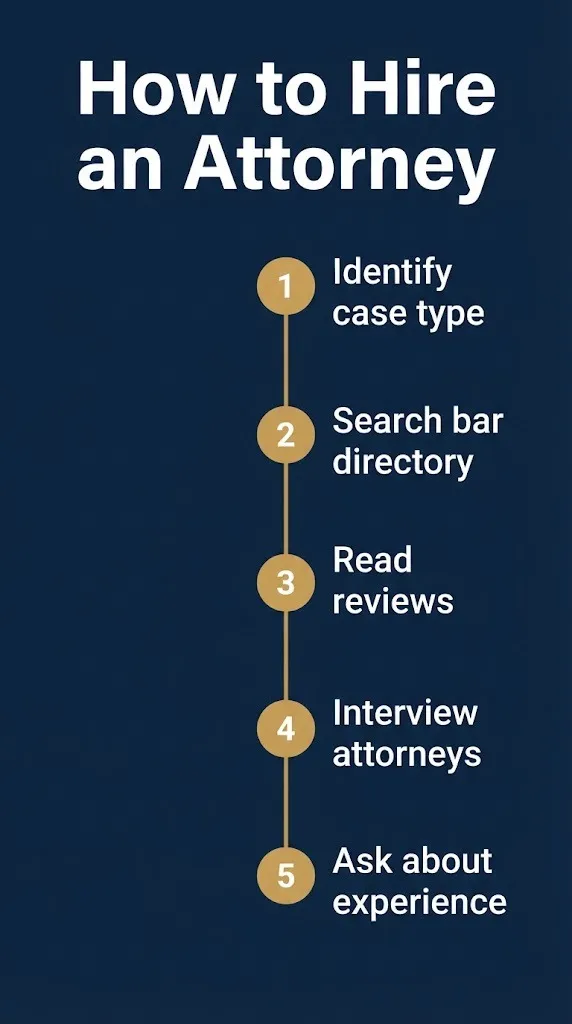
Here are five steps:
- Identify the specific area of law your case involves.
- Search state bar association directories for licensed attorneys.
- Read client reviews and disciplinary records.
- Interview at least two or three attorneys.
- Ask about their experience with cases like yours.
Ask about case outcomes, not just years of experience. A lawyer with ten years of general practice may know less about your issue than a specialist with three years.
Reality Check: No legitimate attorney guarantees a specific outcome. If a lawyer promises you a certain settlement amount before reviewing your evidence, walk away. Ethical rules prohibit guarantees. Contingency agreements must be in writing, and you are entitled to a copy.
What Is a Statute of Limitations?
A statute of limitations is a legal deadline for filing a lawsuit. If you miss it, your case is barred permanently.
Deadlines vary by state and claim type. Personal injury claims often have two to three year limits. Breach of contract claims may have longer or shorter windows.
Here are common deadlines:
| Claim Type | Typical Limit |
|---|---|
| Personal injury | 2 to 3 years |
| Breach of written contract | 4 to 6 years |
| Fraud | 2 to 4 years |
| Workers compensation | 1 to 3 years |
| Medical malpractice | 1 to 3 years |
These are general ranges. Your state’s specific deadline may differ.
Key Takeaway: The statute of limitations is the single most important date in any potential lawsuit.
What Happens in a Civil Lawsuit?
A civil lawsuit follows a predictable path from filing to resolution.
Here is the standard timeline:
- Plaintiff files a complaint.
- Defendant files an answer or motion to dismiss.
- Discovery: both sides exchange documents and take depositions.
- Motions: parties ask the court to rule on legal issues.
- Settlement negotiations: most cases resolve here.
- Trial: if no settlement, a judge or jury decides.
- Appeal: the losing party may appeal.
Most cases settle before trial. The settlement rate in civil litigation is consistently high, often over 90 percent.
What Is Discovery in Civil Litigation?
Discovery is the pretrial phase where both sides exchange information. It includes documents, interrogatories, depositions, and requests for admission.
Discovery is often the longest and most expensive part of litigation. It prevents surprise at trial and forces both sides to evaluate their case honestly.
A lawsuit attorney uses discovery to find evidence that supports your claim and weakens the other side’s defense.
What Is a Settlement in Civil Litigation?
A settlement is a voluntary agreement to resolve a lawsuit without trial. The defendant typically pays money, and the plaintiff drops the case.
Settlements are private contracts. They can happen at any stage, from before filing to after a jury verdict.
Most settlements include a release. You give up your right to sue again on the same claim in exchange for payment.
Key Takeaway: Settlement is the most common outcome in civil litigation, not trial.
What Is the Difference Between a Class Action and an Individual Lawsuit?
A class action is a lawsuit where one or more plaintiffs represent a larger group. An individual lawsuit involves one plaintiff seeking their own damages.
Class actions are efficient for small claims that would not be worth pursuing individually. Individual lawsuits allow for higher per-person recoveries.
A lawsuit attorney can advise which structure fits your situation.
What Happens Next
If you are considering a lawsuit, your next steps are practical.
- Immediately: Gather all documents related to your claim.
- Within days: Contact a lawsuit attorney for an evaluation.
- Within weeks: Confirm the statute of limitations deadline.
- If you received a settlement notice: Check the official website and deadline.
The single most important action is verifying your deadline. Miss it and the legal system will not help you.
Frequently Asked Questions
What is a lawsuit attorney?
A lawsuit attorney is a lawyer who handles civil court cases.
They file complaints, conduct discovery, and represent clients at trial or settlement.
Most specialize in a specific area like personal injury or consumer law.
How much does a lawsuit attorney cost?
Most plaintiff attorneys work on contingency.
You pay nothing upfront and a percentage of your recovery if you win.
Hourly and flat fee arrangements exist for other case types.
What is civil litigation law?
Civil litigation law is the rules and procedures for non-criminal lawsuits.
It covers disputes between individuals, businesses, and government entities.
The burden of proof is usually preponderance of the evidence.
Do I need a lawyer for a civil lawsuit?
You need a lawyer for complex cases or cases involving significant money.
Small claims court handles minor disputes without lawyers.
A consultation helps you decide what your case requires.
What is a statute of limitations?
A statute of limitations is a legal deadline for filing a lawsuit.
Miss it and your case is barred.
Deadlines vary by state and claim type.
What percentage do lawsuit attorneys take?
Contingency fees typically range from 33 to 40 percent of the recovery.
Some states cap fees in specific case types.
The fee agreement must be in writing.
How long does a civil lawsuit take?
A simple case can settle in months.
A complex case can take years.
Most cases settle before trial.
What is the difference between a lawyer and an attorney?
In the United States, the terms are interchangeable.
Both require a law degree and bar admission.
A lawsuit attorney specifically handles court cases.