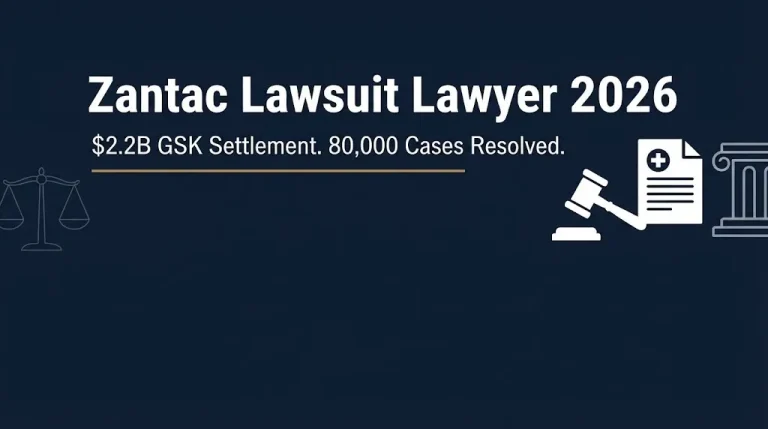
Zantac Settlement Payout 2026: Claim Status, Amount Estimates, and What Comes Next
Quick Answer
- The Zantac lawsuits are real and allege the heartburn drug contained a probable carcinogen.
- Some individual settlements have been reported, but no class-wide payout amount has been set.
- No claim deadline exists for most users because no class settlement has been approved.
You took Zantac for heartburn. Years later, you saw headlines about cancer risks. Now you are wondering if there is money for people like you. The answer is complicated.
The litigation is real. The science is disputed. Some people have settled. Most have not. The difference between those groups matters more than any headline number.
This article explains what is verified, what is not, what the payouts look like, and what you should do right now if you ever took Zantac or generic ranitidine. No hype. No fake deadlines. Just the current state of the largest pharmaceutical litigation in recent memory.
The Facts
| Fact | Verified Value |
|---|---|
| Case | In re: Zantac (Ranitidine) Products Liability Litigation |
| Status | Active, some individual settlements, no class-wide fund |
| Fund Size | No global settlement fund established |
| Est. Per Person | Not uniformly set, varies by injury and jurisdiction |
| Claim Deadline | None for most claims, no class settlement |
| Administrator | Not applicable for most cases |
| Proof Needed | Medical records, prescription history, cancer diagnosis |
Is the Zantac lawsuit legitimate?
Yes. The Zantac litigation is real and massive. It is one of the largest product liability matters in U.S. history. Tens of thousands of cases have been filed in state and federal courts.
The core allegation is that ranitidine, the active ingredient in Zantac, can degrade into a chemical called NDMA under certain conditions. NDMA is classified as a probable human carcinogen by environmental health agencies. The lawsuits claim that long-term Zantac use exposed people to unsafe levels of NDMA, leading to cancer.
The manufacturers, including Sanofi and Boehringer Ingelheim, have denied the claims. They argue the levels of NDMA in ranitidine were too low to cause harm. The science remains contested.
The U.S. Food and Drug Administration asked manufacturers to withdraw ranitidine from the market in April 2020. That withdrawal is public record and is not disputed. What remains disputed is whether the drug caused specific cancers.
Is there a Zantac class action settlement?
No. There is no certified class action settlement for Zantac. The litigation is structured as a multidistrict litigation, often called an MDL, in federal court. That is not the same as a class action.
In an MDL, individual cases are consolidated for pretrial purposes. Each plaintiff keeps their own case. They do not share a single settlement fund. A class action, by contrast, would bind all class members to one resolution.
Some state court cases have also proceeded individually. A few bellwether cases have gone to trial with mixed results. Some plaintiffs won verdicts. Some lost. Those verdicts do not create a fund for everyone else.
Key Takeaway: No judge has certified a Zantac class. No single settlement covers all users. Your case, if you have one, stands alone.
How much are Zantac settlements paying?
There is no uniform payout. No settlement grid exists. The amounts vary dramatically based on the injury, the jurisdiction, and the strength of the individual case.
Some early settlements have been reported. Sanofi and other defendants have resolved certain cases for undisclosed amounts. One publicly reported settlement involved a bellwether case that settled before trial. The terms were confidential.
What matters more is the potential range in verdicts. A few plaintiffs have won jury verdicts in the tens of millions of dollars. Those verdicts are subject to appeal and may be reduced. They do not predict what a typical case is worth.
The honest answer is that payout amounts are not yet determined for most claimants. If you have a diagnosed cancer and a documented history of Zantac use, your case may have significant value. If you took Zantac without a cancer diagnosis, your case likely has little or no value.
What cancers are linked to Zantac lawsuits?
The lawsuits focus on cancers that have been associated with NDMA exposure in animal studies and some human data. Not every cancer qualifies. The key is whether the cancer type is plausibly linked to the alleged exposure.
The most common cancers in the litigation include:
- Bladder cancer
- Stomach cancer
- Esophageal cancer
- Liver cancer
- Colorectal cancer
- Pancreatic cancer
- Kidney cancer
Each case requires an expert to connect the specific cancer to Zantac use. That causation analysis is the central battleground. The defense argues the cancers have other causes. The plaintiffs argue Zantac was a substantial factor.
Who may qualify for a Zantac lawsuit?
The potential claimant pool is enormous. Zantac was one of the best-selling drugs in the world. Millions of people took it. But taking Zantac is not enough. You need a qualifying injury.
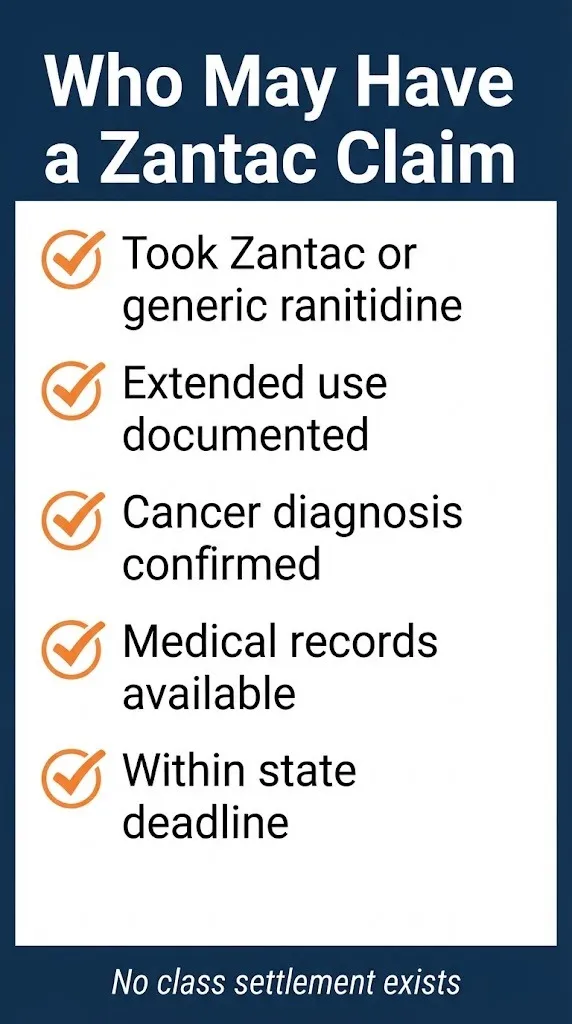
You may have a viable claim if:
- You took Zantac or generic ranitidine for an extended period.
- You were diagnosed with a qualifying cancer.
- Your cancer diagnosis came after or during your Zantac use.
- You have medical records documenting both the Zantac use and the cancer.
You likely do not have a claim if you took Zantac briefly, never developed cancer, or cannot document your use. The litigation is not a refund program for everyone who bought the drug.
Key Takeaway: This is not a consumer refund case. It is a personal injury case. Your medical history controls everything.
How do I file a Zantac lawsuit?
You cannot file a Zantac claim through this site or any general claims portal. These are individual personal injury cases. You need a lawyer who handles pharmaceutical litigation.
The process starts with an evaluation. The lawyer will ask about your Zantac use and your cancer diagnosis. You will need to provide medical records and pharmacy records.
Here are the steps:
- Gather your medical records showing your cancer diagnosis.
- Obtain pharmacy records or prescription history for Zantac or ranitidine.
- Contact a law firm with experience in pharmaceutical mass torts.
- Provide a timeline of your Zantac use and your diagnosis.
- Allow the lawyer to evaluate causation with a medical expert.
- Sign a representation agreement if the case has merit.
- Let the lawyer file your case in the appropriate court.
This is not a quick form. It is the start of a legal process that can take years.
What is the deadline for a Zantac lawsuit?
The deadline is your state’s statute of limitations for personal injury or product liability. Those deadlines vary from one to six years depending on the state and the circumstances.
In many states, the clock starts when you knew or should have known that Zantac may have caused your cancer. That is called the discovery rule. The FDA withdrawal in 2020 put many people on notice. The exact deadline for your case depends on your diagnosis date and your state’s law.
Do not guess your deadline. A missed statute of limitations is fatal to your claim. The court will dismiss your case no matter how strong the facts are. Contact a lawyer immediately to evaluate your timeline.
What is the current status of the Zantac litigation in 2026?
The federal MDL is in the pretrial and bellwether phase. Bellwether trials are test cases designed to show how juries respond to the evidence. The results so far have been mixed.
In 2024, a jury in Illinois returned a defense verdict in one bellwether case. In another case, a jury found for the plaintiff and awarded significant damages. Appeals are ongoing in multiple cases.
The mixed results have pushed both sides toward settlement talks in some categories. But no global resolution has emerged. The litigation may take several more years to fully resolve.
What happened with the Zantac recall?
The FDA did not issue a formal recall in the traditional sense. Instead, in April 2020, the agency asked all manufacturers to withdraw ranitidine products from the U.S. market. The reason was the presence of NDMA above acceptable daily intake levels.
The withdrawal was precautionary. The FDA stated that the risk to any individual user was likely low. But the agency concluded that the levels were unacceptable for a drug taken by millions of people.
Generic ranitidine was also withdrawn. If you took a generic version, the same legal issues apply. The brand name and the generic share the same active ingredient and the same alleged risk.
Key Takeaway: The FDA action stopped the sale of ranitidine. It did not resolve the legal question of whether the drug caused cancer.
Can I file a Zantac claim if I took the generic?
Yes. The litigation includes generic ranitidine. The generic manufacturers are named as defendants alongside the brand-name companies.
Your prescription records should show whether you received Zantac or a generic equivalent. Many pharmacies automatically substituted a generic. That does not weaken your claim. It may change which defendant is responsible.
Keep your pharmacy records. They are the best evidence of what you actually took, when, and for how long.
What should I do right now if I took Zantac?
First, do not panic. The science is uncertain, and not every user is at risk. Second, if you have a cancer diagnosis, gather your records. Third, contact a qualified lawyer for an evaluation.
If you do not have a cancer diagnosis, your options are limited. The litigation is not a class action refund. You cannot file for “exposure” alone in most courts. Some jurisdictions allow medical monitoring claims, but those are rare and not part of the main litigation.
Here is the immediate checklist:
- Locate your cancer diagnosis records if you have one.
- Request your complete pharmacy history for the years you took Zantac.
- Note the dates and dosages if you have them.
- Contact a mass tort lawyer for a free case evaluation.
- Do not sign anything from a claims company without legal review.
- Do not pay anyone upfront for a “Zantac evaluation.”
- Keep copies of everything you send.
Reality Check
No one will text you about a Zantac settlement check. The cases are individual personal injury lawsuits, not a class action refund. Legitimate lawyers do not charge upfront fees for evaluation. They work on contingency, paid only if you recover. Be wary of any site that claims you are “pre-qualified” for a Zantac payout without reviewing your medical records. Your cancer diagnosis and prescription history are the only things that matter.
What Happens Next
| Timeline | Expected Stage |
|---|---|
| Mid 2026 | Additional bellwether trials expected |
| Late 2026 | Possible appeal rulings on key causation issues |
| 2027 | Broader settlement talks likely |
| 2027 to 2028 | Potential resolution categories for specific cancers |
| 2028 or later | Payouts for settled cases, if any agreements are reached |
These dates are estimates based on the current pace of the litigation. None are confirmed.
Frequently Asked Questions
Is there a Zantac settlement in 2026?
No global settlement exists. Some individual cases have settled, but most are still pending.
How much will I get from a Zantac lawsuit?
The amount depends on your cancer type, treatment, and jurisdiction. No fixed payout exists.
Can I file a Zantac claim without cancer?
Likely not. The litigation focuses on cancer diagnoses, not exposure alone.
What is the Zantac lawsuit deadline?
The deadline is your state’s statute of limitations. It varies by state and your diagnosis date.
Do I need a lawyer for a Zantac lawsuit?
Yes. These are complex product liability cases requiring expert testimony.
What if I took generic ranitidine?
Generic use is included in the litigation. Your pharmacy records will show what you took.
Has anyone won a Zantac case?
Yes, some plaintiffs have won verdicts. Others have lost. The results are mixed.
How long will the Zantac litigation last?
Several more years at minimum. Resolution may extend into 2028 or later.
The Single Most Important Step
If you took Zantac and have a cancer diagnosis, contact a mass tort lawyer today. Your statute of limitations may be running. The consultation is free. The evaluation costs you nothing. Waiting could cost you everything.
The science is contested. The litigation is slow. But the deadline is real. Find out where you stand before the courthouse door closes.