Zepbound Lawsuit: 2026 Update on Tirzepatide Claims, Side Effects, and Legal Actions
Quick Answer:
- Zepbound lawsuits are real but early, with no certified class action or approved settlement yet.
- No per-person payout has been determined. Any dollar figure you see is speculation.
- The most important deadline is your state’s statute of limitations for personal injury or consumer claims.
The Zepbound lawsuit landscape in 2026 is a developing story. Zepbound, the brand name for tirzepatide when marketed for weight loss, has drawn legal attention over side effect disclosures and marketing practices.
If you took Zepbound or tirzepatide and experienced a serious side effect, you may be wondering whether a lawsuit exists, whether you qualify, and what a payout might look like. The honest answer is that the litigation is early, no settlement has been approved, and no claim deadline has been set.
This article covers what Zepbound is, what the lawsuits allege, who may have a claim, and how the legal process is likely to unfold. One verified detail matters: the same active ingredient, tirzepatide, is also sold as Mounjaro for diabetes, and cases involving both brand names may be consolidated or coordinated.
The Facts
| Item | Detail |
|---|---|
| Case | Multiple proposed class actions and individual claims involving Zepbound and tirzepatide |
| Status | Early litigation, no certified class or approved settlement |
| Fund Size | Not yet confirmed |
| Est. Per Person | Not yet determined |
| Claim Deadline | TBD, no settlement administrator appointed |
| Administrator | Not yet appointed |
| Proof Needed | Medical records, prescription history, adverse event documentation |
Is the Zepbound Lawsuit Legit?
Yes, the Zepbound lawsuits are real legal filings, but they are in early stages. No settlement has been approved, and no class has been certified.
The term “Zepbound lawsuit” refers to a collection of legal claims against Eli Lilly, the manufacturer of Zepbound and Mounjaro. The claims generally allege that the company failed to adequately warn about certain side effects or engaged in misleading marketing.
These lawsuits are not a single class action with a single deadline. They are separate filings that may eventually be consolidated into multidistrict litigation.
Key Takeaway: The lawsuits exist, but they are not paying yet. Anyone claiming otherwise is not telling you the truth.
What Is Zepbound and What Is Tirzepatide?
Zepbound is the brand name for tirzepatide when prescribed for chronic weight management. Tirzepatide is the active pharmaceutical ingredient.
The same drug, tirzepatide, is sold under the brand name Mounjaro when prescribed for type 2 diabetes. Both products are manufactured by Eli Lilly and Company.
Tirzepatide works by activating two hormone receptors, GIP and GLP-1, which affect appetite, blood sugar, and digestion. The drug received FDA approval for diabetes in 2022 and for weight loss in late 2023.
What Are the Zepbound Lawsuits Alleging?
The Zepbound lawsuits allege that Eli Lilly failed to adequately warn about certain side effects or that the company’s marketing downplayed risks. The specific allegations vary by case.
Some claims focus on gastrointestinal side effects, including severe nausea, vomiting, and gastroparesis, a condition where the stomach empties too slowly. Other claims involve gallbladder issues or pancreatitis.
Some consumer protection claims allege that marketing overstated benefits or minimized risks. These claims are separate from personal injury claims and may follow different legal paths.
- Failure to warn about gastroparesis and other GI side effects.
- Inadequate disclosure of gallbladder and pancreatic risks.
- Marketing that allegedly overstated benefits or minimized risks.
- Consumer protection claims under state laws.
How Much Is the Zepbound Lawsuit Worth Per Person?
No per-person payout has been determined for any Zepbound lawsuit. No settlement exists yet, and any dollar figure circulating online is fabricated.
Personal injury settlements in pharmaceutical cases vary widely based on the severity of the injury, the strength of the medical evidence, and the number of plaintiffs. Early-stage litigation cannot predict a per-person number.
If a settlement eventually occurs, payouts would depend on factors like hospitalization records, duration of symptoms, permanent injury, and lost wages. The claims administrator would set tiers based on these factors.
Reality Check: No legitimate lawyer or website can tell you today what a Zepbound case is worth. The litigation is too early. Anyone promising a specific payout is misleading you.
What Are the Common Zepbound Side Effects in the Lawsuits?
The most common side effects cited in Zepbound lawsuits are gastrointestinal. Nausea, vomiting, diarrhea, constipation, and abdominal pain are frequently mentioned.
More serious conditions alleged in some filings include gastroparesis, where the stomach muscles slow or stop working normally. This can cause persistent vomiting, malnutrition, and dehydration.
Gallbladder disease and pancreatitis also appear in some claims. These conditions can require surgery or hospitalization.
| Side Effect | Severity | Commonly Alleged? |
|---|---|---|
| Nausea and vomiting | Mild to moderate | Yes, very common |
| Diarrhea or constipation | Mild to moderate | Yes, very common |
| Gastroparesis | Severe | Yes, in some cases |
| Gallbladder disease | Severe | Yes, in some cases |
| Pancreatitis | Severe | Less common but serious |
Has Anyone Received Money From a Zepbound Settlement?
No verified Zepbound settlement payments have been reported as of January 2026. The litigation is too early for distributions.
Some individual cases may have settled quietly, but no published settlement fund, claims administrator, or distribution schedule exists. Any claim that checks are being mailed is false.
Pharmaceutical mass torts often take years to reach settlement. The Zepbound litigation is still in the filing and early motion stage.
Key Takeaway: No one has been paid through a Zepbound class settlement because no class settlement exists.
How Do You File a Zepbound Lawsuit Claim?
You cannot file a claim through a settlement administrator because no settlement exists. The current path is contacting a lawyer to evaluate an individual case.
If you experienced a serious side effect after taking Zepbound or Mounjaro, a lawyer can assess whether you have a viable claim. The lawyer would need your medical records, prescription history, and documentation of the side effect.
The process starts with a case evaluation, not a claim form. There is no portal, no deadline, and no administrator yet.
- Gather your medical records showing the Zepbound or Mounjaro prescription.
- Document the side effect with medical records, hospital notes, and test results.
- Keep a timeline of symptoms and when they started relative to the medication.
- Contact a lawyer with pharmaceutical litigation experience.
- Provide all records for a case evaluation.
- Follow the lawyer’s guidance on whether to file.
What Is the Difference Between a Zepbound Class Action and Mass Tort?
A class action is a single lawsuit representing many plaintiffs with similar claims. A mass tort is a collection of individual lawsuits coordinated for efficiency.
Pharmaceutical injury cases are usually mass torts, not class actions. Each plaintiff has a different medical history, different side effects, and different damages.
If Zepbound cases grow, they may be consolidated into multidistrict litigation, or MDL. That is a procedural step that groups similar cases before one judge for pretrial proceedings.
What Is the Zepbound Statute of Limitations?
The statute of limitations for a Zepbound claim depends on your state and the type of claim. Personal injury claims typically must be filed within two to three years of the injury or discovery of the injury.
The discovery rule matters here. If you did not connect your side effect to Zepbound until later, the clock may start when you made the connection, not when you took the drug.
For consumer protection claims, the deadline may differ. State laws vary widely. You should confirm your specific deadline with a lawyer.
- Determine when you first experienced the side effect.
- Determine when you first connected it to Zepbound.
- Check your state’s personal injury statute of limitations.
- Do not wait to consult a lawyer. Deadlines are unforgiving.
What Is the FDA’s Role in Zepbound Litigation?
The FDA approved Zepbound for weight loss in late 2023. The FDA also maintains adverse event reporting through its FAERS database.
The FDA does not bring lawsuits on behalf of consumers. It regulates the drug’s labeling and can require safety updates. Consumer lawsuits are separate.
If the FDA issues new safety warnings or label changes, those documents can support pending litigation. They can also trigger new filings.
What Is Tirzepatide and Why Does It Have Lawsuits?
Tirzepatide is the active ingredient in both Mounjaro and Zepbound. The lawsuits involve both brand names because the drug is the same.
Some compounding pharmacies have also produced tirzepatide versions, leading to separate regulatory and legal issues around safety and quality.
The core legal question in the product liability cases is whether Eli Lilly adequately warned about risks that were known or should have been known at the time of marketing.
What Should You Do If You Experienced Zepbound Side Effects?
Document everything and seek legal evaluation if the side effect was serious. Do not wait for a settlement to appear.
Your medical records are the foundation of any claim. Request complete records from every provider who treated you for the side effect. Keep a written timeline of symptoms, medications, and doctor visits.
If you stopped taking Zepbound, note the date and whether the side effect improved. That information helps establish causation.
- Request complete medical records from all treating providers.
- Document your Zepbound prescription history and dates.
- Keep a symptom timeline.
- Note when you stopped the medication and whether symptoms improved.
- Contact a pharmaceutical litigation lawyer for evaluation.
- Do not stop any medication without consulting your doctor.
Reality Check: Stopping a medication like Zepbound suddenly can have its own effects. Always talk to your doctor before changing your medication. A lawyer evaluates your legal options. A doctor manages your health.
What Happens Next With Zepbound Litigation?
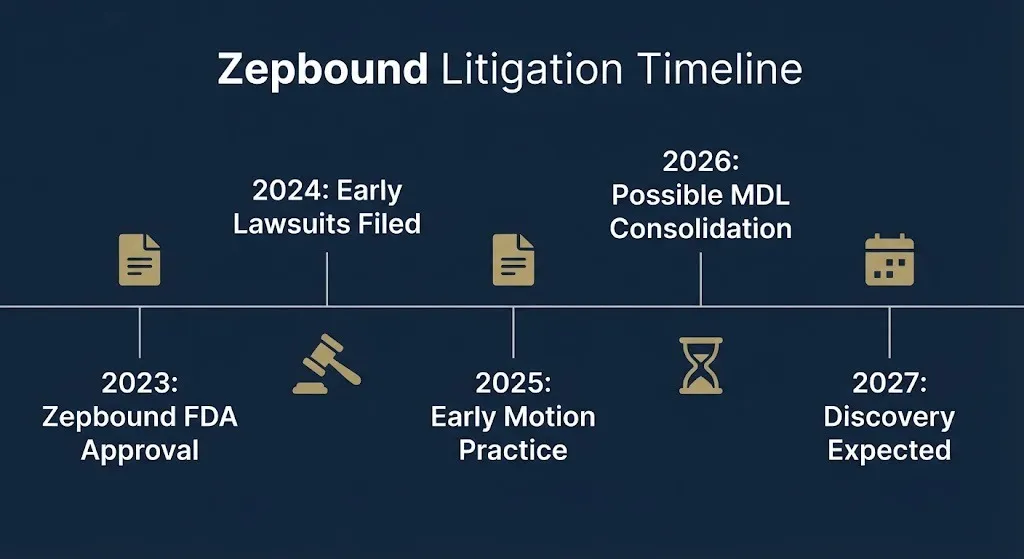
Expected 2026: Early motions and possible consolidation of similar cases.
Expected late 2026: A decision on whether cases are coordinated into multidistrict litigation.
Expected 2027: Discovery and expert reports if litigation proceeds.
Expected 2028 or later: Possible settlement discussions or trial dates.
These projections are based on typical pharmaceutical litigation timelines. The actual path may differ.
Frequently Asked Questions
Is there a Zepbound class action lawsuit?
No certified class action exists yet. Several proposed cases have been filed.
How much is the Zepbound settlement per person?
No settlement exists, so no per-person amount has been determined.
What are the Zepbound lawsuits about?
The lawsuits allege inadequate warnings about side effects and possibly misleading marketing.
Can I still file a Zepbound lawsuit?
Possibly, if you experienced a serious side effect and are within your state’s deadline.
What is the Zepbound lawsuit deadline?
No settlement deadline exists. Your filing deadline is your state’s statute of limitations.
Has anyone been paid from a Zepbound lawsuit?
No verified payments have been reported from any Zepbound settlement.
What is the difference between Zepbound and Mounjaro?
Both contain tirzepatide. Zepbound is for weight loss. Mounjaro is for diabetes.
Should I stop taking Zepbound?
Do not stop any medication without consulting your doctor. Legal concerns are separate from medical decisions.
Zepbound litigation is real but young. No settlement, no payout fund, and no claim deadline exist yet. The people who move fastest now are lawyers building cases, not consumers receiving checks.
If you have a serious side effect and a documented history, the right move is a case evaluation, not a claim form. The deadline that matters is your state’s statute of limitations, not a settlement window.