Average Settlement for Non Injury Car Accident in 2026: Real Payout Data and What Insurers Won’t Tell You
Quick Answer
- Non-injury car accident claims are individual insurance settlements, not class action payouts with a single fund.
- The average settlement ranges from $500 to $25,000, with a calculated average near $9,900 based on 2026 law firm data.
- There is no claim deadline because these are individual negotiations, but most states impose a 2 to 3-year statute of limitations to file suit.
If you walked away from a crash without a scratch but your car is crumpled, you’re probably wondering what that’s actually worth. The honest answer: it depends heavily on where you live, how bad the damage is, and whether you’re willing to push back on the first lowball offer.
This isn’t a class action settlement with a claims administrator and a deadline. It’s a negotiation between you and an insurance adjuster. That changes everything about how you should approach it.
This article breaks down verified 2026 settlement data by state and damage type, explains the one offer you should never accept, and shows you exactly how to calculate what your non-injury claim is actually worth.
The Facts
| Case Type | Individual insurance claims (not a class action) |
| Status | Ongoing, no single settlement fund |
| Fund Size | N/A (individual claim-by-claim) |
| Est. Per Person | $500 to $25,000 (average ~$9,900) |
| Claim Deadline | Varies by state statute of limitations (typically 2-3 years) |
| Administrator | None (individual insurance adjusters) |
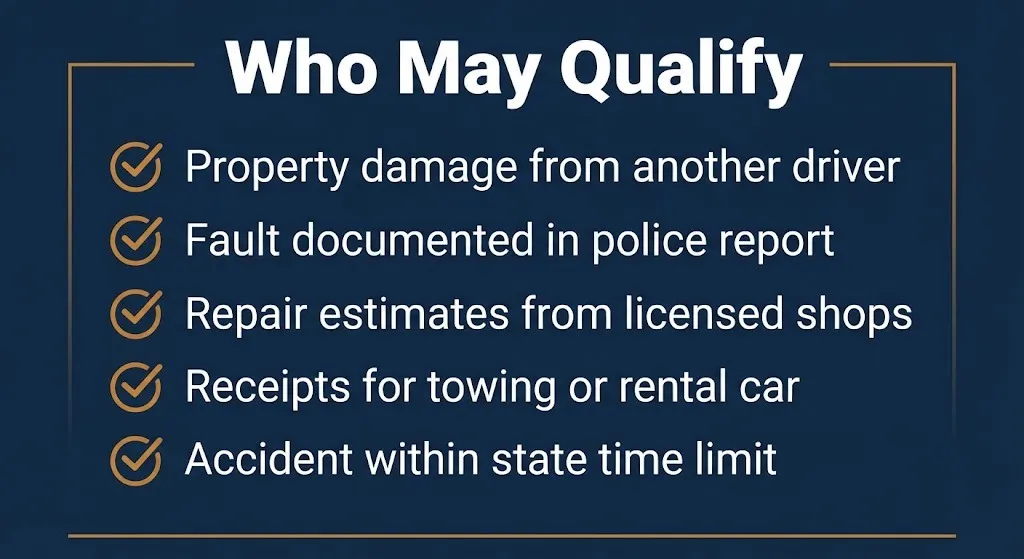
| Proof Needed | Police report, repair estimates, photos, receipts |
Is a Non-Injury Car Accident Settlement Legit or a Scam?
A non-injury car accident settlement is legitimate and legally standard in every U.S. state. Insurance companies pay these claims routinely because you have a legal right to compensation when someone else damages your property.
The scam risk isn’t the settlement itself. It’s the people who call you offering to “handle” your claim for an upfront fee.
Legitimate settlements never require you to pay anything upfront. The insurance company pays you, not the other way around. If someone asks for a fee before you receive money, that’s a red flag.
Another warning sign: anyone coaching you to claim injuries you don’t have. That’s insurance fraud, and it carries criminal penalties. The Reddit threads on this topic are full of people being pushed to say they have neck pain when they don’t. Don’t do it.
Key Takeaway: Non-injury settlements are real and routine. Any “helper” charging upfront fees or encouraging you to fake injuries is the scam, not the settlement.
How Much Can You Actually Get for a Non-Injury Car Accident?
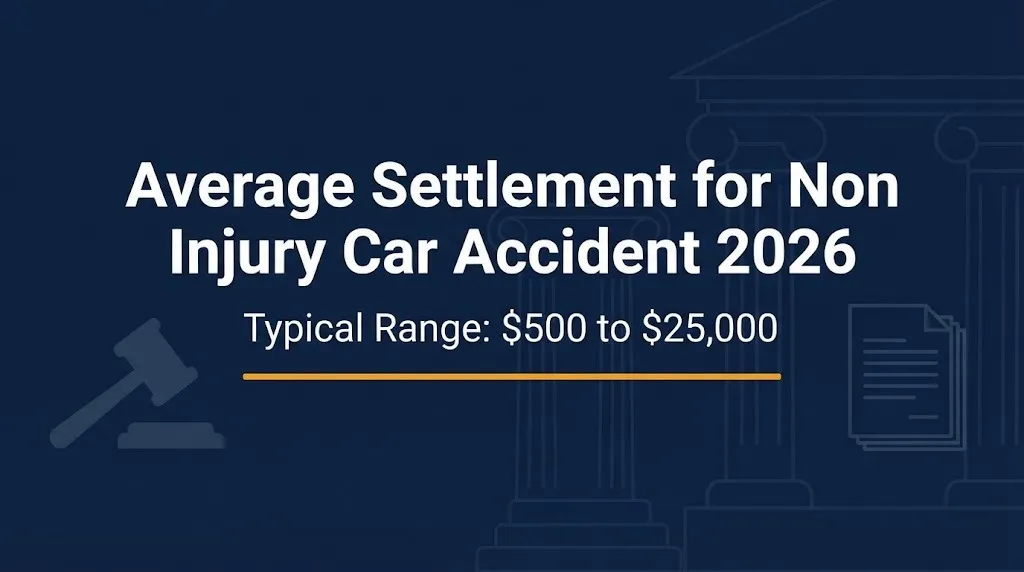
The typical range for a non-injury car accident settlement is $500 to $25,000, with a calculated average of $9,900 based on 2026 data from multiple law firms. That average is not a guarantee. It’s a midpoint dragged up by serious property damage cases and dragged down by minor fender-benders.
Here’s what drives the number:
- Vehicle damage severity: Cosmetic scratches settle low. Frame damage settles high.
- Repair estimates: The quality of your paperwork directly affects your payout.
- Fault allocation: If you’re assigned any percentage of blame, your settlement shrinks.
- State laws: Some states have no-fault systems that change the process entirely.
- Insurance policy limits: The at-fault driver’s coverage caps what’s available.
The national average for all car accident settlements (including injury cases) sits at $30,416 in 2026. Non-injury claims land far below that because you’re not recovering for medical bills, pain, or suffering.
What a Non-Injury Settlement Can Cover
| Damage Type | Typical Compensation |
|---|---|
| Vehicle repairs | Full repair cost at fair market rates |
| Total loss replacement | Blue Book value at time of accident |
| Towing and storage | Receipt-based reimbursement |
| Rental car | Daily rate for repair duration |
| Diminished value | Difference in car value after accident |
| Personal property | Replacement cost of damaged items |
| Lost wages | Only if you missed work due to lack of transportation |
Average Settlement for Non Injury Car Accident by State
Location is the single biggest factor in settlement value, even for non-injury claims. A fender-bender in New York can be worth dramatically more than the identical accident in a rural county.
Here are the 2026 state averages for all car accident settlements, which provide context for how your state’s insurance environment operates:
| State | Average Settlement | vs National |
|---|---|---|
| New York | $287,000 | +872% |
| California | $185,000 | +527% |
| Illinois | $145,000 | +391% |
| New Jersey | $125,000 | +323% |
| Texas | $95,000 | +222% |
| Florida | $77,000 | +161% |
| Pennsylvania | $72,000 | +144% |
| Massachusetts | $68,000 | +130% |
| Georgia | $58,000 | +96% |
| National Average | $30,416 | Baseline |
Those numbers include injury cases, so they don’t directly translate to non-injury payouts. But they show the geographic disparity. A state where injury claims average $287,000 is also a state where property damage claims get negotiated more aggressively.
In non-injury cases, your realistic range is narrower. Most settle between $500 and $25,000 regardless of state. The state matters for how hard you have to fight, not necessarily for the ceiling.
How Are Non-Injury Car Accident Settlements Calculated?
Non-injury settlements are calculated almost entirely on documented economic losses, not on a multiplier formula. That’s the critical difference from injury claims.
For injury cases, attorneys often use a multiplier method: add up economic damages, multiply by 1 to 5 based on severity, then add the result back to the economic total. That’s how pain and suffering gets quantified.
For non-injury claims, there’s no pain and suffering to multiply. The adjuster looks at:
- Repair cost: What a licensed shop says it takes to fix the car.
- Actual cash value: What the car was worth before the crash.
- Comparable sales: What similar cars sell for in your area.
- Depreciation: How much value the car lost from the accident history.
- Policy limits: How much coverage the at-fault driver carries.
The insurer will run your car through valuation software. That software often produces a number lower than what local dealerships charge for the same model. That gap is where negotiation happens.
Key Takeaway: Non-injury settlements are based on documented economic losses only. No multiplier, no pain and suffering, no emotional distress in most cases.
How to File a Claim for a Non-Injury Car Accident
Filing a non-injury claim is more straightforward than an injury case because there are no medical records to compile. But you still need to document everything.
Step-by-Step Claim Process
- Call the police and get a report. The police report is your strongest evidence of fault.
- Photograph everything. Your car, the other car, the scene, the road conditions.
- Get multiple repair estimates. Don’t rely on the insurer’s preferred shop alone.
- File with the at-fault driver’s insurer. This is usually the fastest path.
- Notify your own insurer. Even if you’re not filing with them, they need to know.
- Submit a written demand. Include your repair estimates and supporting photos.
- Review the offer carefully. Reject it if it doesn’t cover all documented losses.
- Negotiate or escalate. Small claims court is an option if talks stall.
The entire process for a non-injury claim typically takes a few weeks to a couple of months. There’s no waiting for injuries to heal, so insurers move faster on property damage only.
What to Do If the Insurance Offer Is Too Low
If the first offer doesn’t cover your repair costs, you do not have to accept it. The first number from an insurance adjuster is almost always a lowball, designed to close the claim cheaply.
Here’s what to do instead:
- Ask for a breakdown. Make the adjuster explain exactly how they calculated the number.
- Provide competing estimates. Get quotes from two or three independent shops.
- Cite comparable vehicles. If your car is totaled, find listings for similar models.
- Write a counteroffer. State what you’ll accept and why, with evidence attached.
- Mention diminished value. Even after repairs, your car is worth less. That’s compensable.
- Consider small claims court. If the amount is under your state’s limit, it’s a viable option.
Once you sign a settlement release, the case is closed permanently. You cannot go back for more money later. That’s why you shouldn’t sign until you’re certain the number is fair.
Reality Check: No one texts you settlement money first. No legitimate claims processor charges you an upfront fee. If someone calls offering to “expedite” your non-injury payout for a fee, hang up. Filing a claim with an insurance company is always free.
How Long Does a Non-Injury Car Accident Settlement Take?
Most non-injury claims settle within a few weeks to two months from the date you file. That’s significantly faster than injury claims, which can drag for months or years waiting on medical treatment to conclude.
The timeline depends on:
- How quickly you file: Delays hurt. Report the accident promptly.
- Disputes over fault: If liability is contested, expect delays.
- Repair estimate disagreements: Back-and-forth over costs adds time.
- Insurer responsiveness: Some companies move faster than others.
If the at-fault driver’s insurer denies the claim or stalls, your options are small claims court or hiring an attorney. For amounts under your state’s small claims limit (often $5,000 to $10,000), court is often faster and cheaper than litigation.
Do You Need a Lawyer for a Non-Injury Car Accident?
You don’t need a lawyer for a straightforward non-injury claim where fault is clear and the damage is modest. The math is simple: repair costs and documented expenses.
A lawyer becomes worth considering when:
- The insurer denies a valid claim
- Fault is disputed and you’re being blamed
- Your car is totaled and the valuation is far below market
- The at-fault driver’s policy limits are too low to cover your losses
- You’re being pressured to accept an unfair amount
For most non-injury claims under $10,000, an attorney’s contingency fee (typically 33% of the recovery) eats too much of the settlement to make sense. Small claims court exists precisely for these disputes.
Key Takeaway: For clear-fault, modest-damage non-injury claims, you can handle it yourself. For denied claims or total losses, a consultation is worth the phone call.
Are Non-Injury Car Accident Settlements Taxable?
Most non-injury car accident settlements are not taxable because they’re considered reimbursement for property damage and losses, not income.
The IRS treats compensation for property damage as a recovery of basis, not taxable income. If you receive money to repair your car or replace what was damaged, that’s not profit.
However, two components may be taxable:
- Lost wages: If your settlement includes reimbursement for missed work, that portion is taxable income.
- Interest: Any interest added to the settlement is taxable as interest income.
For a typical non-injury claim covering repairs and rental costs, you likely owe nothing. But if you’re claiming lost wages, set aside a portion for taxes.
What Happens Next: Timeline for a Non-Injury Claim
- Immediately: File a police report and notify both insurers.
- Within days: Get repair estimates from independent shops.
- Within 1-2 weeks: Submit your demand with all documentation.
- Within 30 days: Expect an initial offer from the at-fault insurer.
- 30-60 days: Negotiate if the offer is too low.
- If unresolved: File in small claims court (check your state’s limit).
There’s no settlement administrator to contact and no class action deadline to watch. Your deadline is your state’s statute of limitations for property damage claims, typically 2 to 3 years from the accident date.
Frequently Asked Questions
Is there an average settlement for a non injury car accident?
Yes. The calculated average is approximately $9,900, with a typical range of $500 to $25,000 based on 2026 law firm data. Your specific amount depends on damage severity, fault, and state.
How much can I get if I wasn’t injured in a car accident?
You can recover documented economic losses: repair costs, rental car expenses, towing, diminished value, and personal property damage. Most non-injury settlements land between $500 and $25,000.
Do I need a police report for a non-injury claim?
A police report is your strongest evidence of fault. Without one, the insurer may dispute liability and reduce or deny your claim. Always call police to the scene if you can.
What if the other driver’s insurance denies my claim?
You can appeal the denial with additional evidence, file with your own insurer if you have collision coverage, or sue in small claims court. Denials are common when fault is unclear.
Can I sue for a car accident with no injuries?
Yes. You can sue for property damage and related economic losses. Small claims court handles most non-injury disputes because the amounts fall under state limits.
How long do I have to file a non-injury car accident claim?
The deadline is your state’s statute of limitations, typically 2 to 3 years for property damage. Check your specific state’s rule because some are shorter.
Will my insurance rates go up if I file a non-injury claim?
If you file with the at-fault driver’s insurer, your rates usually don’t increase. Filing with your own insurer may affect your rates depending on your policy and state law.
What is diminished value and can I claim it?
Diminished value is the difference between your car’s worth before the accident and after, even following repairs. You can claim it in most states, but insurers rarely offer it voluntarily. You have to ask.