Litigation Jobs in 2026: Salary Data, Hiring Trends, and How to Land a Litigation Attorney Job
Quick Answer
- Litigation jobs are legitimate legal positions with strong demand in 2026, driven by regulatory disputes and corporate investigations.
- Entry-level litigation attorneys earn $74,384 on average; senior attorneys earn $152,298; top earners reach $176,169.
- The most important credential is bar admission in the state where you want to practice, plus a Juris Doctor degree from an accredited law school.
What Are Litigation Jobs and Who Hires Litigation Attorneys?
Litigation jobs are legal positions focused on resolving disputes through the court system, including pre-suit negotiations, discovery, motions, trials, and appeals. Litigation attorneys work across private law firms, corporate legal departments, government agencies, and insurance companies.
The largest employers of lawyers are legal services firms at 51%, followed by self-employed attorneys at 12%, local government at 8%, state government at 6%, and the federal government at 5% .
In 2026, litigation and M&A are the primary drivers of talent demand in the legal market . Regulatory disputes, internal investigations, and enforcement matters continue to create steady hiring needs . That means litigators with experience in regulatory compliance, white-collar defense, or complex commercial disputes are in the strongest position.
If you are searching for litigation jobs, you are likely either a law student planning your career, an attorney looking to lateral, or a professional considering a career change. The path is long but the demand is real.
How Much Do Litigation Attorneys Make in 2026?
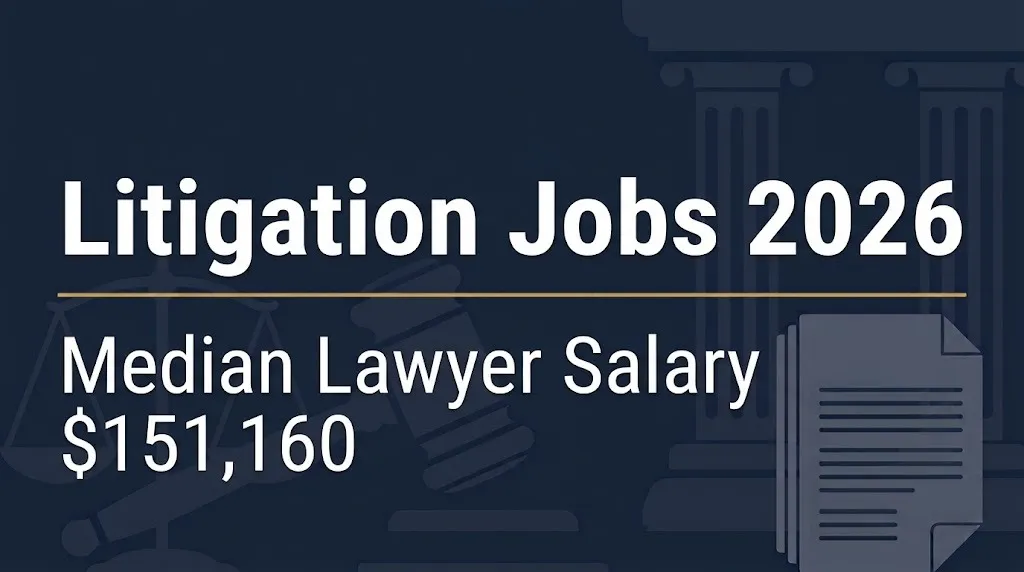
Litigation attorneys earn a median of $147,000 in major markets like San Jose, California, with the average at $155,049 and top earners reaching $210,372 . National data from Salary.com shows senior litigation attorneys average $152,298 per year .
Experience drives the biggest salary jumps. Here is the breakdown:
| Experience Level | Average Salary |
|---|---|
| Entry-Level (less than 1 year) | $74,384 |
| Early Career (1-2 years) | $103,973 |
| Mid-Level (2-4 years) | $119,830 |
| Senior-Level (5-8 years) | $141,113 |
| Expert (over 8 years) | $153,247 |
Location matters just as much. The District of Columbia pays the highest average at $168,624, followed by California at $167,985 and Massachusetts at $165,746 . Texas litigation attorneys average $144,536, with a range from $89,994 to $232,135 .
In-house roles can pay more. Reddit posted a Senior Counsel position for employment and litigation with a salary range of $230,000 to $322,000 . CVS listed a Tort Litigation Counsel role with a pay range of $92,700 to $203,940 .
Key Takeaway: Litigation attorney salaries range from about $74,000 for entry-level to over $200,000 for senior in-house or partner-track roles, with location and practice area driving the biggest differences.
What Qualifications Do You Need for Litigation Attorney Jobs?
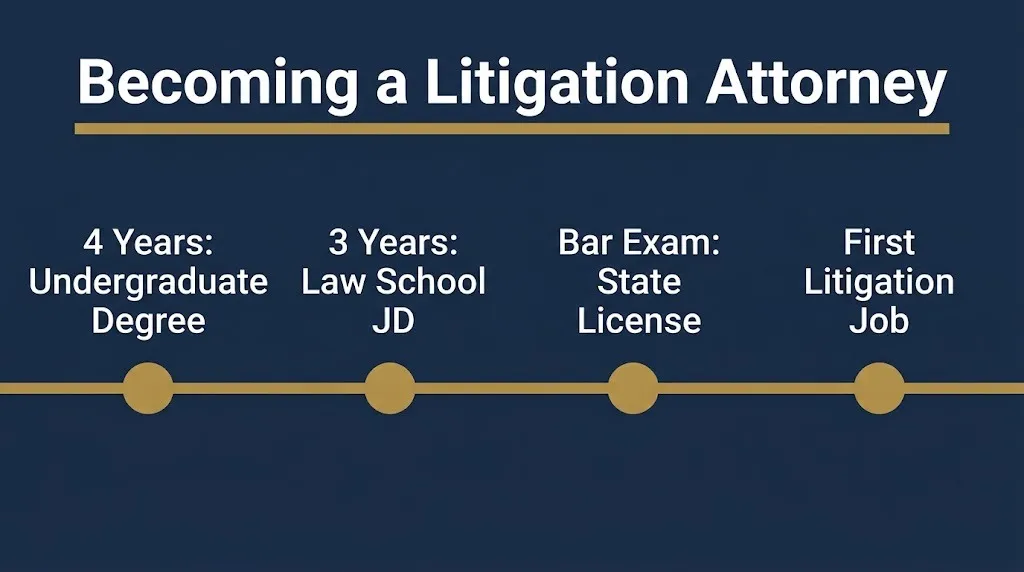
You need a Juris Doctor degree from an accredited law school and a license to practice law in the state where you work. Becoming a lawyer usually takes 7 years of full-time study after high school: 4 years of undergraduate study followed by 3 years of law school .
Bar admission is the critical credential. Each state’s highest court sets its own rules for admission. Most states require graduation from an ABA-accredited law school, passing the written bar exam, and a character review .
For litigation specifically, early exposure to contentious work matters. Internships with courts, regulatory bodies, or disputes-focused firms help you build skills and demonstrate commitment to the field . Federal clerkships are a strong differentiator. A former Big Law litigator noted that firms tend to hire clerks from the highest state courts or federal courts .
Litigation employers look for these skills:
- Analytical thinking to review complex evidence and develop strategy
- Attention to detail for drafting pleadings and reviewing documents
- Communication skills to explain issues clearly to clients and judges
- Commercial awareness to understand client industries and priorities
- Resilience and organization to handle unpredictable deadlines
- Negotiation and persuasion for settlements and mediations
Reality Check: No one texts you a litigation job offer out of the blue. Legitimate legal employers post openings through bar association career centers, law school job boards, and professional recruiters. If a message asks for payment to secure a litigation position, it is a scam.
Where Are the Most Litigation Jobs in 2026?
Litigation jobs are concentrated in major metropolitan areas, state capitals, and regions with active court systems. The ABA Career Center lists dozens of litigation attorney openings across Ohio, Pennsylvania, Maryland, Texas, Florida, and California.
Here are the states with the highest litigation attorney salaries:
| State | Average Salary |
|---|---|
| District of Columbia | $168,624 |
| California | $167,985 |
| Massachusetts | $165,746 |
| Washington | $165,137 |
| New Jersey | $165,076 |
| New York | $161,908 |
Government litigation roles are also available. The Department of Justice, state attorneys general offices, and regulatory agencies hire litigators for enforcement and defense work. Government salaries are typically lower than private practice but come with benefits and public service loan forgiveness eligibility .
Remote litigation jobs exist but are less common than in other legal fields. One remote litigation associate posting offered $150,000 to $180,000 for insurance coverage work, requiring California bar membership . Most litigation roles remain in-office or hybrid because court appearances and depositions require physical presence.
How Do You Find and Apply for Litigation Jobs?
You find litigation jobs through bar association career centers, legal recruiters, law school job boards, and direct applications to firms. The ABA Career Center is a primary resource, listing hundreds of litigation attorney positions nationwide .
Here are the steps to land a litigation job:
- Get bar admission in your target state first.
- Build a writing sample that shows your litigation drafting skills.
- Target firms and organizations that handle cases in your practice area.
- Network through bar associations and legal events.
- Apply through official job boards and firm websites.
- Prepare for interviews by studying the firm’s recent cases.
- Negotiate salary and benefits after receiving an offer.
Many litigation positions require a writing sample and references. One Texas firm asked candidates to submit a resume, cover letter, references, and writing sample . Another firm requested a resume and writing sample with the initial application .
For entry-level candidates, internships and clerkships are the strongest path. A 2026 legal career podcast noted that young lawyers learn by observing talented colleagues and adversaries and by doing the work themselves . Litigation is especially exciting for new attorneys because every case requires learning about new industries and legal issues.
What Is the Job Outlook for Litigation Attorneys in 2026?
The job outlook for litigation attorneys is stable, with employment projected to grow 4% from 2024 to 2034, about as fast as the average for all occupations. About 31,500 openings for lawyers are projected each year over the decade .
Litigation specifically remains resilient during periods of economic uncertainty. Disputes activity often stays active when transactional work slows . The 2026 legal market is described as selective but strong for litigation and regulatory practices .
Artificial intelligence is changing the work but not eliminating the need for litigators. A legal podcast host predicted the number of lawyers will increase over the next three years despite AI’s growing ability to draft documents and analyze discovery . At the highest levels of the profession, highly skilled lawyers remain essential.
The litigation market is less active for lateral associates who lack direct firm experience. A Glassdoor discussion from April 2026 noted that firms prefer laterals from comparable firms or federal clerkships over candidates from other backgrounds . That means your first litigation job matters. Getting into a firm or clerkship early makes later moves easier.
What Happens Next in the 2026 Litigation Job Market
Here is the expected timeline for litigation hiring and salary trends:
Q4 2026: Firms finalize hiring for 2027 associate classes. Regulatory and investigations practices continue to add laterals.
Early 2027: Annual salary reviews take effect. Entry-level litigation salaries likely rise 3% to 4%.
Mid 2027: Lateral partner hiring accelerates as firms position for litigation demand in antitrust and white-collar defense.
2028 and beyond: AI integration changes how junior litigators work, but demand for trial-experienced attorneys remains strong.
Frequently Asked Questions
How much do litigation attorneys make in 2026?
Entry-level litigation attorneys average $74,384, mid-level attorneys average $119,830, and senior attorneys average $152,298. Top earners reach $176,169 or higher.
Do you need a law degree to work in litigation?
Yes, litigation attorney jobs require a Juris Doctor degree from an accredited law school and a license to practice law. Some litigation support roles like paralegal do not require a JD.
What is the job outlook for litigation attorneys?
Employment of lawyers is projected to grow 4% from 2024 to 2034, with about 31,500 openings each year. Litigation and regulatory practices are among the strongest hiring areas in 2026.
How long does it take to become a litigation attorney?
It takes about 7 years of full-time study after high school: 4 years of undergraduate study and 3 years of law school, plus time to pass the bar exam and get licensed.
Where do litigation attorneys make the most money?
The District of Columbia pays the highest average at $168,624, followed by California at $167,985 and Massachusetts at $165,746.
Can you work remotely as a litigation attorney?
Remote litigation jobs exist but are less common than in other legal fields. One remote litigation associate posting offered $150,000 to $180,000, requiring California bar membership and 2 years of experience.
What skills do litigation employers look for?
Employers look for analytical thinking, attention to detail, strong writing and communication skills, commercial awareness, resilience, and negotiation abilities. Trial experience and federal clerkships are strong differentiators.
How do you find litigation job openings?
The ABA Career Center, state bar association job boards, legal recruiters, and law school career offices are the primary sources for litigation attorney openings. Direct applications to firms also work.
Start Your Litigation Job Search Now
The litigation job market in 2026 is selective but real. Entry-level salaries start around $74,000, and experienced litigators can earn over $150,000. The key is getting bar admission, building a strong writing sample, and targeting firms that handle the type of litigation you want to practice.
Check the ABA Career Center and your state bar association job board this week. If you are a law student, apply for summer internships at litigation firms now. The strongest path into a litigation career starts with early exposure to contentious work.