Houston Workers Compensation Lawyer 2026: What They Cost, What Texas Pays, and When to Hire
Quick Answer
- A Houston workers’ comp lawyer helps you navigate a no-fault system where weekly benefits max out at $1,271 in 2026 .
- Texas is the only state where employers can opt out of workers’ comp, so your employer’s subscriber status changes everything .
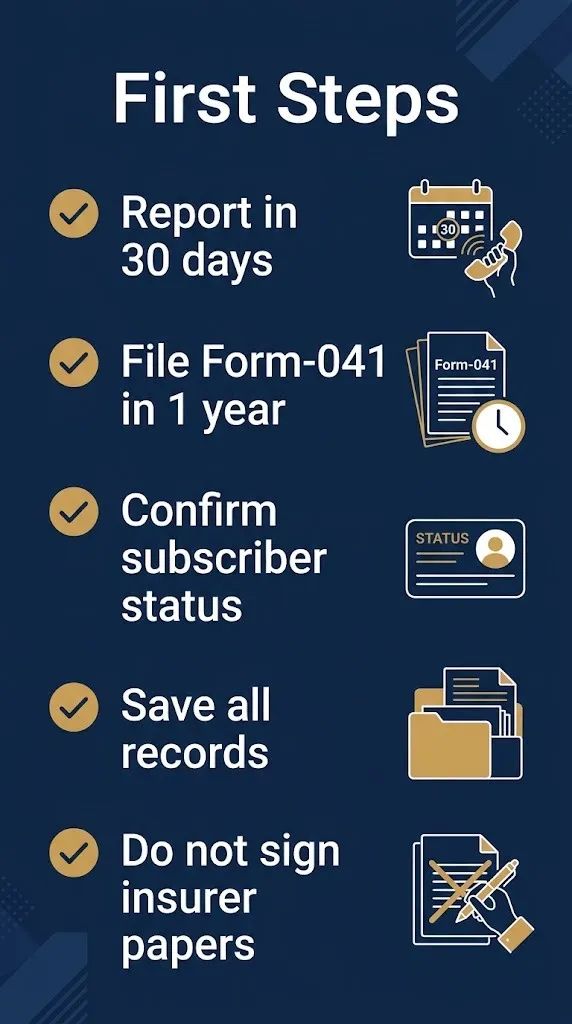
- You have 30 days to report the injury and one year to file the claim with the DWC .
You are searching for a Houston workers’ compensation lawyer because you got hurt on the job and the insurance company is already giving you trouble. The first thing to understand is that Texas does not work like most states. Your employer either carries workers’ comp insurance (a subscriber) or opted out (a non-subscriber), and that single fact determines whether you are in a no-fault administrative system with capped benefits or a courtroom where you can sue for pain and suffering .
The numbers matter. If your employer is a subscriber, your temporary income benefits are capped at $1,271.00 per week for 2026, and that cap binds even if you earn six figures . If your employer opted out, you can file a negligence lawsuit with a two-year statute of limitations and pursue damages a comp claim will never cover .
This article breaks down what a Houston lawyer actually does, what the 2026 benefit caps are, how to tell which system applies to you, and the deadlines that can end your claim before you ever see a hearing.
The Facts
| Item | What to Know |
|---|---|
| System Type | Texas workers’ comp is optional for employers; subscriber vs. non-subscriber changes your rights |
| 2026 Max Weekly Benefit | $1,271.00 for temporary income benefits |
| 2026 Min Weekly Benefit | $191.00 |
| Report Deadline | 30 days to notify your employer |
| Claim Deadline | 1 year to file DWC Form-041 |
| Lawsuit Deadline (Non-Subscriber) | 2 years from the injury |
| Attorney Fees (Subscriber) | Regulated by DWC; contingency for non-subscriber cases |
Is Hiring a Houston Workers Compensation Lawyer Legit or a Scam Risk?
Hiring a Houston workers’ compensation lawyer is legitimate, but the search term draws lead-generation sites that sell your phone number to the highest bidder. A real Houston work injury attorney will tell you their Texas bar number, explain the subscriber versus non-subscriber distinction without prompting, and offer a free consultation . A lead broker will ask for your injury details and route you to whoever pays for the lead.
The scam risk is real in the work injury space because injured workers are desperate and the amounts are large. The Texas Department of Insurance regulates attorney fees in subscriber cases, which means a legitimate lawyer handling a comp claim cannot simply charge whatever they want . In non-subscriber cases, contingency fees are standard, and a Houston attorney’s published rate runs 30% to 40% of the recovery . If someone quotes you a fee structure that does not match those norms, ask why.
Key Takeaway: A real Houston work injury lawyer can explain Texas’s subscriber rules and fee regulations in the first conversation, without asking for payment upfront.
How Much Does a Houston Workers Compensation Lawyer Cost?
A Houston workers’ compensation lawyer costs nothing upfront in most cases, because work injury attorneys work on contingency and subscriber-case fees are regulated by the state. For non-subscriber lawsuits, contingency fees typically run 30% to 40% of the recovery, according to a published Houston attorney profile . For subscriber claims, the Texas Division of Workers’ Compensation approves attorney fees through a formal application process, and the rules set maximum hourly rates and service-hour guidelines .
The DWC fee rules cap specific tasks. An initial interview and research is allotted 1.0 hour. Setting up the file and filing forms is 0.5 hours. Monthly communications are capped at 2.5 hours. Preparation of a settlement agreement is 1.0 hour . These caps exist to prevent attorneys from inflating bills in a system where the injured worker’s benefits are already limited.
| Cost Component | Subscriber Claim | Non-Subscriber Lawsuit |
|---|---|---|
| Upfront cost | $0 in most cases | $0 in most cases |
| Fee structure | DWC-regulated, fee application required | Contingency, 30% to 40% typical |
| Who pays | Comes out of benefits or is approved by DWC | Comes out of settlement or verdict |
| Free consultation | Common | Common |
Not yet determined for your specific case until a lawyer reviews whether your employer is a subscriber and what benefits are in dispute.
Key Takeaway: Subscriber claims have regulated fees, non-subscriber lawsuits use contingency, and neither should require money upfront.
How Much Are Texas Workers Compensation Benefits in 2026?
Texas workers’ compensation benefits in 2026 pay 70% of your average weekly wage for temporary income benefits, capped at $1,271.00 per week and floored at $191.00 . The cap is set annually based on the State Average Weekly Wage. A Houston worker earning $2,000 per week before the injury receives the full $1,271 cap, not 70% of $2,000 ($1,400). A worker earning $1,200 per week receives $840 per week, because that is below the cap.
The benefit structure has four tiers, and each has different rules:
| Benefit Type | Rate | 2026 Max | Duration |
|---|---|---|---|
| Temporary Income Benefits (TIBs) | 70% of AWW | $1,271.00/week | Up to 104 weeks |
| Impairment Income Benefits (IIBs) | 70% of AWW | $890.00/week | 3 weeks per impairment point |
| Supplemental Income Benefits (SIBs) | 80% of wage gap | $890.00/week | Up to 401 weeks |
| Lifetime Income Benefits (LIBs) | 75% of AWW | $1,271.00/week | Lifetime, catastrophic only |
The impairment rating drives the IIBs calculation. A 15% impairment rating from a designated doctor produces 45 weeks of impairment income benefits at 70% of your average weekly wage . That is where settlement math begins in the subscriber system, because Texas eliminated traditional lump-sum comp settlements in 1989 and only allows lump-sum acceleration of IIBs under narrow conditions .
Reality Check: No legitimate workers’ comp attorney promises you a specific dollar amount before reviewing your average weekly wage and impairment rating. The caps are set by statute, and anyone quoting a settlement figure without those numbers is guessing. The Texas Department of Insurance publishes the official rates, and any site quoting a different 2026 cap is using outdated or unverified data.
What Is the Difference Between Subscriber and Non-Subscriber in Houston?
The difference between subscriber and non-subscriber is the single most important fact in your Texas work injury case, and it determines whether you are in a capped administrative system or a full negligence lawsuit. A subscriber employer carries workers’ comp insurance, which means you get no-fault benefits but generally cannot sue your employer for pain and suffering . A non-subscriber employer opted out, which means you can file a negligence lawsuit in district court and pursue medical costs, lost wages, pain and suffering, mental anguish, and potentially punitive damages .
Texas is the only state where private employers can opt out of workers’ comp, and roughly 73% of Texas employers subscribe . That leaves a meaningful number of Houston workers in the non-subscriber category, especially in construction, oilfield services, and small businesses where comp premiums are high.
The legal trade-off is stark. In a subscriber case, the employer’s negligence does not matter. You get benefits if the injury happened at work. In a non-subscriber case, you must prove the employer’s negligence caused your injury, but the employer loses three powerful defenses: contributory negligence, assumption of risk, and fellow-employee negligence . That makes non-subscriber cases potentially far more valuable, but also more complex and contested.
What Does a Houston Workers Compensation Lawyer Actually Do?
A Houston workers compensation lawyer handles the administrative process with the Texas Division of Workers’ Compensation, disputes benefit denials, and protects your deadlines. The work includes filing DWC forms, challenging impairment ratings, requesting benefit review conferences, and representing you at contested case hearings . In subscriber cases, the lawyer’s job is to make sure the insurance carrier pays what the statute requires, not what the adjuster offers.
For non-subscriber cases, the job is different. Your lawyer investigates the accident, preserves evidence, identifies third parties who may share liability, and files a negligence lawsuit in Harris County district court or another proper venue . The two-year statute of limitations applies, and the employer’s defenses are limited by the opt-out statute .
Here is what a Houston work injury lawyer typically handles:
- Confirming whether your employer is a subscriber or non-subscriber.
- Filing DWC Form-041 within the one-year deadline .
- Challenging a disputed impairment rating within 90 days .
- Requesting a benefit review conference if benefits are denied.
- Representing you at a contested case hearing.
- Investigating third-party liability in non-subscriber cases.
- Filing a negligence lawsuit within two years if the employer opted out .
What Is the Deadline to File a Houston Work Injury Claim?
The deadline to file a Houston work injury claim depends on which system applies. For a subscriber claim, you must report the injury to your employer within 30 days and file DWC Form-041 with the Division of Workers’ Compensation within one year of the injury . For a non-subscriber negligence lawsuit, the statute of limitations is generally two years from the injury date .
The 30-day reporting deadline is the one that catches people. Telling your supervisor verbally may not be enough. Put the notice in writing. If the injury developed over time, the clock starts when you knew or should have known the condition was work-related . The one-year claim deadline is separate from the 30-day report, and missing either one can give the carrier grounds to deny benefits.
| Claim Type | Report Deadline | Filing Deadline |
|---|---|---|
| Subscriber (DWC claim) | 30 days to employer | 1 year to DWC |
| Non-Subscriber (lawsuit) | Report promptly to preserve evidence | 2 years statute of limitations |
Key Takeaway: The 30-day report and one-year claim deadlines are separate, and missing either one can end a subscriber claim.
What Is a Houston Work Injury Case Worth in 2026?
A Houston work injury case can be worth anywhere from a few thousand dollars in a minor subscriber claim to $500,000 or more in a serious non-subscriber lawsuit, depending on the injury and the employer’s status. A published Texas settlement guide estimates that minor soft tissue cases settle between $10,000 and $40,000, while serious injuries requiring surgery or causing permanent disability commonly produce settlements of $100,000 to $500,000 or more . Construction and oilfield injuries, which are common in Houston, frequently exceed six figures when a non-subscriber employer is involved.
For subscriber claims, the math is formula-driven. A moderate back injury with a 15% impairment rating at a $1,200 average weekly wage produces roughly $37,800 in impairment income benefits alone (45 weeks at $840 per week), before any medical or temporary income benefits are added . A severe traumatic brain injury with a 60% impairment rating could reach much higher, though the statutory caps still apply to the weekly rate.
| Case Type | Typical Range | Basis |
|---|---|---|
| Minor subscriber claim | $2,000 to $40,000 | Statutory formula, low impairment |
| Surgical subscriber claim | $40,000 to $175,000 | Higher impairment rating, longer IIBs |
| Serious non-subscriber lawsuit | $100,000 to $500,000+ | Full tort damages, pain and suffering |
Not yet determined for your case until an attorney reviews your average weekly wage, impairment rating, and the employer’s subscriber status.
What Happens Next
Immediate: Report the injury in writing to your employer and confirm whether they carry workers’ comp insurance.
Within days: File DWC Form-041 if you are in the subscriber system, or contact a Houston attorney to evaluate a non-subscriber claim.
Within weeks: Gather medical records, wage statements, and witness information; do not sign anything from the insurance carrier without review.
If benefits are denied: Request a benefit review conference through the DWC; the process has its own deadlines.
If non-subscriber: File a negligence lawsuit in Harris County before the two-year statute of limitations expires.
Frequently Asked Questions
How much does a Houston workers compensation lawyer cost?
Most charge nothing upfront. Subscriber-case fees are regulated by the Texas DWC, and non-subscriber cases use contingency fees of 30% to 40% .
What is the maximum weekly benefit in Texas for 2026?
The maximum temporary income benefit is $1,271.00 per week for the 2026 fiscal year .
How long do I have to report a work injury in Houston?
You have 30 days to report the injury to your employer and one year to file DWC Form-041 .
What is the difference between subscriber and non-subscriber?
A subscriber carries workers’ comp insurance and you get no-fault benefits. A non-subscriber opted out, and you can sue for negligence with a two-year deadline .
Can I sue my employer for a work injury in Texas?
Only if your employer is a non-subscriber. Subscriber employers are protected by the exclusive remedy provision, with narrow exceptions .
How much is my Houston work injury case worth?
Subscriber claims follow a formula capped at $1,271 per week. Non-subscriber lawsuits can reach $100,000 to $500,000 or more for serious injuries .
Do I need a lawyer for a workers compensation claim in Houston?
You can file the forms yourself, but a lawyer helps if benefits are denied, the impairment rating is disputed, or your employer opted out of workers’ comp .