Workers Compensation Insurance Massachusetts 2026: Employer Rules, Worker Benefits, and What You Can Actually Claim
Quick Answer
- Workers’ compensation insurance is mandatory for nearly all Massachusetts employers, regardless of hours worked or employee count.
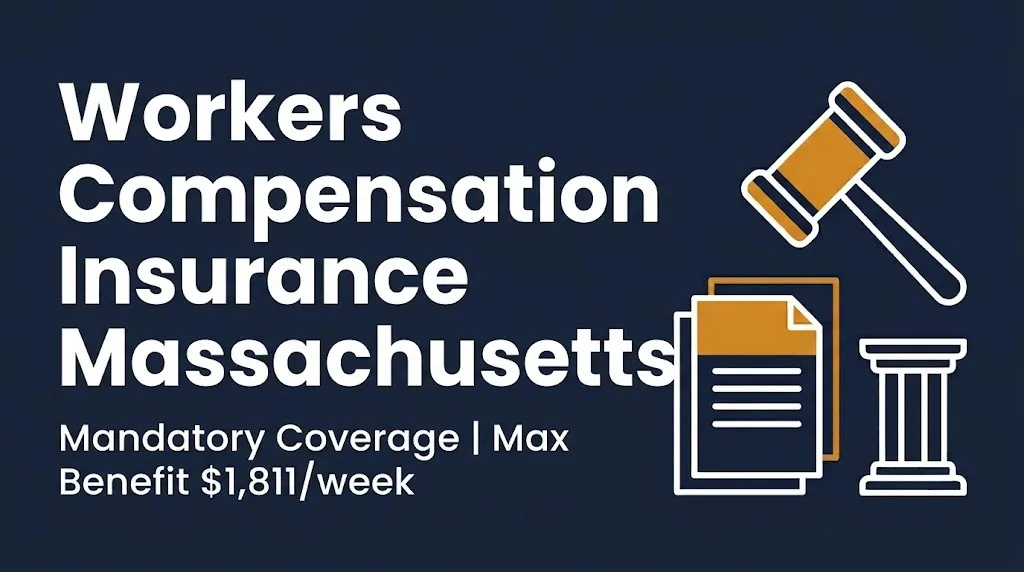
- Injured workers may receive 60% of their average weekly wage, capped at $1,811 per week in 2026.
- The most important deadline is 365 days from the injury to file a claim with the Department of Industrial Accidents.
You searched for workers compensation insurance in Massachusetts because you got hurt on the job, or you employ people and need to understand the rules. The direct answer is that this is a state-mandated insurance system, not a settlement fund. Employers buy policies from private carriers, and injured workers file claims through the Department of Industrial Accidents when disputes arise.
The number that matters most for an injured worker is $1,811 per week, the 2026 maximum benefit. For an employer, the critical fact is that missing coverage triggers a stop work order with fines starting at $100 per day.
This article breaks down the verified 2026 rules: who must carry coverage, how much injured workers actually receive, how to file a claim, and what happens when an employer has no insurance. One detail worth knowing up front: the state’s own Department of Industrial Accidents does not set insurance rates or sell policies, so you cannot buy coverage from the agency that enforces the law.
The Facts
| Item | Verified Detail |
|---|---|
| Governing Law | MGL c. 152 § 25A (Massachusetts Workers’ Compensation Act) |
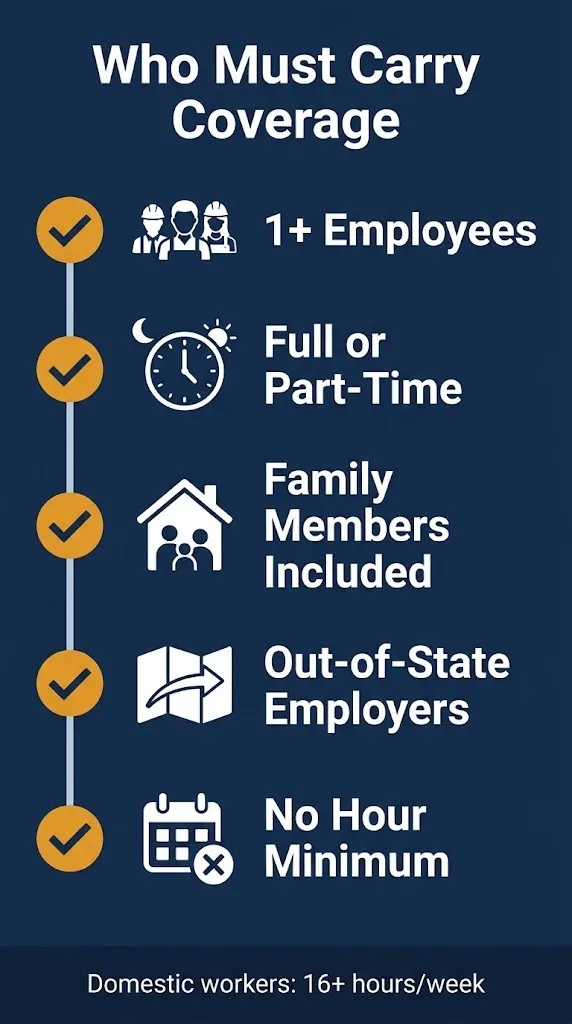
| Who Must Carry | All employers with one or more employees, full or part-time |
| State Agency | Department of Industrial Accidents (DIA) |
| 2026 Max Weekly Benefit | $1,811 per week |
| 2026 Min Weekly Benefit | $362 per week |
| Benefit Rate | 60% of average weekly wage |
| Filing Deadline | 365 days from injury |
| Waiting Period | 5 calendar days, retroactive after 21 days |
| Uninsured Penalty | Stop work order, $100 per day minimum fine |
Is Workers Compensation Insurance Required for Every Massachusetts Employer?
Workers’ compensation insurance is required for every employer operating in Massachusetts with at least one employee, whether full-time or part-time. There is no minimum hour threshold for coverage, and family members who work for you are not exempt .
The only narrow exception applies to domestic employees who must work at least 16 hours per week to be covered . Corporate officers who own at least 25% interest in the company may file for an exemption, but that exemption does not extend to other employees .
Out-of-state employers also must provide coverage for employees working in Massachusetts. If your policy lists Massachusetts in Section 3A of the information page, you satisfy the requirement. If it lists Massachusetts in Section 3C, you need Form 154 verification from your carrier .
Sole proprietors and partners are not required to cover themselves, but they can purchase voluntary coverage. If they hire employees, those employees must be covered .
How Much Does Workers Comp Pay in Massachusetts in 2026?
Workers’ comp in Massachusetts pays 60% of your average weekly wage, subject to a statewide maximum of $1,811 per week and a minimum of $362 per week for 2026. If your average weekly wage is below the minimum, you receive your full wage instead of a percentage .
The table below shows how the formula works in practice.
| Average Weekly Wage | 60% Calculation | Actual Weekly Benefit |
|---|---|---|
| $500 | $300 | $500 (full wage, below minimum) |
| $1,200 | $720 | $720 |
| $2,500 | $1,500 | $1,500 |
| $3,500 | $2,100 | $1,811 (capped at maximum) |
| $4,000 | $2,400 | $1,811 (capped at maximum) |
Not yet determined applies to any specific claim outcome. The ranges above are statutory calculations, not predictions of what you will receive. Your actual benefit depends on your documented average weekly wage, your disability status, and whether the insurer disputes your claim.
Temporary total disability benefits under Section 34 can last up to 156 weeks (three years). After that, the case may shift to partial incapacity benefits under Section 35, which pay 60% of the difference between your pre-injury wage and what you can earn post-injury .
How Do You File a Workers Compensation Claim in Massachusetts?
You file a workers’ compensation claim in Massachusetts by notifying your employer and, if the insurer denies the claim or your employer fails to report it, by submitting Form 110 to the Department of Industrial Accidents. The 365-day deadline runs from the date of injury .
Here are the verified steps:
- Notify your employer immediately about the injury and how it happened.
- Get medical treatment and tell the provider the injury is work-related.
- Confirm your employer filed Form 101 (Employer’s First Report of Injury) within 7 days.
- Check whether the insurer accepts or denies your claim within 14 days of receiving the report.
- Complete Form 110 (Employee Claim) if the claim is denied or your employer did not file.
- Mail a copy to the insurer by certified mail and keep a copy for yourself.
- Attend the conciliation scheduled by the DIA to discuss the claim.
- Appeal to an administrative judge if conciliation does not resolve the dispute.
The DIA rejects many claims for simple errors: wrong insurance carrier name, missing benefit type checkboxes, or missing the first and fifth day of disability. Attach medical reports and bills to your Form 110 even if you think the insurer already has them .
Key Takeaway: The 365-day filing deadline is the hard stop in Massachusetts workers’ comp, and Form 110 is the tool you use when the insurer or employer does not handle your claim correctly.
Reality Check: No one texts you workers’ comp money first. Filing a claim with the DIA is free, and you do not need to pay a third-party service to submit Form 110. If a website charges you to “register” a Massachusetts workers’ comp claim, it is not the official process.
What Happens If Your Employer Has No Workers Compensation Insurance?
If your employer has no workers’ compensation insurance, you can file a claim against the Workers’ Compensation Trust Fund, which is part of the DIA. The Trust Fund may pay lost wage and medical benefits, and the DIA will pursue the employer to recover the money .
The penalties for uninsured employers are severe. The DIA issues a stop work order, and fines begin at $100 per day, including weekends and holidays, until coverage is verified and the fine is paid. If the employer appeals the order, the fine increases to $250 per day .
Criminal penalties are also possible: up to one year in prison and a fine of up to $1,500 upon conviction. Uninsured employers are also barred from bidding on state or municipal contracts for three years .
This matters for workers because the Trust Fund is the safety net, but it does not make the employer compliant. If you are hurt and suspect your employer has no coverage, contact the DIA’s Office of Insurance at (617) 626-5481 to verify the carrier .
How Much Does Workers Compensation Insurance Cost for Employers?
Workers’ compensation insurance in Massachusetts costs an average of about $484 per year for small businesses, according to Insureon customer policy data. Actual premiums depend on payroll, industry classification, claims history, and carrier .
The rate per $100 of payroll varies widely by job type. Published 2026 estimates show office and clerical work at roughly $0.25 per $100 of payroll, while roofing sits at $12.00 per $100 . Those figures are estimates, not filed rates, and actual quotes will differ.
The formula insurers use is: classification rate × experience modification rate × (annual payroll ÷ $100). Experience modification only applies to employers with annual premiums of at least $5,000 .
Massachusetts uses its own rating bureau, the Workers’ Compensation Rating and Inspection Bureau of Massachusetts (WCRIBMA), rather than NCCI. WCRIBMA files loss costs and classification rules that carriers build their pricing on .
The state’s most recent approved general rate change was a 14.6% average decrease effective July 1, 2024. A proposed 7.1% increase for July 2025 was rejected, and no separate 2026 manual-rate change has been approved as of the latest available information .
What Is the Difference Between Workers Comp and Liability Insurance?
Workers’ compensation and liability insurance are not the same thing, and the DIA says so plainly. Workers’ comp covers employee injuries and wage loss regardless of fault. Liability insurance covers claims from third parties, such as customers or visitors who are injured on your premises .
Workers’ comp is a no-fault system: your employee does not need to prove you were negligent to receive benefits. Liability insurance responds to negligence claims, and it does not satisfy the workers’ comp requirement.
If you are an employer, carrying one does not substitute for the other. If you are a worker, your claim goes through the workers’ comp carrier, not the business liability policy.
What Happens Next
- Within 7 days of injury: Your employer must file Form 101 with the insurer and DIA if you miss 5 or more days of work.
- Within 14 days of receiving the report: The insurer must accept or deny your claim.
- Within 365 days of injury: You must file Form 110 with the DIA if the claim is denied or not filed.
- After Form 110 filing: The DIA schedules a conciliation, usually within a few weeks.
- If conciliation fails: The case moves to an administrative judge for a formal hearing.
Frequently Asked Questions
Is workers compensation insurance mandatory in Massachusetts?
Yes. Every employer with at least one employee must carry coverage, regardless of hours worked or number of employees .
How much does workers comp pay per week in Massachusetts?
The 2026 maximum is $1,811 per week, and the minimum is $362 per week. Benefits are 60% of your average weekly wage .
What is the deadline to file a workers comp claim in Massachusetts?
The filing deadline is 365 days from the date of injury .
What happens if my employer does not have workers comp insurance?
You can file against the Workers’ Compensation Trust Fund. The DIA issues stop work orders and fines of at least $100 per day against the employer .
Do I need a lawyer to file a workers comp claim in Massachusetts?
You are not required to have one. Form 110 can be filed by an unrepresented worker, but an attorney may help if the insurer disputes the claim or the injury is serious.
Can I choose my own doctor for a workers comp injury in Massachusetts?
Yes. Injured workers may select their own medical provider, and reasonable, necessary treatment related to the work injury must be paid by the insurer .
How long can I receive workers comp benefits in Massachusetts?
Temporary total disability benefits can last up to 156 weeks (three years) under Section 34. Partial incapacity benefits under Section 35 have different duration rules .