Debt Settlement Lawyers Near Me in 2026: What They Cost, What They Do, and When You Need One
Quick Answer
- A debt settlement lawyer negotiates with creditors to reduce what you owe, and can defend you if you are sued.
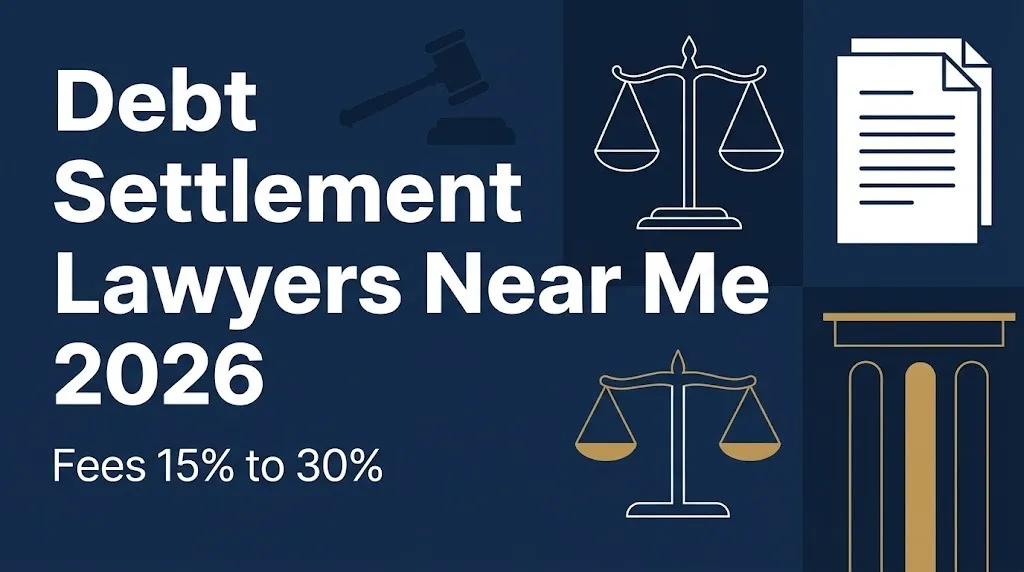
- Fees typically run 15% to 30% of the debt or savings, or $150 to $400 per hour .
- Real debt settlement firms never charge upfront fees before negotiating, and the FTC warns that scams thrive in this space.
You are searching for a debt settlement lawyer near me because the calls will not stop, the balances keep climbing, and you need someone who can actually negotiate. The first thing to understand is that a lawyer and a debt settlement company are not the same thing. A lawyer can defend you in court if a creditor sues. A settlement company cannot. That difference matters more than the fee structure, because the moment a collection lawsuit lands on your doorstep, the company you hired cannot help you .
The numbers here are not vague. Attorney fees for debt negotiation commonly run 15% to 30% of the debt or the amount saved, or $150 to $400 per hour depending on location and experience . A flat fee is sometimes available for reviewing a specific settlement offer. None of those figures include the tax bill that can follow forgiven debt over $600 .
This article breaks down what these lawyers actually do, how their fees compare to settlement companies, the warning signs of a debt relief scam, and the one situation where hiring a lawyer is not optional.
The Facts
| Item | What to Know |
|---|---|
| Service Type | Legal representation for debt negotiation, creditor lawsuits, and FDCPA violations |
| Typical Fee Structure | 15% to 30% of debt or savings, or $150 to $400/hour |
| What a Lawyer Can Do | Negotiate, defend lawsuits, send cease-and-desist letters, file FDCPA claims |
| What a Settlement Company Cannot Do | Represent you in court or provide legal advice |
| Scam Risk | High; upfront fees and “stop paying creditors” advice are red flags |
| Key Deadline | No universal deadline, but a lawsuit summons has a strict response window |
Is Hiring a Debt Settlement Lawyer Legit or a Scam Risk?
Hiring a debt settlement lawyer is legitimate, but the search term attracts companies that pretend to be law firms and deliver nothing but a fee schedule. A real attorney is licensed by a state bar, can appear in court on your behalf, and is bound by ethical rules that require them to act in your interest . A debt settlement company is a business, and some of them operate in a gray zone where they collect monthly fees, tell you to stop paying creditors, and never actually negotiate .
The scam pattern is consistent. You see an ad promising to wipe out 70% of your debt. You call. A consultant asks for an upfront setup fee and tells you to stop paying your creditors. Months pass. Your credit score drops, late fees pile up, and when you call your creditors, you find out no one ever contacted them . The Federal Trade Commission and state regulators have repeatedly warned about this exact model.
The way to separate a real lawyer from a marketer is simple. Ask for their bar number. Ask which state they are licensed in. Ask whether they will personally appear in court if you get sued. A real lawyer answers those questions without hesitation. A lead broker changes the subject.
Key Takeaway: A real debt settlement lawyer can go to court for you. A settlement company cannot, no matter what its website says .
How Much Does a Debt Settlement Lawyer Cost in 2026?
A debt settlement lawyer costs 15% to 30% of the debt amount or the amount saved, or $150 to $400 per hour, according to published fee guidance . The percentage model is more common in consumer debt negotiation because it ties the lawyer’s pay to the result. The hourly model is more common when the work is limited, such as reviewing a settlement offer or defending a single collection lawsuit.
Here is how the math works on a real balance. If you owe $20,000 and your lawyer negotiates it down to $8,000, you saved $12,000. At a 25% fee on the savings, you pay $3,000, leaving you with $9,000 in net savings . That is the clean version. The messy version is that your credit score takes a hit during the process, and the forgiven $12,000 may be taxable income if it exceeds $600 .
| Fee Structure | Typical Range | When It Applies |
|---|---|---|
| Percentage of savings | 15% to 30% | Negotiation with multiple creditors |
| Percentage of enrolled debt | 15% to 30% | Some firms use this instead of savings |
| Hourly | $150 to $400 | Limited scope, review, or defense work |
| Flat fee | Varies | Reviewing a single settlement offer |
Not yet determined for your specific case until a lawyer reviews your balances, your delinquency status, and whether any creditor has already filed suit.
Key Takeaway: The fee is only worth it if the net savings after fees and taxes still beats what you would pay on your own.
Reality Check: No legitimate debt settlement lawyer guarantees a specific reduction before reviewing your file. The 30% to 50% forgiveness range you see quoted is an average, not a promise, and creditors are not required to settle at all .
What Does a Debt Settlement Lawyer Actually Do?
A debt settlement lawyer negotiates with your creditors, reviews settlement agreements, and defends you if a creditor sues. The negotiation part is what most people expect. The defense part is what separates a lawyer from a settlement company. If a creditor files a collection lawsuit, a settlement company cannot file an answer, cannot appear at a hearing, and cannot negotiate a dismissal. A lawyer can .
The work also includes sending cease-and-desist letters under the Fair Debt Collection Practices Act. Once a collector knows you are represented, they must stop contacting you directly and communicate through your lawyer. That alone can end the harassing phone calls that drove you to search in the first place.
Here is what a lawyer typically handles:
- Reviewing your debts and identifying which ones are negotiable.
- Sending cease-and-desist letters to stop direct collector contact.
- Negotiating lump-sum settlements or payment plans with creditors.
- Reviewing settlement agreements before you sign.
- Defending you if a creditor files a lawsuit.
- Filing FDCPA claims if a collector violated your rights.
- Advising on the tax consequences of forgiven debt.
What Is the Difference Between a Debt Settlement Lawyer and a Debt Settlement Company?
A debt settlement lawyer can represent you in court and is bound by attorney ethics rules. A debt settlement company cannot do either. That is the entire difference, and it is the only one that matters when a creditor sues you . Settlement companies typically charge 15% to 25% of enrolled debt, which is similar to attorney fees, so you are not saving money by choosing the non-lawyer option .
The regulatory structure is different too. Attorneys are licensed by state bars and subject to discipline for misconduct. Debt settlement companies are regulated unevenly, and some operate in states where their model is restricted or banned. A company that claims to be “attorney backed” may be referring to a lawyer who reviewed a template and has never spoken to a client .
There is one more difference worth knowing. A lawyer can tell you when debt settlement is a bad idea. If you are current on your payments and your credit is decent, a settlement will damage your score for years. A settlement company has no incentive to tell you that, because it only gets paid if you enroll .
| Feature | Debt Settlement Lawyer | Debt Settlement Company |
|---|---|---|
| Can represent you in court | Yes | No |
| Bound by attorney ethics rules | Yes | No |
| Typical fee | 15% to 30% | 15% to 25% |
| Can send FDCPA cease-and-desist | Yes | Usually no |
| Will tell you not to enroll | Sometimes | Rarely |
How Do You Find a Real Debt Settlement Lawyer Near You?
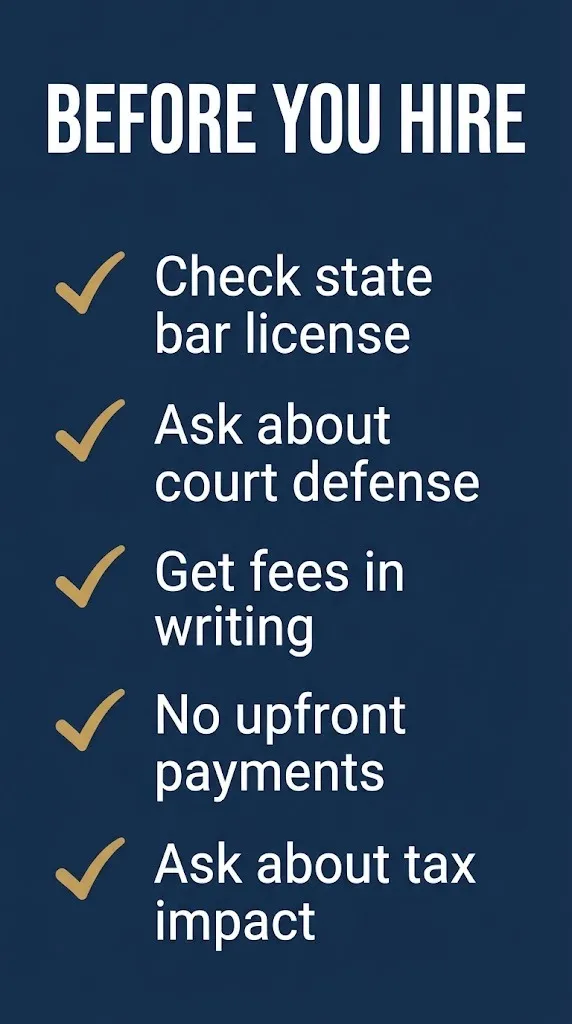
You find a real debt settlement lawyer by checking state bar records, confirming the lawyer handles debt defense, and asking whether they will appear in court for you. Start with your state bar association’s lawyer lookup, which shows licensure status and public discipline history. Then look for firms that list debt settlement, creditor defense, or FDCPA work as a practice area, not as one line among thirty others .
A free consultation is common and useful, but it is not proof of quality. Use the consultation to ask specific questions. Ask how many debt defense cases the lawyer has handled in the past year. Ask what happens if a creditor sues you mid-negotiation. Ask whether the lawyer or a staff member handles the actual negotiations . The answers will tell you whether you are talking to a lawyer or a salesperson.
Here is a practical filter:
- Confirm the lawyer’s license on your state bar website.
- Ask whether they personally negotiate with creditors or delegate it.
- Ask what they do if a creditor files suit during the process.
- Ask for the fee structure in writing before you sign anything.
- Ask whether they will review the tax consequences of forgiven debt.
- Check for public discipline records before you pay a retainer.
What Are the Red Flags of a Debt Settlement Scam?
The red flags of a debt settlement scam are upfront fees, guaranteed results, and advice to stop paying creditors before any negotiation begins. The FTC and consumer regulators have documented the same pattern for years: a company collects a setup fee, tells you to stop paying your creditors, and then does nothing while your balances grow and your credit collapses . By the time you realize nothing is happening, the company has your money and your phone calls go unanswered.
The specific warning signs are not subtle once you know them. A guarantee to wipe out 70% or 80% of your debt is a red flag, because no one can guarantee a creditor will accept anything. An upfront fee before any service is delivered is a red flag. Pressure to sign quickly is a red flag. A company that cannot tell you which regulator oversees it is a red flag .
| Red Flag | Why It Matters |
|---|---|
| Upfront fee before negotiation | Real lawyers bill after work or from escrow |
| Guaranteed debt reduction | Creditors are not required to settle |
| Advice to stop paying immediately | Damages credit and can trigger lawsuits |
| Cannot name a regulator or bar number | Sign of an unlicensed operation |
| Pressure to sign today | Legitimate advice survives a night’s sleep |
Key Takeaway: If the pitch promises a result before reviewing your file and asks for money first, it is the same scam model regulators have been warning about for years.
When Do You Actually Need a Debt Settlement Lawyer Instead of a Company?
You need a debt settlement lawyer instead of a company the moment a creditor sues you, or when you want legal protection from collector harassment. A settlement company cannot answer a lawsuit, cannot appear in court, and cannot stop a default judgment. If you have been served, the response deadline is short and missing it can result in a judgment against you, wage garnishment, or a bank levy .
The second situation is when collectors are violating your rights. If a collector calls before 8 a.m. or after 9 p.m., threatens arrest, or keeps calling after you told them to stop, that is potential FDCPA territory. A consumer law attorney can send a cease-and-desist and, in some cases, file a claim for damages. A settlement company has no standing to do either .
The third situation is when you are current on your payments and considering settlement anyway. A lawyer is more likely to tell you that stopping payments to negotiate will damage your credit for years and may not be worth it. A settlement company gets paid only if you enroll, so that advice is less likely to come from them .
What Happens Next
Immediate: Pull your credit reports and list every debt, balance, and collection status before you call anyone.
Within days: Check your state bar’s lawyer lookup and confirm the attorney’s license and discipline history.
During the consultation: Ask whether they will appear in court if you are sued, and get the fee structure in writing.
Before you sign: Confirm whether the fee is based on enrolled debt or savings, and ask about the tax consequences of forgiven amounts over $600 .
If you are served: Respond to the lawsuit through a lawyer before the deadline; a default judgment can lead to garnishment.
Frequently Asked Questions
How much does a debt settlement lawyer cost?
Most charge 15% to 30% of the debt or savings, or $150 to $400 per hour . Some offer flat fees for limited work.
What is the difference between a debt settlement lawyer and a debt settlement company?
A lawyer can represent you in court and is bound by ethics rules. A settlement company cannot do either .
Do I need a lawyer if a creditor sues me?
Yes. A settlement company cannot answer a lawsuit or appear in court for you. Missing the response deadline can lead to a default judgment .
Can a debt settlement lawyer stop collection calls?
Yes. Once a collector knows you are represented, they must communicate through your lawyer, and a cease-and-desist letter can stop direct contact .
How much debt can be forgiven in a settlement?
Creditors often settle for 30% to 50% less than the balance, but nothing is guaranteed . The amount depends on delinquency, hardship, and the creditor.
Is forgiven debt taxable?
Forgiven debt over $600 is generally treated as taxable income by the IRS, though exceptions exist . Ask your lawyer or a tax professional.
What are the red flags of a debt settlement scam?
Upfront fees, guaranteed results, and advice to stop paying creditors before negotiation begins are the main warning signs .