Healthcare Litigation 2026: Verified Settlements, Attorney Costs, and What You Can Actually Claim
Quick Answer
- Healthcare litigation is real: CVS agreed to pay $315 million over opioid prescriptions, and states settled generic drug price-fixing claims for over $496 million combined.
- Individual payouts are not yet determined for most active cases; the generic drug settlements cover purchases from May 2009 to December 2019.
- The most urgent action is checking eligibility for the generic drug compensation program, which has an open inquiry line but no confirmed claim deadline.
What Is Healthcare Litigation in 2026 and Is It Legitimate?
Healthcare litigation in 2026 is a broad category of lawsuits involving pharmaceutical companies, pharmacy chains, medical device makers, and healthcare providers accused of fraud, antitrust violations, or patient harm. It is legitimate. The federal government, state attorneys general, and private plaintiffs file these cases in federal and state courts every year.
The cases range from False Claims Act allegations against individual clinics to multistate antitrust actions against drug manufacturers. Some result in criminal penalties. Most end in civil settlements.
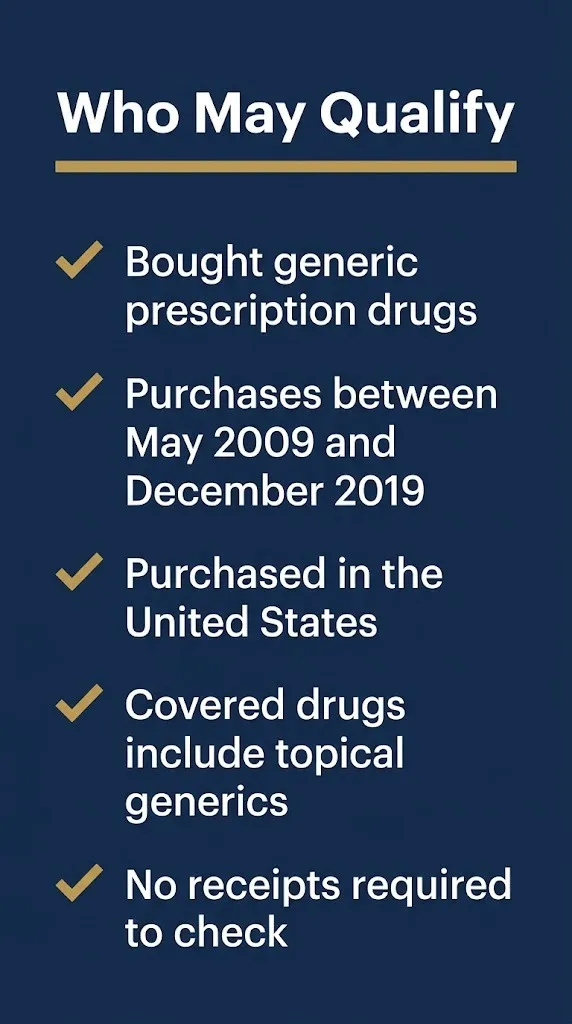
You do not need to have been physically injured to be part of some healthcare litigation. If you bought a generic prescription drug between May 2009 and December 2019, you may have overpaid because of illegal price-fixing, and you might qualify for compensation.
But “legitimate” does not mean every headline you see is a real payout opportunity. Some are active cases with no consumer claim process yet.
How Much Can You Get From Healthcare Litigation Settlements?
Payouts in healthcare litigation vary from a few dollars per claimant to millions for individual injury cases. For the large government settlements announced in October 2026, individual consumer payout amounts are not yet determined.
The CVS opioid settlement is a $315 million payment to the federal government, not a consumer claim fund. The money resolves allegations that CVS billed Medicare and other federal programs for invalid opioid prescriptions from 2013 to 2025 . No portion of that $315 million has been designated for direct consumer payments.
The generic drug settlements are different. Ascend Laboratories will pay $400,000 to the states, and Mayne Pharma will pay $650,000 . Citron Pharma’s settlement includes no monetary payment because the company has ceased operations.
Previous settlements in the same generic drug litigation totaled $496.5 million, including payments from Sandoz, Glenmark, Lannett, Bausch, Apotex, and Heritage Pharmaceuticals . A separate $400 million Sandoz settlement was announced in early October 2026 .
| Settlement | Amount | Consumer Payout Status |
|---|---|---|
| CVS opioid settlement | $315 million | Not yet determined |
| Generic drug settlements (previous) | $496.5 million | Claims process open |
| Sandoz settlement | $400 million | Pending court approval |
| Ascend/Mayne/Citron | $1.05 million combined | Pending court approval |
The honest answer: if you are waiting for a check from any October 2026 healthcare settlement, you will wait months at minimum. Court approval comes first. Then a claims process opens.
Key Takeaway: The biggest healthcare litigation numbers you see in 2026 headlines are government recoveries, not consumer payout pools, so read the fine print before assuming you have money waiting.
Do You Need a Healthcare Litigation Attorney to File a Claim?
You do not need a healthcare litigation attorney to file a claim in a class action or government settlement compensation program. The claims process for the generic drug settlements is designed for consumers to use without legal representation.
The states’ inquiry line is toll-free at 1-866-290-0182. There is also an email address and an official website for eligibility checks . You call, you answer questions about what you bought and when, and you find out if you qualify.
Hiring an attorney makes sense in specific situations:
- You suffered a serious physical injury from a drug or device and want to file an individual lawsuit.
- You are a whistleblower with inside knowledge of fraud and want to pursue a False Claims Act case.
- You were denied a claim in a settlement program and need help appealing.
For the generic drug price-fixing settlements, the process is administrative. A lawyer adds cost without adding value for most people.
The reality is that settlement administrators and government programs do not require you to have an attorney. If someone tells you that you must hire a lawyer to get your share, that is a red flag.
How Much Does a Healthcare Litigation Attorney Cost?
Healthcare litigation attorneys typically work on contingency for consumer cases, meaning you pay nothing upfront and they take 25% to 40% of any recovery. For False Claims Act whistleblower cases, the government sets the reward at 15% to 30% of the recovery.
For the generic drug settlement program, you should not pay anything. The states are running the compensation process. No attorney fees are deducted from consumer claims.
If you are considering hiring a lawyer for an individual healthcare lawsuit, ask these questions first:
- What percentage do you take from a settlement?
- Who pays for expert witnesses and court costs if we lose?
- Have you handled cases against this specific defendant before?
- Can I see the written fee agreement before signing?
For mass tort cases involving pharmaceutical injuries, many firms advance all costs. You owe nothing unless they win or settle. That structure is standard. If a firm asks for money upfront for a contingency case, walk away.
Reality Check: No legitimate settlement program requires you to pay a fee to check eligibility or file a claim. If someone calls or texts you demanding payment to “release your settlement funds,” it is a scam. The generic drug inquiry line is free, and so is filing.
How Do You File a Claim in the Generic Drug Settlements?
You can start the eligibility check for the generic drug settlements by calling 1-866-290-0182 or visiting the states’ official compensation website. The process is designed to be simple, but you need to know what you bought and roughly when.
Here are the steps:
- Gather any records showing generic prescription drug purchases from May 2009 to December 2019.
- Call the toll-free line or go to the official states’ website.
- Answer questions about which drugs you bought and the time period.
- Submit a claim if the system flags you as potentially eligible.
- Keep a copy of everything you submit.
- Watch for a confirmation number and follow up if you do not receive one.
You do not need receipts for every purchase. The eligibility rules are based on the drug and the time window. If you bought a covered generic drug during that period, you may qualify.
The settlements are still pending court approval. The first trial in the broader generic drug litigation is scheduled for February 2027 in Hartford, Connecticut . That means the claims process may not fully open until after that trial or after final approval of the settlements already announced.
When Will You Get Paid From These Settlements?
Payment timelines for the October 2026 healthcare settlements are not yet confirmed. Final court approval and claims processing take months, sometimes years.
For the CVS opioid settlement, no consumer payment mechanism exists. The $315 million goes to the federal government to resolve False Claims Act allegations . There is no individual claimant fund.
For the generic drug settlements, the states have opened an inquiry line but the formal claim submission and payment timeline depends on court approval. The first trial in the broader case is set for February 2027 .
Here is a realistic timeline:
- October 2026: Settlements announced, inquiry line open.
- Late 2026 to early 2027: Court approval process for announced settlements.
- February 2027: First generic drug trial begins in Connecticut.
- Mid to late 2027: Claims process likely opens for approved settlements.
- 2028: Payments may begin for early claimants.
These are estimates based on how similar multistate settlements have proceeded. The actual dates depend on the court.
What Is the CVS Opioid Settlement and Who Does It Affect?
The CVS opioid settlement is a $315 million agreement announced October 13, 2026, resolving federal allegations that CVS illegally filled opioid prescriptions and billed Medicare for them. It does not create a consumer payout fund.
The government alleged that from October 2013 through December 2025, CVS filled prescriptions for dangerous opioid quantities, early refills, and “trinity” prescriptions combining opioids, benzodiazepines, and muscle relaxants . The government also said CVS filled prescriptions from “pill mill” prescribers and ignored red flags.
CVS admitted no wrongdoing as part of the settlement. The company said it “strongly disagrees” with the claims and is “pleased to move forward” .
The $315 million goes to the federal government. A whistleblower, former CVS employee Hillary Estright, filed the original civil lawsuit under the False Claims Act and may receive a share of the recovery. That amount is not yet determined .
If you were prescribed opioids and believe CVS filled an invalid prescription for you, this settlement does not give you a direct claim. You would need to pursue a separate individual lawsuit, and the settlement does not establish that any specific patient was harmed.
What Is the Generic Drug Price-Fixing Litigation?
The generic drug price-fixing litigation is a multistate antitrust case alleging that more than 20 generic drug manufacturers conspired to inflate prices and reduce competition. Forty-five states and territories are involved, and settlements totaling hundreds of millions of dollars have been announced.
The conspiracy allegations date back to 2016. The states claim executives from competing companies met at dinners, lunches, cocktail parties, and golf outings to agree on pricing . Internal documents used terms like “fair share” and “playing nice in the sandbox” to describe how they divided the market.
The first complaint named Heritage Pharmaceuticals and 17 other companies. A second complaint in 2019 targeted Teva Pharmaceuticals and 21 other manufacturers. A third complaint focuses on 80 topical generic drugs and is set for trial in February 2027 .
Settlements so far include:
- Sandoz: $400 million
- Glenmark, Lannett, Bausch, Apotex, Heritage, and Emcure: $496.5 million combined
- Ascend Laboratories: $400,000
- Mayne Pharma: $650,000
- Citron Pharma: no monetary payment (ceased operations)
Consumers who bought generic prescription drugs between May 2009 and December 2019 may be eligible for compensation from these settlements .
Healthcare Litigation vs. Class Action Lawsuits: What Is the Difference?
Healthcare litigation is a broad term covering any lawsuit involving healthcare companies or services, while a class action is a specific procedural mechanism where many people with similar claims sue together.
A single patient suing a hospital for malpractice is healthcare litigation but not a class action. A thousand patients suing a drugmaker over the same defective product might become a class action or a multidistrict litigation.
Government enforcement actions, like the CVS opioid settlement, are healthcare litigation but not class actions. The government is the plaintiff, not a group of consumers.
Class actions and mass torts often have claim processes where individuals can file for compensation. Government settlements sometimes include consumer compensation, but not always.
For the generic drug settlements, the structure is a government enforcement action with a consumer compensation component. That is why the states have a toll-free line for consumers to check eligibility.
Key Takeaway: Not every healthcare litigation headline leads to a consumer payout, so always look for a claim administrator or state-run compensation program before assuming you are owed money.
What Happens Next in Healthcare Litigation
Here is the expected timeline for the cases covered in this article:
Late 2026: Court approval process for the Ascend, Mayne, Citron, and Sandoz settlements. The states have filed motions for preliminary approval.
February 2027: First trial in the generic drug price-fixing litigation begins in Hartford, Connecticut. This trial covers 80 topical generic drugs and 26 corporate defendants .
Mid 2027: If settlements receive final approval, formal claim submission windows may open for consumers.
2028: First consumer payments from approved generic drug settlements may be distributed.
Ongoing: Additional settlements and trials in the broader generic drug litigation are expected through 2027 and beyond.
Frequently Asked Questions
Is the generic drug settlement real?
Yes. The settlements are real and were announced by state attorneys general in October 2026. Forty-five states and territories are participating. You can verify by calling the official toll-free line at 1-866-290-0182.
How much will I get from the generic drug settlement?
Your payout is not yet determined. The total settlements announced so far exceed $496 million from previous deals, but the formula for dividing that among eligible consumers depends on what you bought and how many claims are filed.
Do I need a lawyer to claim generic drug settlement money?
No. The states are running the compensation process directly. You call the toll-free line, provide purchase information, and file a claim if eligible. No attorney is required and no attorney fees are deducted.
What is the deadline to file a generic drug settlement claim?
No confirmed claim deadline has been announced as of October 14, 2026. The settlements are still pending court approval. Watch the official states’ website or call the toll-free line for updates.
Is the CVS opioid settlement giving money to consumers?
No. The $315 million CVS settlement resolves federal False Claims Act allegations and the money goes to the government. There is no consumer payout fund in that settlement.
When will I receive my settlement check?
Payment timelines are not yet confirmed. For the generic drug settlements, court approval and claims processing must happen first. The first trial in the broader case is February 2027, so payments likely will not begin until late 2027 or 2028.
Can I file a claim for a drug I bought more than 10 years ago?
Possibly. The generic drug settlements cover purchases from May 2009 through December 2019. If your purchases fall in that window, you may qualify. Call the toll-free line to check.
What is the whistleblower share in the CVS settlement?
The whistleblower’s share is not yet determined. Hillary Estright, a former CVS employee, filed the original False Claims Act lawsuit and is entitled to a percentage of the recovery under the statute. The exact amount will be decided later.
Check Your Eligibility and Calendar the Key Dates
If you bought generic prescription drugs between May 2009 and December 2019, call 1-866-290-0182 or visit the states’ official compensation website to check eligibility. The call is free. The claim filing is free.
Write down February 2027. That is when the first generic drug trial begins, and it is the next major milestone that could unlock additional settlements or claims processes. Set a reminder to check the official site again in January.