Lawsuit for Emotional Distress 2026: How to Sue, What You Can Recover, and Key Deadlines
Quick Answer
- You can sue for emotional distress through two main claims: negligent (NIED) and intentional (IIED).
- Most negligence-based emotional distress claims must be filed within two years in Florida. Intentional torts get four years.
- There is no fixed payout. Awards range from thousands to millions depending on evidence and jurisdiction.
If you searched “lawsuit for emotional distress,” you are probably wondering whether what happened to you is legally actionable and what it might be worth. The direct answer: yes, you can sue, but the rules are strict and vary heavily by state.
Florida is one of the toughest states for these claims because of its “Impact Rule.” You generally need a physical impact or a recognized exception, like being a bystander to a traumatic event involving a close family member. Other states are more forgiving.
This article covers the two types of emotional distress claims, what evidence wins, how much juries award, filing deadlines, and what changed after the 2023 tort reforms. One fact that surprises most readers: a California appellate court in July 2026 reinstated a $13.1 million verdict for “garden-variety” emotional distress.
The Facts
| Case | Individual emotional distress claims, not a class action |
|---|---|
| Status | Ongoing. Claims filed case by case in state and federal courts |
| Fund Size | Not applicable. No settlement fund exists |
| Est. Per Person | Varies widely. Recent verdicts range from $24,000 to $13.1 million |
| Claim Deadline | 2 years for negligence in Florida. 4 years for intentional torts |
| Administrator | None. Claims handled by your attorney against the defendant |
| Proof Needed | Medical records, therapy records, witness statements, written communications |
Is a lawsuit for emotional distress real or a scam?
A lawsuit for emotional distress is real. Courts recognize two main claims: negligent infliction of emotional distress (NIED) and intentional infliction of emotional distress (IIED). Both are established causes of action.
NIED applies when someone’s carelessness causes you severe emotional harm. IIED applies when someone’s extreme and outrageous conduct intentionally or recklessly causes you distress
If someone promises you a payout from an “emotional distress settlement fund,” that is a scam. There is no central fund. These are individual claims filed against the person or entity that harmed you.
Real emotional distress claims require evidence. You need medical records, therapy notes, or witness statements. A claim based only on your own testimony is weak.
How much can you recover in an emotional distress lawsuit?
There is no fixed amount for emotional distress. Recent verdicts range from $24,000 to $13.1 million, depending on the severity of harm, the strength of evidence, and the jurisdiction.
Recent verified awards:
| Case | Amount | Type | Year |
|---|---|---|---|
| Glick v. City of Los Angeles | $13.1 million combined | Employment discrimination | 2026 |
| Payan v. LACCD (lost opportunity) | $218,500 and $24,000 | ADA disability | 2026 |
| Florida NIED claims | Varies, no cap in general negligence | Negligence | 2026 |
| Medical malpractice emotional distress | Capped in some states | Medical negligence | 2026 |
In California, the appellate court in Glick v. City of Los Angeles rejected the trial court’s attempt to cap “garden-variety” emotional distress at $375,000. The court said emotional distress within jurors’ common experience requires no expert testimony .
In Florida, there is no cap on non-economic damages in general personal injury actions. Medical malpractice caps under §766.118 may apply in specific cases .
Reality Check
No one will text you emotional distress settlement money first. These are individual lawsuits, not class action payouts. Filing is done through your attorney, and reputable personal injury lawyers work on contingency. If someone charges you upfront to “process” an emotional distress claim, that is a scam.
What is negligent infliction of emotional distress (NIED)?
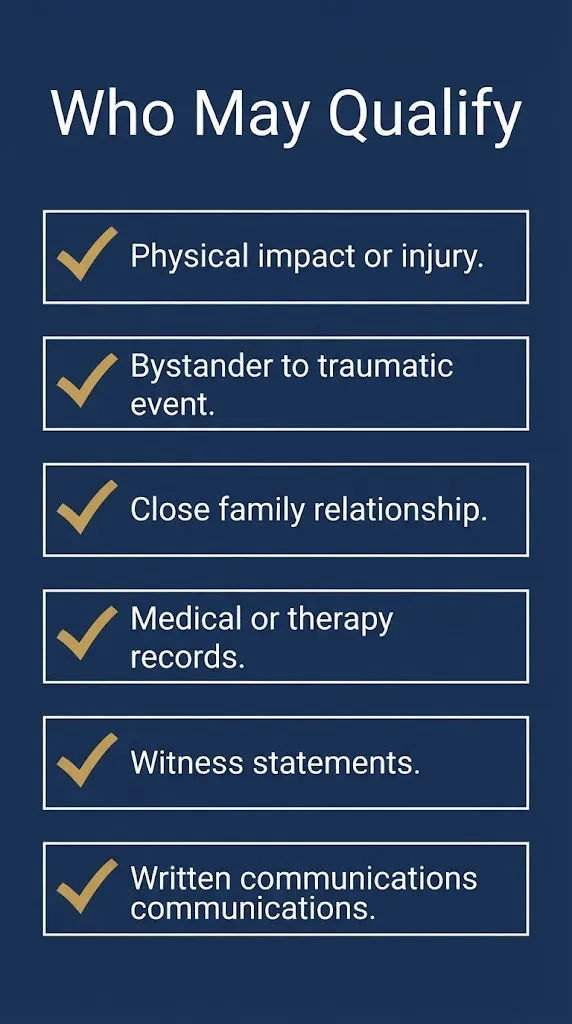
Negligent infliction of emotional distress is a claim that someone’s carelessness caused you severe emotional harm. In Florida, you generally need a physical impact or a recognized exception.
Florida follows the “Impact Rule.” This means you usually cannot recover for purely emotional distress unless it flows from a physical impact or injury . The rule exists to prevent fraudulent claims based on subjective feelings.
Key exceptions to the Impact Rule in Florida:
- Bystander claims: You witnessed a traumatic event involving a close family member
- Negligent stillbirth or wrongful birth: Parents can recover for mental pain
- Mishandling of a corpse: Families can sue for emotional distress
- Breach of confidentiality: Psychotherapist or medical provider disclosures
- Ingestion of contaminated food: Treated as a direct physical impact
The bystander exception has a four-part test. You must show a significant discernible physical injury from the trauma, direct sensory perception of the event, a close personal relationship with the injured person, and that the injury was caused by the psychological trauma .
What is intentional infliction of emotional distress (IIED)?
Intentional infliction of emotional distress is a claim that someone’s extreme and outrageous conduct intentionally or recklessly caused you severe emotional harm. The bar is very high.
Elements of IIED:
- Extreme and outrageous conduct
- Intentional or reckless intent to cause distress
- Causation between the conduct and the harm
- Severe emotional distress
Courts look for conduct that “shocks the conscience of a civilized society.” Ordinary insults, rudeness, or relationship conflicts do not qualify. Actionable conduct includes sustained harassment, threats of violence, sharing private images, or deliberate campaigns of humiliation .
The Ninth Circuit recently tossed an IIED claim against an Arizona boarding school. The court said the plaintiff offered no evidence of severe emotional distress and that the school’s conduct was not extreme or outrageous enough .
In Pennsylvania, courts require an allegation of physical injury, harm, or illness related to the distress. Termination from a job alone is not enough .
Key Takeaway: NIED requires negligence and often a physical impact in Florida. IIED requires conduct that shocks the conscience. Both require severe distress, not just upset feelings.
How do you file a lawsuit for emotional distress?
You file a lawsuit for emotional distress by hiring an attorney, gathering evidence, and submitting a complaint in the appropriate court before the statute of limitations runs out.
Steps to file:
- Document your emotional harm with medical or therapy records
- Gather witness statements from family, friends, or coworkers
- Preserve written communications like texts, emails, or social media messages
- Consult a personal injury attorney for a case review
- File a notice of claim if suing a government entity
- Submit your complaint in circuit or superior court
- Complete discovery and prepare for mediation or trial
Evidence is critical. Medical and therapy records, witness statements, and written communications showing the conduct and intent all support your claim .
If you are suing a Florida state agency, you must provide written pre-suit notice and wait under Fla. Stat. §768.28(6) .
How long do you have to file an emotional distress claim?
You have two years to file most negligence-based emotional distress claims in Florida. Intentional torts get four years. Other states have different deadlines.
Florida filing deadlines:
| Claim Type | Deadline |
|---|---|
| Negligence (accrued on or after March 24, 2023) | 2 years |
| Negligence (accrued before March 24, 2023) | 4 years |
| Intentional torts (IIED) | 4 years |
| Wrongful death | 2 years from date of death |
| Claims against government entities | Pre-suit notice required |
The 2023 tort reform (HB 837) shortened the negligence window from four years to two years. Anyone relying on the old four-year clock will lose their case before it starts .
Deadlines are fact-specific and can be shorter than the general rule. Confirm your date with a licensed attorney in your state .
What evidence do you need to win an emotional distress claim?
You need medical records, therapy records, witness statements, and written communications to win an emotional distress claim. Documentation is critical given the high legal standard.
Types of evidence that support a claim:
- Medical and therapy records showing diagnosis and treatment
- Professional assessments linking the conduct to your symptoms
- Witness statements from family members or coworkers
- Texts, emails, voicemails, or social media messages
- Police reports, journals, or photographs
- Prior protective orders
In California, the Glick decision confirmed that emotional distress within jurors’ common experience requires no expert testimony. A jury’s assessment of severity and duration is entitled to deference .
But in many cases, expert testimony strengthens the link between the defendant’s conduct and your harm. A mental health professional can explain how the conduct caused your symptoms.
How does comparative fault affect emotional distress claims?
Comparative fault can reduce or eliminate your recovery if you were partially at fault for the incident. Florida’s 2023 reforms changed the rules.
Under Fla. Stat. §768.81(6), most negligence actions now use modified comparative negligence. If you are found more than 50 percent at fault, you recover nothing .
This is a significant change. Under the old pure comparative negligence rule, you could recover something even if you were 90 percent at fault. Now, crossing 50 percent bars recovery entirely.
The comparative fault bar does not apply to medical malpractice cases .
If you were partly responsible for what happened, your attorney will need to build a strong case to keep your fault below 50 percent. Evidence of the defendant’s greater culpability matters.
What happens next in an emotional distress lawsuit?
Here is the expected path for most emotional distress claims:
Initial consultation: Attorney reviews your evidence and evaluates viability.
Investigation: Medical experts or mental health professionals assess causation and severity.
Pre-suit notice: Required if suing a government entity in Florida.
Filing: Complaint submitted in circuit or superior court.
Discovery: Depositions, document exchange, expert reports. Often 12 to 24 months.
Mediation: Most cases resolve here before trial.
Trial: If no settlement, a jury decides. Verdicts can be higher but riskier.
Appeal: Either side can appeal, adding more time.
No deadline exists because this is not a settlement fund. Your state’s statute of limitations controls.
Frequently Asked Questions
Can I sue for emotional distress without physical injury?
It depends on your state. Florida generally requires a physical impact or a recognized exception.
Some states allow NIED claims without physical impact.
Bystander claims and special relationships may qualify as exceptions.
How much is an emotional distress lawsuit worth?
There is no fixed amount. Recent verdicts range from $24,000 to $13.1 million.
Severity of harm, evidence quality, and jurisdiction drive the value.
A California court reinstated a $13.1 million verdict in July 2026.
What is the difference between NIED and IIED?
NIED is negligent infliction of emotional distress. It requires carelessness.
IIED is intentional infliction of emotional distress. It requires extreme and outrageous conduct.
Both require severe distress, not just upset feelings.
How long do I have to file an emotional distress claim in Florida?
Two years for most negligence claims under Fla. Stat. §95.11(4)(a).
Four years for intentional torts like IIED.
The 2023 reform shortened the negligence window from four to two years.
What evidence do I need for an emotional distress claim?
Medical and therapy records showing diagnosis and treatment.
Witness statements from family or coworkers.
Written communications like texts, emails, or social media messages.
Can I recover emotional distress damages under the ADA?
No. The Ninth Circuit ruled in 2026 that emotional distress damages are not available under the ADA.
Compensatory damages for lost educational opportunities are still available.
This follows the Supreme Court’s Cummings decision in 2022.
What is the bystander exception in Florida?
It allows recovery if you witnessed a traumatic event involving a close family member.
You must show a significant discernible physical injury from the trauma.
You must have had direct sensory perception of the event.
What happens if I was partly at fault?
Under Florida’s modified comparative negligence, if you are more than 50 percent at fault, you recover nothing.
This rule applies to most negligence actions.
The bar does not apply to medical malpractice cases.
What should you do if you’re considering an emotional distress lawsuit?
Document everything. Get medical or therapy records. Preserve texts, emails, and social media messages. Write down what happened while your memory is fresh.
Call a personal injury attorney for a free consultation. Most work on contingency, so you pay nothing unless you win. The two-year deadline in Florida is strict. Do not wait.
The number to remember: two years for negligence claims in Florida. The evidence to remember: medical records and witness statements. Without them, your claim is weak.