Workers Compensation Insurance Companies: Claims, Payouts, and 2026 Deadlines
Quick Answer
- Workers compensation insurance is regulated state by state, and every state requires most employers to carry it.
- Payout amounts depend on your state’s benefit schedule, your average weekly wage, and the severity of your injury.
- Filing deadlines range from 30 days to 2 years depending on your state, so checking your state’s specific limit is critical.
If you were hurt on the job and are trying to figure out which workers compensation insurance company handles your claim, whether the settlement offer is fair, or why your checks stopped, you are not alone. Every year, millions of injured workers navigate the same system.
The insurance company assigned to your claim matters more than most people realize. Different carriers have different claims handling reputations, settlement patterns, and denial rates. Some approve treatment quickly. Others fight every doctor visit.
This article covers what workers compensation insurance companies actually do, how they decide what to pay, which companies dominate the market, and what you can verify right now about your own claim.
The Facts
| Case | Workers compensation insurance regulatory framework, all 50 states |
| Status | Active system, ongoing claim processing for 2026 |
| Fund Size | No single fund; each insurer maintains state-required reserves |
| Est. Per Person | Varies by state, injury severity, and wage history |
| Claim Deadline | 30 days to 2 years depending on state law |
| Administrator | State workers compensation boards and commissions |
| Proof Needed | Medical records, incident report, wage documentation |
Is Workers Compensation Insurance Legitimate?
Workers compensation insurance is a legally mandated system in all 50 states, not a scam. Every state except Texas requires most private employers to carry workers compensation coverage. Texas allows employers to opt out, but most still choose to participate.
The system exists because state laws created a trade-off. Workers give up the right to sue their employer for most workplace injuries. In exchange, they receive guaranteed medical care and partial wage replacement without having to prove fault.

The insurance companies that administer these claims are regulated by state departments of insurance. They must file their rates, maintain reserves, and follow claims handling rules. State workers compensation boards oversee disputes between injured workers and insurers.
That does not mean every interaction with a workers compensation insurer is smooth. Denials happen. Delays happen. But the framework itself is real, established, and backed by state law.
Key Takeaway: Workers compensation is a legitimate state-regulated insurance system, not a lawsuit in the traditional sense, and every state has rules that insurers must follow.
What Do Workers Compensation Products Cover?
Workers compensation products fall into three main categories. Standard workers compensation policies cover medical treatment, a portion of lost wages, and permanent impairment benefits if you never fully recover.
Medical benefits pay for doctor visits, surgeries, physical therapy, prescriptions, and medical equipment related to your workplace injury. There is no copay or deductible for approved treatment.
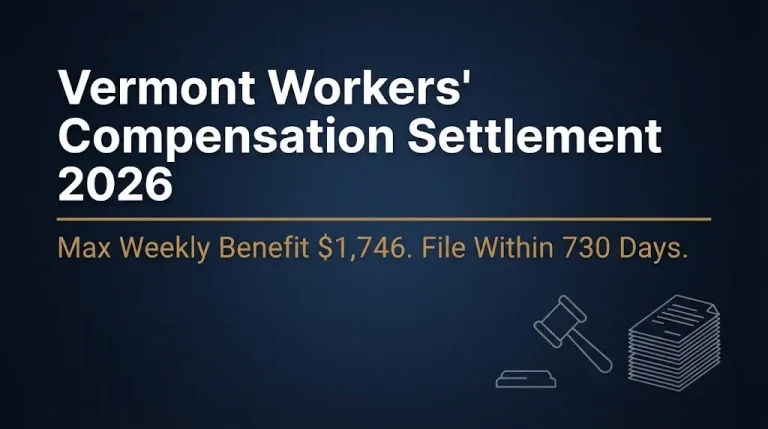
Wage replacement benefits, often called temporary disability, typically pay about two-thirds of your average weekly wage. Each state sets a maximum weekly amount. For example, California’s maximum temporary disability rate for 2026 is adjusted annually based on the state average weekly wage.
Permanent disability benefits kick in when you reach maximum medical improvement but still have limitations. The amount depends on your impairment rating, which a doctor assigns using state-specific guidelines.
Some insurers also offer voluntary products like return-to-work programs, nurse case management, and safety training. These are extras, not required benefits, and they primarily serve the employer’s interests.
| Benefit Type | What It Covers | Typical Amount |
|---|---|---|
| Medical | Treatment, surgery, therapy, prescriptions | 100% of approved costs |
| Temporary Disability | Lost wages during recovery | Two-thirds of average weekly wage, capped |
| Permanent Disability | Lasting impairment after recovery | Based on impairment rating and state schedule |
| Death Benefits | Surviving dependents | Varies by state and number of dependents |
Who Are the Best Workers Compensation Insurance Companies?
The largest workers compensation insurers in the United States by market share include Travelers, Hartford, Zurich, Chubb, Liberty Mutual, and state funds in monopolistic states like Ohio and Washington. Rankings change year to year based on premium volume reported to state regulators.
“Best” depends on whose perspective you are using. Employers often rate insurers by cost and safety resources. Injured workers rate them by how quickly claims are approved and how fairly settlements are offered.
Travelers is the largest private workers compensation insurer in the country, holding roughly 8 percent of the national market. Hartford and Zurich each control significant portions of the commercial market. State funds like the State Compensation Insurance Fund in California and the New York State Insurance Fund dominate their home states.
Public data on claims handling quality is limited. Some states publish complaint ratios for insurers. The National Council on Compensation Insurance, or NCCI, tracks industry-wide data but does not rank individual insurers by customer satisfaction.
From a worker’s perspective, the insurance company’s name matters less than its claims adjuster’s behavior, your doctor’s reports, and your state’s workers compensation rules.
Which Workers Compensation Insurance Company Handles My Claim?
Your employer’s policy determines which insurer handles your claim, not your preference. The name of the insurer should appear on the workers compensation poster displayed at your workplace. Every state requires employers to post this notice.
After you report an injury, your employer files a claim with their insurer. The insurer then assigns an adjuster who investigates, approves or denies benefits, and authorizes medical treatment.
If you do not know the insurer, ask your employer’s human resources department or check your state workers compensation board website. Many states let you look up an employer’s coverage online using the employer’s name or federal tax ID.
If your employer does not have coverage and was required to carry it, most states operate an uninsured employers fund. You can still file a claim, but the process moves to a state agency instead of a private insurer.
Key Takeaway: Your employer chooses the workers compensation insurer, but state law guarantees you can find out who it is and file a claim regardless.
How Much Can I Expect From a Workers Compensation Settlement?
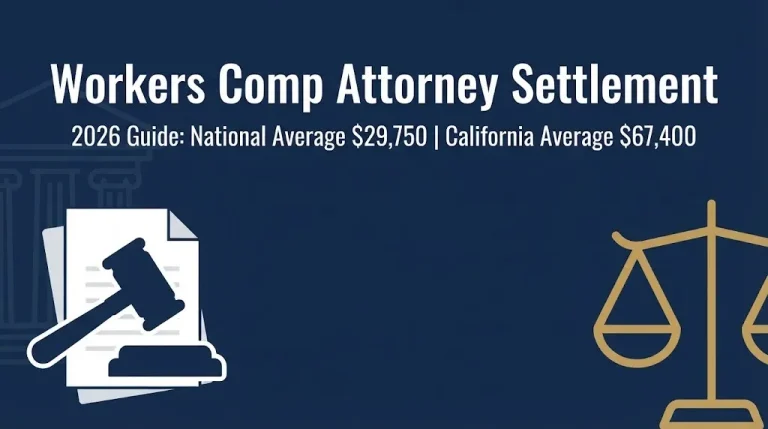
Settlement amounts vary more in workers compensation than in almost any other legal area. A minor sprain might settle for a few thousand dollars. A back injury requiring surgery and leaving permanent restrictions might settle for six figures.
Most settlements are calculated using a formula that considers medical treatment already received, future medical needs, temporary disability paid, and permanent impairment rating. Your average weekly wage and your state’s benefit schedule set the baseline.
The single biggest factor is whether you have a permanent impairment. States use guides from the American Medical Association to assign a percentage. That percentage translates to a number of weeks of benefits. Multiply the weeks by your weekly rate, and you have the starting point.
A worker earning 800 dollars per week with a 10 percent impairment rating in a state using a 500-week schedule for 100 percent impairment could expect roughly 40,000 dollars for the impairment portion alone. Added medical and wage benefits push the number higher.
Settlement amounts are not public record in most states. Attorneys and insurance adjusters develop expectations through experience, not published data. If someone tells you a specific number without reviewing your records, be skeptical.
| Injury Category | Typical Settlement Range |
|---|---|
| Minor sprain or strain | 2,000 to 15,000 dollars |
| Moderate injury with surgery | 15,000 to 75,000 dollars |
| Severe injury with permanent disability | 75,000 to 300,000 plus dollars |
| Catastrophic injury | Varies widely, often 500,000 plus dollars |
When Will My Workers Compensation Checks Arrive?
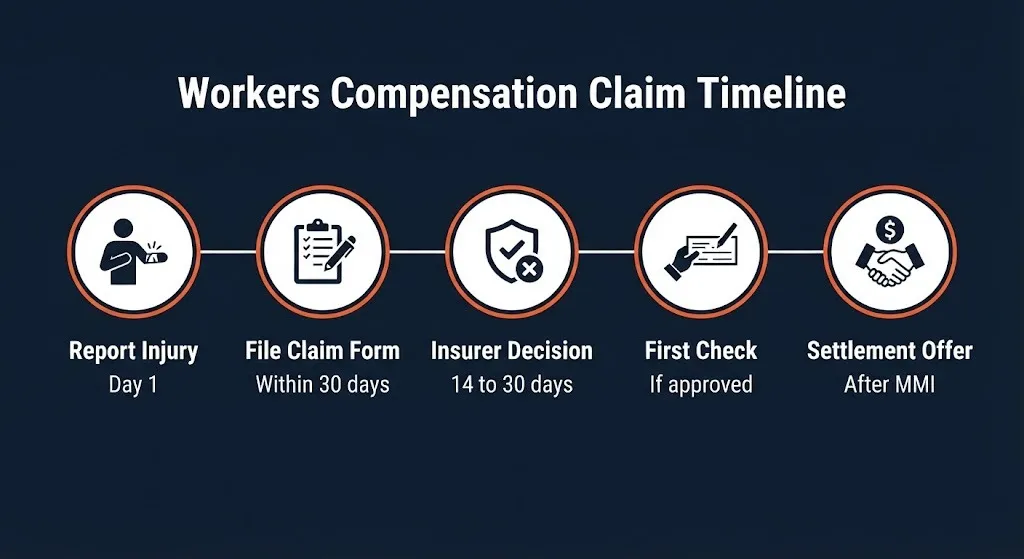
Temporary disability checks usually begin within 14 to 30 days after the insurer receives your claim, assuming the claim is approved without dispute. Some states mandate faster payment. California requires the first payment within 14 days of the employer’s knowledge of the injury, if the claim is accepted.
Checks stop when your doctor releases you to return to work, when you reach maximum medical improvement, or when the insurer disputes the claim. If your checks stop without explanation, file a hearing request with your state workers compensation board immediately.
Permanent disability checks follow a schedule set by state law. They are usually paid every two weeks, matching your temporary disability schedule, until the award is exhausted.
Settlement checks, once both sides sign, typically arrive within 30 days. Some states require judicial approval of settlements, which adds 30 to 60 days.
If payment is late, your state board can impose penalties on the insurer. Each state has its own penalty structure, but late payment penalties are common and enforceable.
Key Takeaway: Most workers compensation checks start within 14 to 30 days of claim approval, and state boards enforce penalties for late payment.
How Do I File a Workers Compensation Claim?
Filing a claim correctly is the single most important step you control. Missing the reporting deadline can bar your claim entirely in most states.
- Report the injury to your supervisor in writing immediately after it happens.
- Seek medical treatment from an approved provider if your state or employer requires one.
- Complete the state’s claim form, usually called a DWC-1 in California or a C-3 in New York.
- Keep copies of every form, medical record, and correspondence.
- Document your symptoms, time off work, and all medical appointments.
- Follow all treatment recommendations from your authorized treating physician.
- Notify your state workers compensation board if the insurer denies your claim or fails to respond.
Every state has its own reporting deadline. Texas gives you 30 days. Many states give 90 days to a year. A few states allow up to two years for claims involving occupational diseases with delayed onset.
Reality Check
Insurance companies are not required to offer you a fair settlement on their own. They are required to follow state law when calculating benefits. If you accept an early settlement offer without understanding your impairment rating, future medical needs, or your state’s benefit formula, you may leave significant money on the table. Many legitimate workers compensation attorneys offer free consultations, and contingency fees are capped by state law.
Can a Workers Compensation Insurance Company Deny My Claim?
Yes, and denials are common. The most frequent reasons are disputes over whether the injury is work-related, whether you reported it on time, and whether medical treatment is reasonable and necessary.
Insurers deny claims in writing. The denial letter must state the specific reason and explain how to appeal. If you receive a denial, do not treat it as the final word.
You have the right to request a hearing before your state workers compensation board. At the hearing, an administrative law judge reviews evidence from both sides and issues a decision. Many denied claims are reversed at this stage.
Common denial reasons include pre-existing conditions, intoxication at the time of injury, injuries occurring outside work hours, and insufficient medical evidence linking the injury to the job.
If you believe the denial is wrong, gather all medical records, witness statements, and correspondence. Then file your hearing request. Deadlines for requesting a hearing vary by state but are often 30 to 60 days from the denial date.
Key Takeaway: A denial letter is not the end of your claim. State hearing processes exist specifically to review insurer decisions.
What Does Workers Compensation Not Cover?
Workers compensation does not cover everything that happens to you while employed. Stress-related claims are difficult in most states. Injuries from intoxication or horseplay are generally excluded. Commuting injuries are usually not covered unless you were driving for work at the time.
Self-inflicted injuries are excluded. Injuries from fighting where you were the aggressor are excluded. Off-duty recreational activity is not covered unless the activity was employer-sponsored and required.
Some states exclude certain types of workers entirely. Independent contractors are not eligible in most states. Agricultural workers, domestic workers, and seasonal employees have varying coverage depending on state law.
If your injury falls into one of these excluded categories, you may still have options. A personal injury lawsuit against a third party, short-term disability insurance, or Social Security Disability Insurance may apply.
How Do Workers Compensation Insurance Companies Make Money?
Workers compensation insurers make money through underwriting profit and investment income. Underwriting profit is the difference between premiums collected and claims paid out plus administrative costs.
Premiums are based on your employer’s payroll and industry classification. Riskier industries like construction and trucking pay higher rates. A roofer’s employer pays far more per 100 dollars of payroll than an accounting firm’s employer.
Insurers also earn investment income on the reserve funds they hold for future claims. When claims are delayed or denied, the insurer keeps those reserves invested longer, which increases their income.
The financial incentive to minimize claim payouts is real. State regulations and hearing processes exist to counterbalance that incentive. Understanding this dynamic helps you recognize why insurers sometimes act the way they do.
Are Workers Compensation Settlements Taxable?
Workers compensation benefits are generally not taxable at the federal or state level. The Internal Revenue Service excludes workers compensation from gross income. This applies to temporary disability, permanent disability, and settlement payments.
The exception is if you also receive Social Security Disability Insurance. An offset applies, and part of your workers compensation may become indirectly taxable because it reduces your SSDI benefit, which is otherwise taxable in some cases.
If you return to work on light duty and receive partial wage replacement, those payments are also excluded from income. The exclusion is one of the few tax advantages injured workers receive.
Consult a tax professional for your specific situation. But the general rule is clear: workers compensation money is not taxable income.
What Happens Next
January 2026: State workers compensation boards update benefit schedules and maximum weekly rates for the new year.
March 2026: Insurers file annual rate proposals with state insurance departments, which can affect premiums but not existing claims.
Ongoing: If you have an open claim, your next step is confirming your treating physician’s latest report and checking for any scheduled hearings.
If you have not yet filed: Report the injury immediately and submit your state’s claim form within the applicable deadline.
Frequently Asked Questions
Is workers compensation the same as a lawsuit?
No. Workers compensation is an administrative system where you give up the right to sue your employer in exchange for guaranteed benefits. You do not have to prove your employer was negligent.
What if my employer does not have workers compensation insurance?
Most states operate an uninsured employers fund. You can still file a claim, and the state may pursue your employer for penalties.
Can I choose my own doctor for a workers compensation injury?
It depends on your state. Some states let you choose any doctor. Others require you to use a doctor from the employer’s approved network, at least initially.
How long do workers compensation benefits last?
Temporary disability lasts until your doctor releases you or you reach maximum medical improvement. Permanent disability lasts for the number of weeks set by your impairment rating and state schedule.
Can I work another job while receiving workers compensation?
Working another job while receiving temporary disability can reduce or end your benefits. You must report all income to the insurer. If you work light duty at your regular job, you may receive partial benefits.
What if the insurance company offers me a settlement?
You are not required to accept any settlement offer. You can negotiate, reject it, or consult an attorney. Settlements are usually final, so understand the terms before signing.
How do I check the status of my workers compensation claim?
Contact the insurance adjuster assigned to your case or log into your state workers compensation board’s online portal. Many states offer case lookup by claim number or Social Security number.
Do I need a workers compensation attorney?
Not for every claim. But if your claim is denied, your benefits stop, or a settlement offer seems low, an attorney can help. Most work on contingency and take a percentage of what they recover for you.
If you are waiting on a claim decision, checking the official state board website is your fastest source of truth. If your checks stopped, do not wait to act. Request a hearing. The deadlines do not pause for you to think about it.
The insurance company on your employer’s poster is who you will deal with. Know their name. Know your claim number. And know your state’s filing deadline.