Accident Compensation Lawyers 2026: How to Find the Right Attorney, Fee Structures, and Claim Timelines
Quick Answer
- Accident compensation lawyers are real, licensed professionals who work on contingency, not upfront fees.
- Most personal injury cases settle between $15,000 and $75,000, with severe cases reaching six figures or more.
- Each state sets its own statute of limitations, typically two to three years from the accident date.
If you were hurt in a car crash, a slip and fall, or any other accident, you are probably asking one question: do I need a lawyer and how do I find one who will actually get me paid. The answer starts with one verified fact: personal injury lawyers work on contingency, which means they only get paid if you get paid.
The lawyer takes a percentage of your settlement, usually 33 to 40 percent, and you owe nothing upfront. That structure makes legal help accessible to people who could never afford an hourly attorney.
This article breaks down what accident compensation lawyers actually do, how much they cost, how to choose one, and what your claim timeline looks like. One surprising detail: most personal injury cases never go to trial, and the settlement rate exceeds 90 percent in most jurisdictions.
The Facts
| Topic | Verified Detail |
|---|---|
| Fee structure | Contingency, 33 to 40 percent of recovery |
| Upfront costs | None, costs advanced by the firm |
| Typical timeline | 12 to 24 months |
| Settlement rate | Over 90 percent |
| Statute of limitations | 2 to 3 years by state |
| Trial rate | Under 5 percent |
Are Accident Compensation Lawyers Legitimate?
Accident compensation lawyers are legitimate, licensed attorneys who specialize in personal injury law. They are regulated by state bar associations and must follow strict ethical rules.
The term “accident compensation lawyer” is a marketing phrase, not a separate legal specialty. These are personal injury attorneys who focus on recovering money for people hurt in accidents.

You can verify any lawyer’s license through your state bar association website. A legitimate lawyer will have a clean disciplinary record and a verifiable office address. If someone calls you unsolicited claiming to be an accident lawyer, that is a red flag.
Key Takeaway: Real accident lawyers are licensed, verifiable, and never cold-call accident victims.
How Much Do Accident Compensation Lawyers Charge?
Accident compensation lawyers charge a contingency fee, typically between 33 and 40 percent of your total recovery. The percentage often depends on whether the case settles before trial or goes to litigation.
A standard arrangement is 33 percent if the case settles without a lawsuit. If a lawsuit is filed, the fee often rises to 40 percent. Some firms use a sliding scale based on case stage.
Costs are separate from the fee. Costs include filing fees, expert witnesses, medical record retrieval, and deposition transcripts. Those costs are advanced by the firm and deducted from your recovery along with the fee.
| Case Stage | Typical Fee |
|---|---|
| Settlement before lawsuit | 33 percent |
| After lawsuit filed | 40 percent |
| After trial or appeal | 40 to 45 percent |
How Much Is My Accident Case Worth?
The value of your accident case depends on your medical bills, lost wages, pain and suffering, and the insurance limits available. Most personal injury cases settle between $15,000 and $75,000.
Severe cases involving surgery, permanent disability, or wrongful death can reach six figures or more. The same case can be worth very different amounts depending on the defendant’s insurance coverage.
No lawyer can guarantee a specific outcome. A lawyer who promises a large settlement during the first call is selling you, not representing you.
| Injury Severity | Typical Settlement Range |
|---|---|
| Minor soft tissue | $3,000 to $15,000 |
| Moderate injury with treatment | $15,000 to $75,000 |
| Surgery or permanent injury | $75,000 to $250,000 |
| Catastrophic or wrongful death | $250,000 to $1,000,000+ |
What Is the Deadline to File an Accident Claim?
The deadline to file an accident claim is set by your state’s statute of limitations. Most states allow two to three years from the accident date.
Some situations shorten that window. Claims against government entities often require a formal notice within 60 to 180 days. Wrongful death claims may start the clock on the date of death, not the accident.
If you miss the deadline, your case is barred permanently. That is the single most common reason valid claims fail.
Key Takeaway: Your state deadline is non-negotiable, and government-involved accidents have much shorter windows.
How Do I Find a Personal Injury Litigation Lawyer Near Me?
Finding a personal injury litigation lawyer near you requires more than a search engine. You need to verify credentials, experience, and track record.
Start with your state bar association’s lawyer directory. Then check for board certification in personal injury law if your state offers it. Then read verified client reviews and disciplinary records.
A good lawyer will offer a free consultation, explain your case clearly, and never pressure you to sign immediately. If you feel rushed, walk away.
What Questions Should I Ask an Accident Lawyer?
Here are the questions to ask before hiring an accident lawyer.
- What percentage do you charge, and does it change if we file a lawsuit?
- Who pays costs if we lose the case?
- How many cases like mine have you handled?
- What is my case worth, realistically?
- How long will my case take?
- Who will actually work on my case, you or an associate?
- Have you ever been disciplined by the bar?
How Long Does an Accident Case Take?
Most accident cases settle within 12 to 24 months from the date you hire a lawyer. Straightforward cases with clear liability can settle in six months.
Cases with disputed liability, severe injuries, or multiple defendants take longer. A lawsuit adds another 12 to 18 months to the timeline.
Once a settlement is signed, payment usually arrives within 30 to 60 days. That delay covers the release processing, insurer approval, and lien resolution.
Key Takeaway: The legal process is slow by design, and rushing to settle early often means leaving money on the table.
What Is the Difference Between a Settlement Lawyer and a Litigation Lawyer?
A settlement lawyer focuses on negotiating with insurance companies without filing a lawsuit. A litigation lawyer is prepared to file a complaint and take the case to court if needed.
Most accident lawyers do both. They start with negotiation and escalate to litigation only if the insurer’s offer is unreasonable.
The distinction matters because some firms are settlement mills that never go to trial. Insurers know which firms will actually litigate and which will fold, and they adjust offers accordingly.
Reality Check: No lawyer can force an insurer to pay more than the policy allows. If the at-fault driver has a $25,000 minimum policy, that may be the ceiling on your recovery unless other insurance applies.
What Is a Settlement Mill and Why Should I Avoid One?
A settlement mill is a law firm that handles a high volume of cases with minimal individual attention. The goal is speed, not maximum recovery.
Settlement mills often settle cases for less than they are worth because the firm profits from volume. You may wait months for a call back and never speak to an actual attorney.
Signs of a settlement mill include heavy television advertising, promises of fast cash, and a lack of personal contact with your lawyer.
What Happens After I Hire an Accident Lawyer?
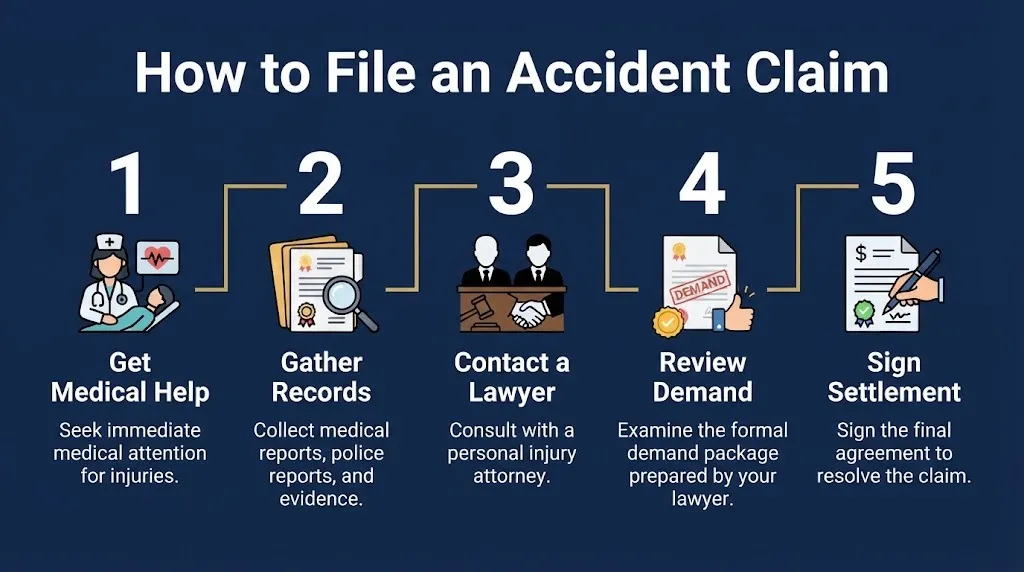
After you hire an accident lawyer, the firm sends a letter of representation to the insurance company. That letter stops the insurer from contacting you directly.
The lawyer then investigates your case, gathers medical records, and calculates your damages. A demand package is sent to the insurer outlining liability and the amount requested.
Negotiation follows. The insurer responds, usually with a low initial offer, and your lawyer counters with evidence. Most cases settle during this phase.
What If My Accident Case Goes to Trial?
If your case goes to trial, the timeline extends by a year or more. Discovery, depositions, and pretrial motions all take time.
Trials are expensive and risky for both sides. That risk is why insurers settle most cases before trial.
Less than 5 percent of personal injury cases go to trial. The rest settle at some point in the process.
Key Takeaway: Trial is the exception, not the rule, but the willingness to go to trial is what drives fair settlements.
What Damages Can I Recover in an Accident Case?
You can recover economic damages, which are your out-of-pocket losses, and non-economic damages, which cover pain and suffering.
Economic damages include medical bills, lost wages, lost earning capacity, and property damage. Non-economic damages cover physical pain, emotional distress, and loss of enjoyment of life.
In rare cases involving egregious conduct, punitive damages may apply. Those damages punish the defendant and can dramatically increase a verdict.
What Is Contributory Negligence and How Does It Affect My Case?
Contributory negligence is the legal rule that reduces or eliminates your recovery if you were partially at fault. Most states use comparative negligence, which reduces your settlement by your percentage of fault.
A few states, including Alabama, Maryland, North Carolina, Virginia, and the District of Columbia, use pure contributory negligence. In those states, any fault on your part bars recovery entirely.
Your lawyer will evaluate fault early because it directly affects your case value.
What Records Should I Gather for My Accident Lawyer?
The records you gather directly affect your settlement value. Here is a checklist.
- Police report or incident report.
- Medical records and bills.
- Photos of the accident scene and your injuries.
- Witness contact information.
- Insurance policy information.
- Pay stubs and lost wage documentation.
- Any correspondence from insurance companies.
Key Takeaway: The more complete your records, the stronger your case and the faster it resolves.
What Happens Next After I Settle My Accident Case?
Once you accept an offer, you sign a release. That release ends your right to seek more money from the same defendant for the same accident.
The insurer processes payment, your lawyer resolves any medical liens, deducts the fee and costs, and issues you a check. The entire post-settlement process usually takes 30 to 60 days.
After payment, the case is closed permanently. That is why you should never settle before understanding your full medical picture and future needs.
Expected weeks 1 to 2: Release signed and submitted to insurer.
Expected weeks 2 to 4: Insurer processes payment.
Expected weeks 4 to 6: Liens resolved and check issued.
Frequently Asked Questions
Do accident lawyers charge upfront fees?
No, accident lawyers work on contingency and only get paid if you win.
How much is the average accident settlement?
Most cases settle between $15,000 and $75,000, with severe cases reaching six figures.
How long do I have to file an accident claim?
Most states allow two to three years, but government claims have much shorter deadlines.
What percentage do accident lawyers take?
Typically 33 to 40 percent of your recovery, depending on case stage.
Will my case go to trial?
Probably not. Over 90 percent of personal injury cases settle before trial.
Can I handle my accident claim without a lawyer?
Yes, but you may leave money on the table. Insurers know how to exploit unrepresented claimants.
What if the at-fault driver has no insurance?
Your own uninsured motorist coverage may pay, or the lawyer will investigate other sources of recovery.
How do I know if an accident lawyer is legitimate?
Verify their license through your state bar association and check for disciplinary actions.
Your next step is to gather your accident records and contact a licensed personal injury lawyer for a free consultation. The consultation costs nothing, and the lawyer will tell you whether you have a case and what it might be worth.
The single most important fact: your state deadline is running from the day of the accident, not from the day you hire a lawyer. Every week you wait makes evidence harder to gather and brings you closer to losing your right to recover.