Prescription Drug Lawsuit Attorney 2026: What a Lawyer Can and Cannot Do for Your Claim
Quick Answer
- A prescription drug lawsuit attorney handles injury claims against manufacturers, not consumer refunds from government settlements.
- Most prescription drug injury cases are handled on contingency, meaning no upfront fee and 25% to 40% taken from any recovery.
- The nearest verified deadline is December 1, 2026, for the opioid Third-Party Payor settlement, but that class covers insurers and payors, not individual patients.
You are searching for a prescription drug lawsuit attorney because something went wrong, or because a settlement notice showed up and you are not sure if it is real. The honest answer is that the right attorney depends entirely on which bucket your claim falls into. Injury cases and settlement class memberships follow completely different paths. Most people conflate the two, and that confusion is exactly what bad actors exploit. This article separates them, names the verified deadlines, and tells you when hiring a lawyer is worth it and when it is not. One detail worth knowing upfront: the biggest prescription drug litigation in the country, the opioid MDL, has a claims deadline that is not for individual patients at all.
The Facts
| Case | In re National Prescription Opiate Litigation (Third-Party Payor track) |
| Status | Final approval granted September 23, 2026, for Allergan, Janssen, Teva, and Pharmacies settlements |
| Fund Size | Not yet confirmed in public consumer-facing documents |
| Est. Per Person | Not yet determined; this class covers third-party payors, not individuals |
| Claim Deadline | December 1, 2026, for TPP class members |
| Administrator | Not yet confirmed in available records |
| Proof Needed | Claim form for TPP class members; individual injury claims follow separate litigation |
Is the Prescription Drug Lawsuit Real or a Scam?
The prescription drug lawsuit is real, but the scams around it are just as real, and they usually arrive by text message. Legitimate prescription drug litigation exists in federal court, with docket numbers you can look up and court orders signed by named judges. The opioid MDL sits in the Northern District of Ohio under Judge Dan Aaron Polster, and the docket shows actual final approval orders entered in September 2026. That is a real court record, not a marketing page. The scam version looks different. Someone calls claiming you are owed money from a drug settlement and asks for a processing fee, your Social Security number, or bank details before you have filed anything. No legitimate settlement administrator operates that way. Filing a claim is free, and no court requires you to pay anyone to check whether you qualify. If a caller pressures you to pay first, the call is the scam.
How Much Can You Get From a Prescription Drug Lawsuit?
Not yet determined for most active prescription drug settlements, and that is not a dodge. The amount you can get depends on which litigation you are in, and the two main paths produce very different numbers.
For individual injury lawsuits against a drug manufacturer, there is no fixed payout schedule. A settlement or verdict depends on the injury, the evidence linking the drug to that injury, the jurisdiction, and the manufacturer’s litigation strategy. Attorneys in these cases work on contingency and typically take 25% to 40% of any recovery, plus costs in some arrangements. No honest attorney can quote you a number before reviewing medical records.
For class action settlements where a fund exists, payouts are pro rata, meaning your share depends on how many valid claims are filed against the total fund. The opioid TPP settlement has a December 1, 2026, claim deadline, but that class is defined as third-party payors, not individual patients. If you are an individual who took a prescription drug and were harmed, you are not in that class. If you are an insurer or payor that covered opioid prescriptions, you may be.
Key Takeaway: No verified per-person payout figure exists for individual prescription drug injury claims, and any website quoting you a specific dollar amount before reviewing your records is guessing or selling.
Do You Need a Prescription Drug Lawsuit Attorney to File a Claim?
You need a prescription drug lawsuit attorney if you were injured by a medication and want to pursue compensation from the manufacturer, but you do not need one to file a claim in a class action settlement you are already part of. That distinction matters because it saves you money in one scenario and protects you in the other.
Here is when an attorney is worth consulting:
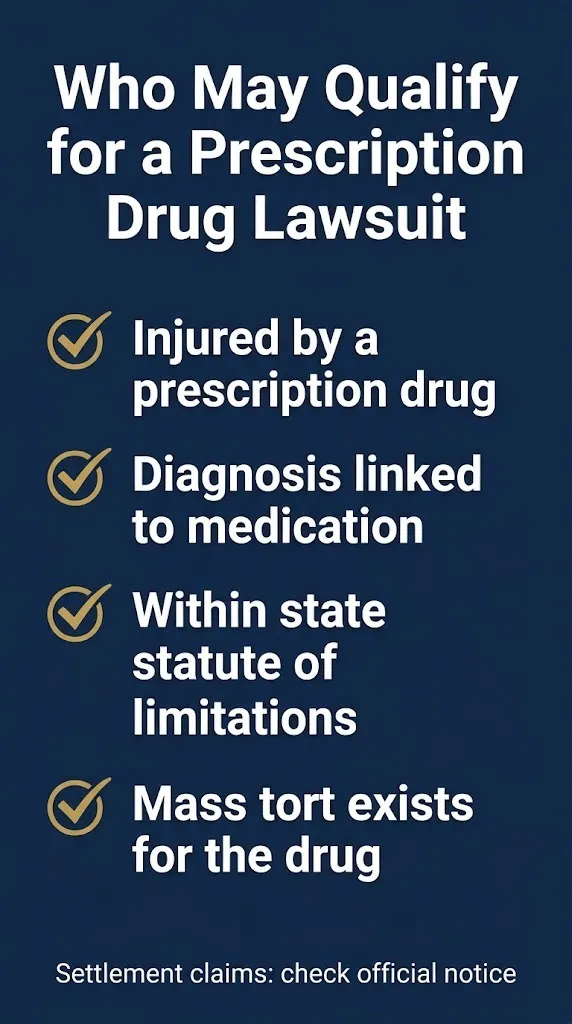
- You suffered a serious diagnosis you believe is linked to a prescription drug, such as organ damage, a brain tumor, or a severe reaction.
- You are within the statute of limitations for your state, which varies and can be as short as one to two years for personal injury.
- A manufacturer is facing mass tort litigation over the specific drug and injury you have, which means there is a established legal path.
Here is when you probably do not need one:
- You received a settlement notice in the mail with a claim form and a deadline, and the notice identifies you as a class member.
- The claim process is administrative, meaning you fill out a form, provide purchase records if required, and wait.
- The settlement website says filing is free, which it will if it is legitimate.
Contingency fee arrangements are standard in prescription drug injury cases. You pay nothing upfront, and the attorney takes a percentage of the recovery if there is one. If a firm asks for a retainer before investigating a contingency case, walk away.
What Prescription Drug Settlements Have Verified Deadlines in 2026?
The prescription drug settlements with verified deadlines in 2026 are limited, and most of them do not pay individual patients. This is the section where most competitors get vague, so here are the specifics that are actually confirmed.
Opioid Third-Party Payor Settlements: Final approval was granted on September 23, 2026, for settlements with Allergan, Janssen, Teva, and the settling pharmacies. The claim form deadline for TPP class members is December 1, 2026. If you are an insurer, health plan, or payor that covered opioid prescriptions, this deadline applies to you. If you are an individual patient, it does not.
Walgreens Savings Club Settlement: This $100 million prescription drug settlement received final judgment on March 31, 2026. The claim deadline was April 17, 2025, and it has passed. Claims are being processed, and no new claims are being accepted. If you filed on time, watch for deficiency notices and keep your address current.
Generic Drug Settlements: Several states opened an inquiry line for generic drug price-fixing settlements, but the formal claim process depends on court approval. The first trial in the broader generic drug litigation is scheduled for February 2027 in Connecticut, and payments may not begin until 2028 at the earliest. No verified consumer claim deadline exists yet.
| Settlement | Verified Deadline | Who Qualifies |
|---|---|---|
| Opioid TPP Settlements | December 1, 2026 | Third-party payors, not individuals |
| Walgreens Savings Club | April 17, 2025 (passed) | Customers with eligible prescription purchases |
| Generic Drug Settlements | Not yet confirmed | TBD, inquiry line only |
Key Takeaway: The only 2026 prescription drug settlement deadline that is currently open and verified is December 1, 2026, and it applies to third-party payors in the opioid litigation, not to individual patients.
Reality Check
No legitimate prescription drug settlement program texts you a dollar amount and asks you to click a link to claim it. Settlement administrators mail notices, post claim forms on official websites, and never charge a fee to file. If someone contacts you demanding payment to release settlement funds, it is a scam, full stop. The generic drug inquiry line and every court-approved claim process are free to use.
How Do You File a Prescription Drug Lawsuit Claim?
How you file a prescription drug lawsuit claim depends on whether you are filing an injury lawsuit or submitting a claim in an existing class settlement. The steps below cover the settlement claim path, which is the one most people encounter without warning.
- Read the notice carefully. Identify the settlement name, the class definition, and whether you fit it.
- Check the deadline. The opioid TPP deadline is December 1, 2026. Walgreens passed in April 2025.
- Go to the official settlement website named in the notice, not a site you found in an ad.
- Gather proof if required. Some settlements ask for purchase records or prescription histories; others only require identifying information.
- Submit the claim form by the deadline, online or by mail with the required postmark.
- Keep a copy of everything you submit and note any confirmation number.
- Watch for deficiency notices and respond promptly if the administrator asks for more information.
For an injury lawsuit, the first step is different: contact a lawyer for a consultation, bring your medical records and a list of medications with dates, and ask whether a mass tort or MDL exists for your drug and injury. Do not file anything on your own before that consultation.
How Much Does a Prescription Drug Lawsuit Attorney Cost?
A prescription drug lawsuit attorney typically costs nothing upfront in contingency cases, with the attorney taking 25% to 40% of any recovery, but the exact terms vary and you should get them in writing. That range is standard for consumer pharmaceutical injury cases. Some firms advance all costs, including expert witnesses and court fees, and you owe nothing unless they win or settle. That is the norm in mass tort litigation. For class action settlements, you generally do not pay attorney fees at all, because the court approves fees paid from the settlement fund, not from individual claimants. The generic drug settlement process, for example, does not deduct attorney fees from consumer claims. If you hire a lawyer for an individual injury case, ask these questions before signing anything: what percentage do you take, who pays costs if we lose, have you handled this specific drug and injury before, and can I see the written fee agreement. A firm that hesitates on any of those is a firm you should not hire.
What Happens Next
December 1, 2026: Claim deadline for opioid Third-Party Payor class members.
Late 2026 to early 2027: Court approval process and claims processing for announced generic drug settlements, with no consumer claim deadline confirmed yet.
February 2027: First trial in the broader generic drug litigation begins in Hartford, Connecticut, which may shape future settlement values.
Mid to late 2027: Claims process likely opens for approved generic drug settlements, based on similar multistate timelines.
2028: Payments may begin for early generic drug claimants, but this is an estimate and depends on the court.
Frequently Asked Questions
Is the prescription drug lawsuit a scam?
No, the major prescription drug litigation is real and documented in federal court. The scam is in how people impersonate it. If someone texts you a payout amount and asks for a fee, that is fraud.
How much is a prescription drug lawsuit worth?
Not yet determined for most active settlements. Individual injury cases have no fixed value, and class settlement payouts depend on the number of valid claims filed against the fund.
Do I need a lawyer to file a claim in a prescription drug settlement?
No, if you received a class notice and the process is administrative. Yes, if you were injured by a drug and want to sue the manufacturer.
What is the deadline for the opioid prescription drug settlement?
December 1, 2026, for the Third-Party Payor class. This does not apply to individual patients.
Can I still file a Walgreens prescription settlement claim?
No. The claim deadline was April 17, 2025, and it has passed. If you filed on time, your claim is being processed.
How long does a prescription drug lawsuit take?
Injury lawsuits can take one to three years or longer. Class settlements can take six months to two years from claim deadline to payment, depending on appeals and claim volume.
What should I do if I get a settlement notice in the mail?
Read the class definition first. If you fit it, check the deadline and file on the official website named in the notice. Do not pay anyone to file for you.
Can I join a prescription drug lawsuit if I stopped taking the medication?
Possibly, if you were injured while taking it and your state’s statute of limitations has not expired. Talk to an attorney about your specific dates.