Compensation Strategy 2026: How Settlement Payouts, Claim Timing, and Legal Leverage Actually Work
Quick Answer
- A compensation strategy is a plan to maximize what you recover from settlements, lawsuits, or benefits claims.
- Payouts depend on case type, proof strength, claim timing, and whether you opt out or stay in a class.
- The single most important step is checking official deadlines before any other planning.
A compensation strategy is not a form you file or a settlement you join. It is a decision-making process for getting the most money possible from a legal claim, a class action, a workers compensation case, or a benefits dispute. In 2026, that process matters more because settlement administrators are using tiered payouts, shorter filing windows, and stricter proof requirements. If you search this term, you probably have a claim or think you might, and you want to know how to position yourself before the deadline passes.
The people most affected are ordinary consumers, injured workers, and employees who get a notice in the mail or an email about a settlement. The single most important number in any compensation strategy is the claim deadline. Miss it and the best strategy in the world recovers zero. Every other move is secondary to that date.
This article explains what a compensation strategy is, how it differs from a benefits strategy, when to file, when to opt out, how payouts are calculated, and which mistakes cost people the most. One surprising verified fact: in many class actions, the highest per-person payouts go to claimants who file early with complete documentation, not to those with the largest losses.
| The Facts | |
|---|---|
| Case | No single case; applies to active settlements and lawsuits in 2026 |
| Status | Framework for maximizing verified settlement and benefits payouts |
| Fund Size | Varies by specific settlement or claim type |
| Est. Per Person | Depends on tier, proof level, and pro rata allocation |
| Claim Deadline | Case-specific, always set by settlement administrator or court |
| Administrator | Varies by settlement, court-appointed in class actions |
| Proof Needed | Ranges from sworn attestation to full medical or purchase records |
Is a Compensation Strategy Real or Just a Buzzword?
A compensation strategy is real, but it is not a government program, a legal fund, or a guarantee. It is a planning method used by plaintiffs, claimants, and even employers to decide how to approach money recovery. In the legal claims world, it means making deliberate choices about whether to file, when to file, what proof to gather, and whether to accept a settlement or push for more.
The term is used in two different contexts. Human resources professionals use it to describe how companies pay employees, combining salary, bonuses, and benefits. In the consumer and legal claims world, it describes how individuals maximize what they recover from lawsuits, class actions, insurance claims, and settlement funds. This article focuses on the second context, because that is what people searching for legal compensation information actually need.
The confusion comes from articles that mix both meanings without telling you which one they are covering. A compensation strategy for a business paying workers is not the same as a strategy for getting your share of a defective product settlement. If you are a claimant, you need the latter. And that starts with understanding the specific claim you have, not with a generic framework.
Key Takeaway: Compensation strategy is a real planning method, but in legal claims it means making case-specific decisions, not joining a universal program.
How Much Can a Compensation Strategy Actually Increase My Payout?
A good compensation strategy can meaningfully increase your payout, but it cannot create money that is not in the settlement fund. In a class action with a fixed fund, the total is set. Your share depends on how many people file valid claims, what tier you fall into, and whether your documentation supports a higher tier. Filing early and filing accurately gets you the maximum share available to you.
In individual lawsuits, the stakes are higher because the payout is not fixed by a settlement administrator. A strategy that preserves evidence, documents damages, and negotiates with knowledge of the defendant’s exposure can produce a larger settlement. But that is a case-by-case outcome, not a formula. No verified study shows a universal percentage increase from any single strategy.
| Claim Type | What Determines Payout | Strategy Impact |
|---|---|---|
| Class action settlement | Pro rata share of fixed fund | Filing early and accurately maximizes your tier |
| Individual lawsuit | Liability, damages, defendant assets | Evidence quality drives settlement value |
| Workers compensation | State schedule, impairment rating | Medical documentation is decisive |
| Benefits claim | Policy terms, deadlines, appeals | Timely filing and complete records prevent denial |
The honest answer is that strategy matters most at the margins. It can mean the difference between a denied claim and an approved one. It can move you from a lower tier to a higher tier. But it will not turn a $50 class action settlement into a $50,000 payout. Understanding that is itself part of a sound strategy.
Key Takeaway: Strategy improves your share within the rules of your specific claim, but it cannot create a larger fund or turn a small settlement into a windfall.
What Is the Difference Between Compensation Strategy and Benefits Strategy?
A compensation strategy focuses on how money is recovered, including lawsuit settlements, class action payouts, workers compensation, and insurance claims. A benefits strategy focuses on employee benefits packages, including health insurance, retirement plans, paid leave, and other non-wage compensation. The two terms overlap in employment contexts but diverge sharply in legal claims.
For a claimant in a class action, compensation strategy means choosing whether to file a claim, what proof to submit, and whether to opt out to pursue an individual lawsuit. For an employee reviewing a job offer, compensation and benefits strategy means evaluating salary against stock options, 401(k) matching, and health coverage. Same phrase, different world.
The confusion matters because search results often blend these meanings. If you are trying to get money from a settlement and you land on an HR page about total rewards packages, you lose time. Time is the one resource you cannot recover in a claim with a deadline. Always confirm which context an article is addressing before you act on it.
Key Takeaway: Compensation strategy is about recovering money from claims, while benefits strategy is about employment packages, and mixing them up costs time.
What Is a Compensation Strategy in Legal Claims?
A compensation strategy in legal claims is a deliberate plan for maximizing the money you recover from a lawsuit, settlement, class action, or administrative claim. It includes deciding whether to file, what evidence to gather, when to file, whether to accept an offer, and whether to opt out of a class. The goal is to match your effort to the realistic value of your claim.
The first step is identifying what kind of claim you have. A class action settlement requires a different approach than an individual personal injury lawsuit. A workers compensation claim follows state schedules, not negotiation leverage. A benefits denial has an appeals process with its own deadlines. Each path has its own rules, and a strategy that works for one fails for another.
The second step is gathering proof before you file. Settlement administrators reject claims with incomplete or inconsistent documentation. Courts favor plaintiffs who can show damages with records, not just testimony. In 2026, more settlements are using digital claim forms that flag inconsistencies automatically. A strategy that treats proof as an afterthought is a strategy for a denied claim.
Reality Check: No strategy can save a claim filed after the deadline. The most sophisticated compensation plan in the world is worthless if you miss the filing window by one day. File first, strategize second, always.
How Do I Build a Compensation Strategy for a Class Action Settlement?
Building a compensation strategy for a class action settlement starts with reading the official notice. The notice tells you the class definition, the claim deadline, the proof requirements, and your options. Your first strategic choice is simple: do you qualify, and is the expected payout worth the time to file.
If you qualify, the next choice is whether to file a claim or opt out. Filing a claim puts you in line for a share of the settlement fund. Opting out preserves your right to sue separately, which only makes sense if your individual damages are large enough to justify the cost and risk of litigation. Most people should file the claim, because opting out usually means walking away from a certain payout for an uncertain lawsuit.
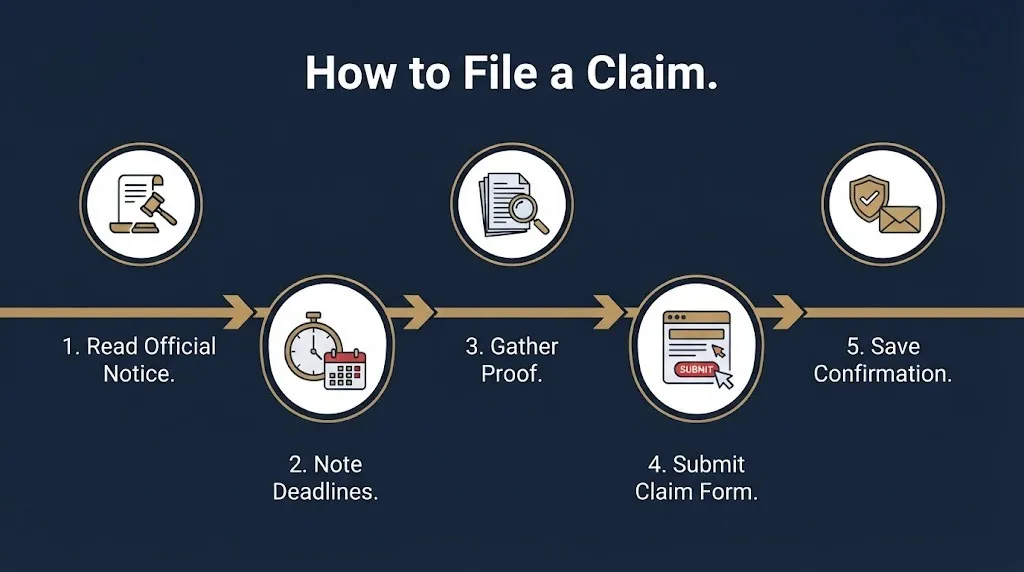
Here is a verified sequence for class action claims:
- Read the official notice and confirm the class definition includes you.
- Note the claim deadline and the opt-out deadline, they are different dates.
- Gather proof of purchase, residency, or harm as specified in the notice.
- File the claim form online or by mail before the deadline.
- Save your confirmation number and a copy of the completed form.
- Watch for a deficiency notice if the administrator needs more proof.
- Wait for the final approval hearing and any appeals before payment.
Each step matters. Missing the opt-out deadline means you are stuck in the class even if you wanted to sue. Ignoring a deficiency notice means your claim gets rejected without a second chance. The strategy is not glamorous. It is disciplined.
Key Takeaway: Class action strategy is mostly about reading the notice, meeting deadlines, and submitting complete proof, not about legal maneuvering.
What Is the Best Compensation Strategy for Workers Compensation?
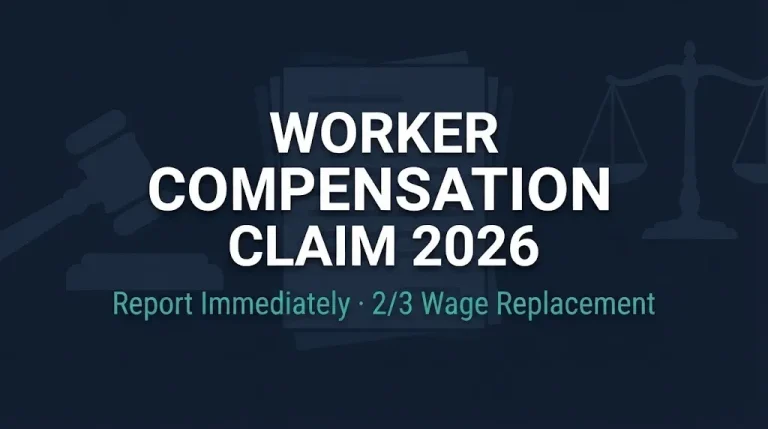
The best workers compensation strategy in 2026 starts with immediate medical documentation. The treating physician’s reports, diagnostic imaging, and functional capacity evaluations determine your impairment rating, and the impairment rating drives the payout under state workers compensation schedules. Delayed or inconsistent medical care weakens the claim.
The second strategic point is understanding that workers compensation is a statutory system, not a negotiation like a personal injury lawsuit. You do not need to prove fault. You need to prove the injury happened at work and the medical evidence supports the level of disability. That shifts the strategy from blame to documentation.
| Strategic Step | Why It Matters |
|---|---|
| Report the injury immediately | Late reporting gives insurers a denial reason |
| See an authorized physician | State rules often require specific providers |
| Follow treatment plan | Gaps suggest the injury is not serious |
| Document work restrictions | Shows functional loss and wage impact |
| Appeal denials on time | Workers comp appeals have short deadlines |
The most common strategic mistake is treating workers compensation like a lawsuit where you hold out for a bigger settlement. Some claims do settle, but the value is bounded by the state schedule and your medical rating. A strategy that ignores the medical record is a strategy for leaving money on the table.
Key Takeaway: Workers compensation strategy is built on medical documentation and deadline compliance, not on courtroom drama.
Should I Opt Out of a Class Action Settlement?
Opting out of a class action settlement only makes sense if your individual damages are high enough to justify a separate lawsuit. In most consumer class actions, the per-person payout is modest, and the cost of individual litigation would swallow any possible recovery. For a $30 settlement, opting out is almost always the wrong call.
But there are exceptions. If you suffered serious physical harm, lost significant income, or have damages far outside the class average, opting out may preserve a much larger individual claim. This comes up in product liability and medical device cases. A person with a $500,000 medical bill has a very different strategic calculation than someone who bought a defective toaster.
The opt-out deadline is separate from the claim deadline. If you miss it, you remain in the class and give up the right to sue individually. That is a binding legal consequence. Before you opt out, consult a lawyer who can evaluate your individual claim value against the expected class payout. Do not make this decision based on a social media post or a general article.
Key Takeaway: Opting out is a high-stakes choice that usually only pays off if your individual damages dwarf the class payout.
How Are Settlement Payouts Calculated in 2026?
Settlement payouts in 2026 are calculated by the terms of each specific settlement agreement. In class actions, the most common method is pro rata allocation. The settlement fund is divided among all valid claims after administrative costs, attorneys’ fees, and any service awards are subtracted. If more people file, each check gets smaller.
Tiered settlements are becoming more common. Claimants with stronger proof or more severe harm receive higher tiers and larger payments. For example, a product defect settlement might pay $25 to claimants with a receipt and $10 to those without. A data breach settlement might pay more for documented out-of-pocket losses than for a simple notice claim.
| Tier Type | Typical Proof Required | Relative Payout |
|---|---|---|
| Documented loss | Receipts, medical bills, account statements | Highest tier |
| Standard claim | Sworn attestation, basic eligibility | Middle tier |
| No-proof claim | Claim form only, no documents | Lowest tier or denied |
The key strategic point is that proof level is now the biggest variable you control. Two people in the same settlement can receive different amounts based solely on what they submitted. That is why a compensation strategy that treats documentation as the foundation outperforms one that treats it as an afterthought.
Key Takeaway: Payouts are pro rata or tiered, and your proof level is the one variable you control.
What Are the Most Common Compensation Strategy Mistakes?
The most common compensation strategy mistake is missing a deadline. Every settlement, appeal, and legal filing has a clock. Miss it and the claim is gone. No amount of evidence, negotiation, or regret brings it back. This is the equivalent of throwing away a winning lottery ticket because you did not check the drawing date.
The second mistake is filing with incomplete proof. Settlement administrators reject claims that do not match the required documentation. In 2026, many claim forms are digital and algorithmically screened. A typo in your address, a missing receipt, or an inconsistency in your sworn statement can trigger a deficiency notice or a denial. Filing fast is good. Filing wrong is worse than not filing yet.
Other recurring mistakes include ignoring deficiency notices, assuming the settlement is a scam without checking, paying a third-party service to file a claim you can file for free, and opting out without knowing the value of the individual claim. Each of these is avoidable with basic attention and a calendar.
Key Takeaway: Deadlines and documentation are where compensation strategies fail, and both are entirely within your control.
What Is a Tiered Settlement and How Does It Affect Strategy?
A tiered settlement is a class action settlement where claimants receive different amounts based on the strength of their documentation or the severity of their harm. Instead of dividing the fund equally, the administrator assigns each valid claim to a tier. Higher tiers get larger payments. Lower tiers get smaller ones or nothing.
This changes the compensation strategy. Under a flat pro rata settlement, filing early matters most because the fund is simply divided. Under a tiered settlement, proof quality matters more because it determines which tier you reach. A claimant with strong documentation can receive several times the amount of a claimant who filed the same form with no proof.
The strategy for a tiered settlement is straightforward. Before you file, read the tier definitions in the settlement notice. Determine which tier you can meet with the evidence you actually have. Then submit the strongest proof you can honestly support. Do not overstate your claim. Administrators verify, and fraud in a claim form can result in denial or worse.
Key Takeaway: In tiered settlements, proof quality is the biggest determinant of your payout, so read the tier definitions before filing.
How Do Settlement Administrators Verify Claims?
Settlement administrators verify claims using the rules set out in the settlement agreement and the court’s order. For simple claims, verification may be a review of the form for completeness and consistency. For higher-value claims, administrators may require receipts, account records, medical documentation, or identity verification. Some settlements use third-party data to cross-check claimant information.
In digital claim forms, automated screening flags inconsistencies. A claim that says you lived in Illinois but lists a California address might get flagged. A claim that requests the highest tier but submits no supporting documents will likely be moved to a lower tier or denied. Administrators do not negotiate. They apply the rules.
The strategy implication is clear. Submit accurate, complete information the first time. If you get a deficiency notice, respond before the deadline. Deficiency notices are not denials, but ignoring them turns them into denials. Treat the administrator like a tax auditor, not an adversary you can charm.
Key Takeaway: Administrators apply rules mechanically, so accuracy and completeness are your best defense against denial.
What Is the Difference Between a Claim Deadline and an Opt-Out Deadline?
The claim deadline is the last day to file a claim form to receive a share of the settlement fund. The opt-out deadline is the last day to exclude yourself from the class and preserve your right to sue separately. They are different dates, often weeks apart, and they have opposite consequences.
Filing a claim means you accept the settlement terms and will be bound by the release. Opting out means you reject the settlement and keep your individual legal rights. You cannot do both. You cannot file a claim and then opt out later because you changed your mind about the amount.
The strategic mistake people make is confusing the two. A person who wants to object to the settlement but keep their right to sue must opt out, not just file an objection. A person who wants the settlement money must file a claim and let the opt-out deadline pass. Read the notice carefully. These are binding legal choices with no do-over.
Key Takeaway: The claim deadline and opt-out deadline are different dates with opposite legal consequences, and you cannot reverse either choice.
What Compensation Strategy Works for Benefits Denials?
A benefits denial, whether for short-term disability, long-term disability, health insurance, or workers compensation, requires an appeals-first strategy. The initial denial is not the end. Most plans and programs have an internal appeals process, and many denials are reversed when the claimant submits additional medical evidence or corrects a procedural error.
The first step is to read the denial letter carefully. It must state the reason for the denial and the deadline to appeal. Missing the appeal deadline usually forfeits the claim. The second step is to gather the specific evidence the denial says is missing. If the insurer says the medical record does not support disability, get a detailed statement from your treating physician addressing that exact point.
Do not start a lawsuit before exhausting administrative appeals unless a lawyer tells you otherwise. Courts often require exhaustion of remedies before they will hear a benefits case. The strategy is procedural: meet every deadline, submit every document, and preserve every denial letter. Benefits claims are won on paperwork, not on outrage.
Key Takeaway: Benefits denials are reversed through timely appeals with targeted medical evidence, not through lawsuits filed before exhausting the process.
What Happens Next
- Before any deadline: Read the official notice, confirm eligibility, and note the claim and opt-out deadlines.
- During the filing window: Gather proof, complete the claim form accurately, and submit with confirmation.
- After filing: Watch for deficiency notices and respond before the deadline.
- Final approval hearing: Wait for the court to approve the settlement and resolve any appeals.
- Payment window: Checks or digital payments are distributed per the settlement terms.
Frequently Asked Questions
What is a compensation strategy?
A compensation strategy is a plan for maximizing money recovered from a settlement, lawsuit, or benefits claim.
It means making deliberate choices about deadlines, proof, and whether to file or opt out.
How do I maximize my settlement payout?
File before the deadline with complete, accurate documentation that supports the highest tier you can honestly claim.
In tiered settlements, proof quality is the biggest variable you control.
Should I opt out of a class action?
Only if your individual damages are large enough to justify a separate lawsuit.
Most consumer class actions pay too little to make opting out worthwhile.
What proof do I need for a settlement claim?
Proof varies by settlement, from a sworn statement to receipts, medical records, or account data.
Read the official notice for the specific requirements.
Can I file a late claim after the deadline?
Almost never.
Late claims are denied unless the settlement agreement allows an exception, which is rare.
Do I need a lawyer to file a class action claim?
No, class action claim forms are designed for individuals to file without a lawyer.
Third-party claim services charge fees for something you can do for free.
How are class action payouts calculated?
Most payouts are pro rata, dividing the fund among valid claims after fees and costs.
Tiered settlements pay more for stronger proof or more severe harm.
When will I get my settlement check?
Payment timing depends on final approval, appeals, and the administrator’s processing schedule.
Checks can take months or more than a year after the claim deadline.
The best compensation strategy in 2026 is not complicated. Read the official notice, calendar every deadline, gather your proof before you file, and never pay someone to file a claim you can file yourself for free.