Tax Rise Lawsuit 2026: Status, Claims, and What It Means for Taxpayers
Quick Answer
- “Tax rise lawsuit” is not one verified case. It refers to various state and local tax challenges filed across the country.
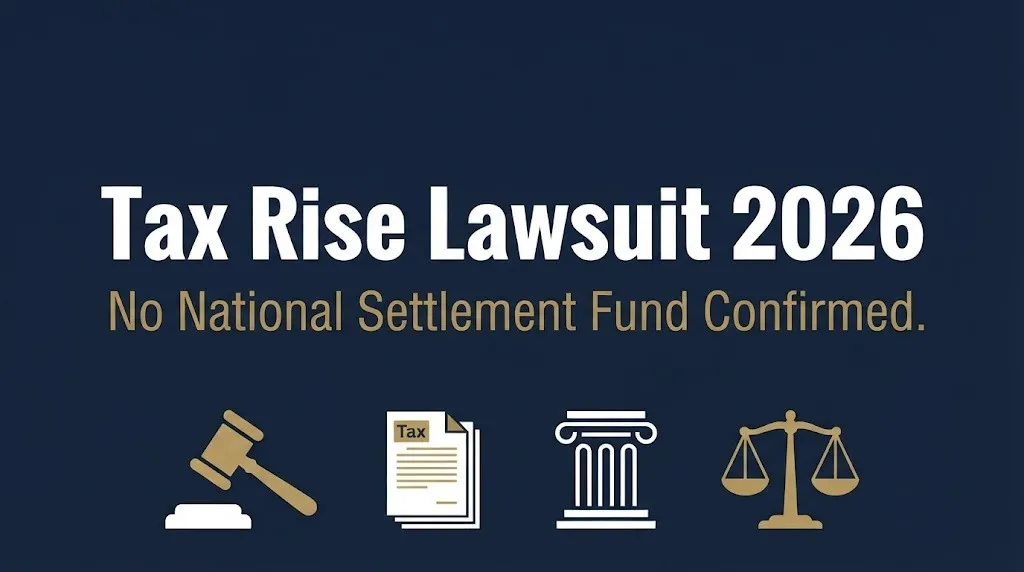
- No settlement fund, per-person payout, or claim deadline is confirmed for any single national tax rise class action.
- If a specific tax lawsuit affects you, you will receive a mailed notice from the court or a settlement administrator.
You searched “tax rise lawsuit” because you heard something. Maybe a neighbor said there is a class action over property tax increases. Maybe a social media post promised a refund if you sign up. Maybe your county reassessed your home and you want to fight it. This article separates what is verified from what is rumor.
Here is the truth: there is no single lawsuit called “the tax rise lawsuit.” That phrase is a search term, not a case name. Multiple lawsuits challenge tax increases in different states and cities. Some are class actions. Some are individual appeals. None has produced a national settlement fund as of February 2026.
Is There a Tax Rise Class Action Lawsuit in 2026?
There is no single verified national class action called “tax rise lawsuit” with a certified class and a settlement fund. That does not mean tax lawsuits do not exist. They do. They are just scattered and local.
Tax lawsuits generally fall into a few categories. Property tax assessment challenges are the most common. Taxpayers argue their county overvalued their home, causing an unfair tax increase. These are usually individual appeals, not class actions.
Some states face broader challenges to tax legislation. For example, legal challenges to income tax changes, sales tax expansions, or special district assessments have been filed in various states. These cases may seek refunds for affected taxpayers, but most are still in early litigation.
A search of federal court records shows no consolidated multidistrict litigation under the name “tax rise lawsuit.” No settlement administrator has been appointed for any national tax rise settlement. Any website claiming otherwise is not telling you the truth.
What Types of Tax Lawsuits Could Produce Refunds?
Tax lawsuits that produce refunds usually challenge the legality of a specific tax, not the fact that taxes went up. You cannot sue just because your taxes increased. You need a legal reason the increase was unlawful.
Common refund-producing tax lawsuits include:
| Case Type | Legal Theory | Who May Benefit |
|---|---|---|
| Property tax assessment appeal | County overvalued property | Individual property owners |
| Unconstitutional tax challenge | State or local tax violates state constitution | All taxpayers who paid the tax |
| Illegal fee or assessment lawsuit | Fee exceeds statutory authority | Residents or businesses charged the fee |
| Sales tax overcollection claim | Retailer collected more than allowed | Consumers who paid the excess |
| Income tax misapplication suit | State applied tax to exempt income | Affected taxpayers |
Each type has different rules, deadlines, and proof requirements. None is automatic. You must file a claim or an appeal to get money back.
Key Takeaway: To get a tax refund through a lawsuit, you must show the tax was illegal or misapplied, not just that it was expensive.
How Do I Know If I Qualify for a Tax Rise Refund?
You may qualify for a tax refund if you paid a tax that a court later rules was illegal or over-assessed. Eligibility depends on the specific case, not on a general feeling that taxes are too high.
Start by identifying the exact tax. Is it a property tax increase from a county reassessment? An income tax change from state legislation? A special assessment on your utility bill? Each has its own challenge process.
Then check whether a lawsuit exists. Search your state court records or consult your county assessor. If a class action is pending, the court will eventually send notices to affected taxpayers. If no lawsuit exists, you may need to file your own appeal.
Do not wait for a lawsuit that may never come. Property tax appeals have strict deadlines, often 30 to 90 days after the assessment notice. Missing that deadline usually means waiting until the next assessment cycle.
What Is the Difference Between a Tax Appeal and a Tax Lawsuit?
A tax appeal is an administrative process. A tax lawsuit is a court case. They are related but separate.
A property tax appeal starts with your local assessor or board of review. You present evidence that your assessment is too high. The board decides. If you disagree, you can appeal to a state tax tribunal or file a lawsuit in court.
A tax lawsuit challenges the legality of a tax itself. You are not arguing about your individual assessment. You are arguing that the tax violates a statute, a constitutional provision, or a procedural requirement.
Here is a comparison:
| Factor | Tax Appeal | Tax Lawsuit |
|---|---|---|
| Forum | Local board or tribunal | State or federal court |
| Scope | Your individual assessment | The tax itself |
| Deadline | 30 to 90 days after notice | Varies by statute of limitations |
| Cost | Low, often DIY possible | Higher, usually requires attorney |
| Result | Assessment adjustment | Refund or tax invalidation |
Most homeowners start with an appeal. If the appeal fails and you believe the tax itself is illegal, a lawsuit may be the next step.
What Are the Biggest Tax Rise Lawsuits Filed in 2025 and 2026?
Several significant tax lawsuits have been filed in 2025 and early 2026. These are not consolidated into one national case, but they matter to the taxpayers affected.
One active category involves challenges to property tax reassessments in states with rapidly rising home values. Homeowners in several counties have filed appeals alleging systematic overvaluation. Some have been consolidated into local class actions, but no national settlement has emerged.
Another category involves challenges to state digital services taxes and online sales tax expansions. Business groups have filed lawsuits arguing these taxes exceed state constitutional authority. These cases may produce refunds for businesses, not individual consumers.
The status of these cases varies. Some have survived motions to dismiss. Others have been dismissed or are on appeal. No final judgment or settlement fund has been confirmed in any major tax rise lawsuit as of February 2026.
Key Takeaway: Tax lawsuits are active in several states, but none has reached a payout stage that would send refund checks to the general public.
Can I Sue My County for a Property Tax Increase?
You cannot sue just because your property taxes went up. You can challenge the increase if you believe the assessment is inaccurate or the increase was calculated illegally.
The most common challenge is an assessment appeal. You argue that the county overvalued your property. If your home’s assessed value is higher than its actual market value, you have a case.
A lawsuit is different from an appeal. You sue if you believe the county violated the law in how it assessed your property or applied the tax rate. Examples include failing to follow required notice procedures, applying the wrong millage rate, or taxing exempt property.
Before filing anything, check your county’s appeal process. Most counties have a window of 30 to 60 days after the assessment notice. That window is your first and best option.
How Do Property Tax Assessment Appeals Work?
Property tax assessment appeals are the most common way taxpayers challenge a tax rise. The process is administrative, not judicial, at least at first.
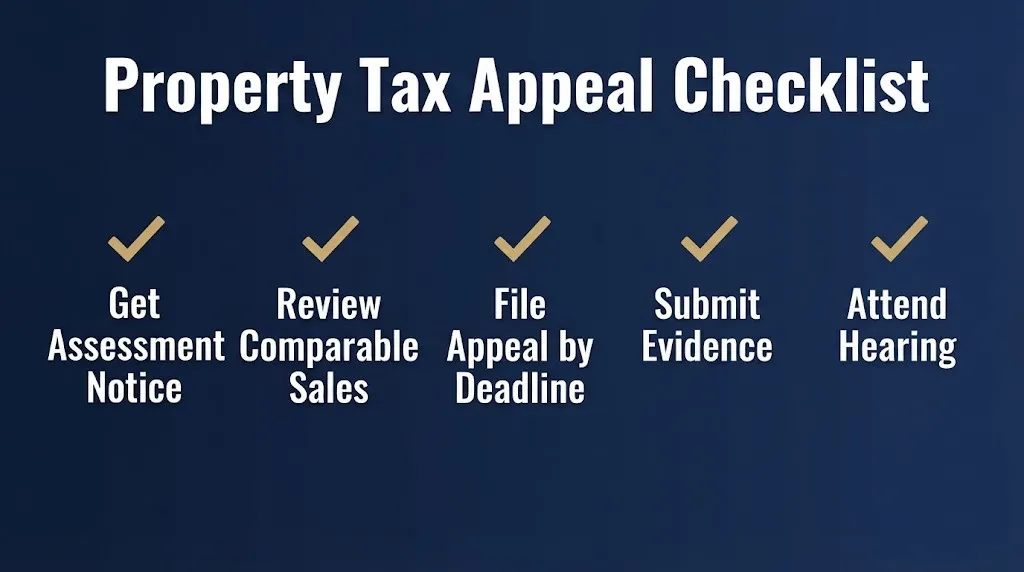
Here are the typical steps:
- Receive your property tax assessment notice from the county.
- Review the assessed value against recent comparable sales.
- File an appeal with the county assessor or board of review by the deadline.
- Submit evidence: an appraisal, comparable sales data, or photos of defects.
- Attend the hearing if one is scheduled.
- Receive the board’s decision.
- Appeal to the state tax tribunal if you disagree with the decision.
The entire process can take 3 to 12 months depending on the county and the backlog. Many homeowners handle the first-level appeal without an attorney. If the case reaches the state tribunal, legal help becomes more valuable.
Reality Check: No legitimate tax refund requires you to pay a filing fee to a third party before you receive money. County appeal fees, if any, are small and paid to the government. Anyone asking for an upfront “processing fee” to get your tax refund is running a scam.
What Evidence Do I Need to Challenge a Tax Increase?
The evidence you need depends on the type of challenge. For a property tax assessment appeal, you need proof your home is worth less than the county says.
Useful evidence includes:
- A recent independent appraisal
- Comparable sales of similar homes in your neighborhood
- Photos of property damage, deferred maintenance, or other value-reducing conditions
- Closing statements from recent purchases of comparable properties
- County records showing errors in your property description
For an income tax or sales tax challenge, you need proof you paid the tax and that the tax was applied incorrectly. Keep your tax returns, receipts, and any correspondence from the taxing agency.
The strongest evidence is specific and documented. An appraisal with a date, a license number, and a value conclusion beats a printout from a home value website.
What Is the Deadline to Challenge a Property Tax Assessment?
Property tax appeal deadlines vary by state and county. Most fall between 30 and 90 days after the assessment notice is mailed.
Some states have longer windows. Others allow appeals only during a specific annual period. Missing the deadline usually means your assessment stands for that year. You can file again the next year, but you lose the current year’s refund opportunity.
Here are approximate deadlines for selected states:
| State | Typical Appeal Deadline |
|---|---|
| California | September 15 or 30 days after notice |
| Texas | May 15 or 30 days after notice |
| Florida | 25 days after notice |
| New York | Varies by municipality, often 30 to 60 days |
| Illinois | 30 days after notice |
Check your assessment notice. It usually states the deadline and the appeal instructions. If it does not, call your county assessor’s office.
Key Takeaway: Property tax appeal deadlines are short and strict. Missing the deadline costs you the current year’s refund.
What Happens If a Court Rules a Tax Increase Was Illegal?
If a court rules a tax increase was illegal, the court may order refunds for the taxpayers who paid it. The mechanics depend on the case and the taxing authority.
In some cases, the refund is automatic. The taxing agency identifies affected taxpayers and issues refund checks. In other cases, taxpayers must file a claim to receive their share.
Class action tax lawsuits often work like this: the court certifies a class of affected taxpayers. A settlement or judgment establishes a refund fund. A claims administrator sends notices and claim forms. Taxpayers who file valid claims receive a share.
No national tax rise settlement has reached that stage as of February 2026. If one does, it will be announced through court filings, not social media posts.
How Do I Find Out If a Tax Lawsuit Affects Me?
You find out if a tax lawsuit affects you by checking official sources, not viral posts.
Start with your county assessor or state tax agency. They publish information about pending appeals and litigation that may affect taxpayers. If a class action is certified, the court will require notice to be mailed to class members.
Also check federal and state court records. The Public Access to Court Electronic Records system, known as PACER, allows you to search federal cases. State courts have their own online dockets.
If you received a notice in the mail about a tax lawsuit, read it carefully. Legitimate notices identify the court, the case number, the class definition, and the deadline to opt out or file a claim.
What Are the Most Common Tax Rise Scams to Avoid?
Tax rise scams are common, especially when headlines mention refunds. Scammers know taxpayers are angry about increases and hopeful about refunds.
Watch for these red flags:
- Unsolicited texts or social media messages promising tax refunds
- Requests for upfront fees to “process” your refund claim
- Claims that you have been pre-approved for a settlement you never heard of
- Pressure to act immediately without reading any documents
- Requests for your bank account, Social Security number, or tax ID
Real tax notices come by mail. Real tax refunds are paid by check or direct deposit from the government. Real court-approved settlements never charge you a fee to file a claim.
What Should I Do If My Taxes Went Up and I Cannot Afford It?
If your taxes went up and you cannot afford the increase, you have options beyond litigation.
First, check whether you qualify for a tax relief program. Many states and counties offer exemptions or deferrals for seniors, veterans, disabled residents, and low-income homeowners. These programs reduce or delay your tax bill.
Second, consider an assessment appeal. If your home is overvalued, a successful appeal lowers your tax bill without changing the tax rate.
Third, explore payment plans. Most taxing authorities offer installment plans for property taxes. The terms vary, but they can spread the payment over several months.
Fourth, contact a housing counselor. Nonprofit organizations certified by the U.S. Department of Housing and Urban Development can help you understand your options and avoid foreclosure.
Key Takeaway: A tax lawsuit is not the only answer. Exemptions, appeals, and payment plans often work faster and cost less.
What Is the Outlook for Tax Rise Lawsuits in 2026?
The outlook for tax rise lawsuits in 2026 is mixed. Some cases are advancing. Others are stalling.
Property tax challenges are likely to increase as home values rise and assessments catch up. Counties reassess on cycles. When values spike, appeal volume spikes too.
State tax challenges to digital services taxes and online sales taxes may reach appellate courts in 2026. These cases could set precedents that affect future tax legislation.
No single case appears close to producing a national settlement fund. Taxpayers waiting for a big refund from a “tax rise lawsuit” should manage expectations. The legal system moves slowly, and tax cases are among the slowest.
What Happens Next in the Tax Rise Lawsuit Landscape?
Here is the expected sequence for tax litigation in 2026. Dates are estimates unless tied to a specific court order.
Early 2026: Existing tax appeals and challenges continue through discovery and motion practice.
Mid 2026: Some state tax challenges may reach appellate argument or summary judgment rulings.
Late 2026: Trial dates or settlement conferences may be scheduled in the most advanced cases.
2027 or later: Any refund distribution would follow final judgment, appeals, and claim administration.
This is not a prediction of a specific outcome. It is a map of how tax litigation typically unfolds.
Frequently Asked Questions
Is there a tax rise class action lawsuit I can join?
There is no single national tax rise class action with a settlement fund.
Some local and state tax challenges exist, but none has opened a claim process for the general public.
How do I get a refund for a property tax increase?
You must file an assessment appeal with your county within the deadline.
If the appeal succeeds, your tax bill is reduced and you may receive a refund for overpayment.
Can I sue my county for raising my property taxes?
You cannot sue just because taxes went up.
You may have a case if the assessment was inaccurate or the tax was calculated illegally.
What is the deadline to challenge a property tax increase?
Deadlines vary by state and county, usually 30 to 90 days after the assessment notice.
Check your notice or contact your county assessor for the exact date.
What evidence do I need for a property tax appeal?
You need proof your home is worth less than the assessed value.
An independent appraisal and comparable sales data are the strongest evidence.
Are tax refund services legitimate?
Some are legitimate but unnecessary.
No legitimate service charges an upfront fee before you receive your refund.
How do I know if a tax lawsuit notice is real?
Real notices come by mail and identify the court and case number.
They never ask for upfront fees or your bank password.
What should I do if I cannot afford my property tax increase?
Check for exemptions, file an appeal, and ask about payment plans.
These options work faster than a lawsuit and cost little or nothing.
The single most important thing to know about the tax rise lawsuit search term is that no national settlement exists as of February 2026. If you want tax relief, start with your local assessor, not a viral post.
Your deadline is the one on your assessment notice. That deadline, not a lawsuit, is what controls whether you get money back this year.