Philadelphia Workers Compensation Attorney in 2026: What Injured Workers Need to Know
Quick Answer
- A Philadelphia workers compensation attorney can help if your claim was denied or your benefits stopped.
- Pennsylvania law sets wage-loss benefits at two-thirds of your average weekly wage, up to a state cap.
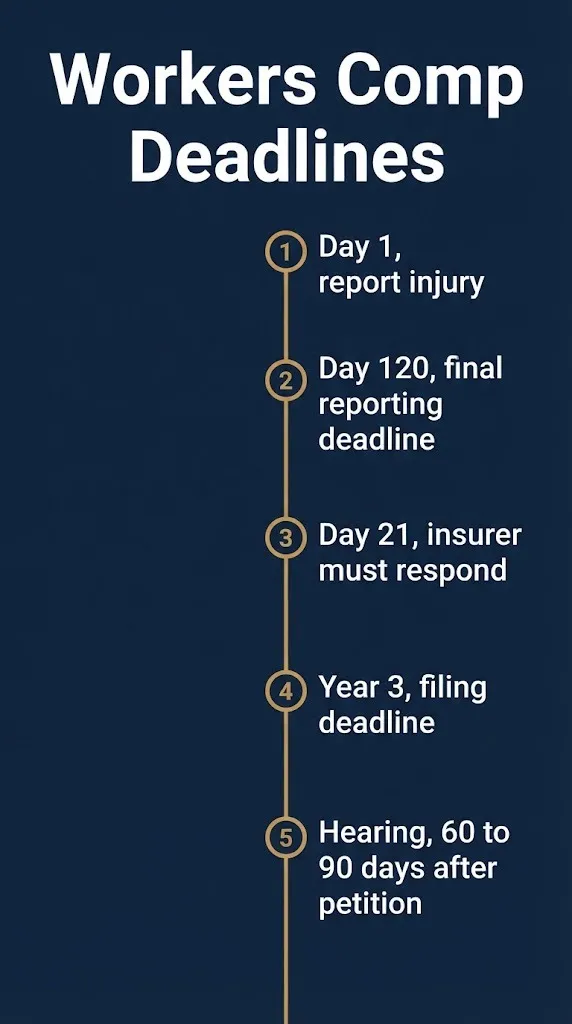
- You have 120 days after injury to report it, and three years to file a claim.
If you got hurt on the job in Philadelphia, you are likely searching for one thing: how to get your workers compensation benefits without losing weeks to paperwork, denials, or an employer who stops returning calls.
A Philadelphia workers compensation attorney handles exactly that problem. These lawyers deal with denied claims, low settlement offers, and employers who retaliate after an injury. One surprising verified fact: Pennsylvania does not require you to prove your employer was at fault. You only need to show the injury happened at work.
The Facts
| Fact | Details |
|---|---|
| Case | Individual workers compensation claims, not a class action |
| Status | Ongoing claims accepted year-round |
| Fund Size | No fixed fund, benefits paid per claim |
| Est. Per Person | Two-thirds of average weekly wage, up to state cap |
| Claim Deadline | 120 days to report, 3 years to file |
| Administrator | Pennsylvania Bureau of Workers’ Compensation |
| Proof Needed | Medical records, incident report, witness statements |
Is a Philadelphia Workers Compensation Attorney Worth It?
A Philadelphia workers compensation attorney is worth it when your claim is denied, your benefits are late, or your employer contests the injury. Most workers compensation attorneys in Pennsylvania work on contingency, meaning they only get paid if you win.
You do not need a lawyer for every claim. Minor injuries with quick approvals and no lost time often resolve without one. But the moment a claim gets denied or an employer disputes the facts, the math changes.

Pennsylvania Bureau of Workers’ Compensation data shows that denied claims are common. A lawyer can request a hearing before a workers compensation judge, gather medical evidence, and cross-examine the employer’s witnesses.
Think of it like a warranty claim. You can handle a simple return yourself. But when the company says no and keeps your money, you want someone who knows the rules.
How Much Does a Workers Compensation Lawyer Cost in Philadelphia?
Most Philadelphia workers compensation lawyers charge a contingency fee of 20 percent of your recovery. Pennsylvania law caps workers compensation attorney fees at 20 percent, and the judge must approve the fee.
You pay nothing upfront. If you lose, you owe nothing. If you win, the fee comes out of your award, not your pocket.
Some lawyers also charge for costs like medical record retrieval or expert witness fees. Ask about costs before signing. A written fee agreement is required by Pennsylvania rules.
| Fee Type | Typical Amount |
|---|---|
| Contingency fee | 20 percent of recovery |
| Upfront retainer | Usually zero |
| Medical record costs | $50 to $200 |
| Expert witness fees | $500 to $2,000 |
These are typical ranges reported by Pennsylvania workers compensation practitioners, not legal guarantees.
What Does a Workers Compensation Lawyer in Pennsylvania Actually Do?
A workers compensation lawyer in Pennsylvania handles the legal fight so you can focus on recovery. The lawyer files your claim, gathers medical evidence, negotiates with the insurer, and represents you at hearings.
Here is what the lawyer does step by step:
- Reviews your injury report and medical records.
- Files a claim petition with the Bureau of Workers’ Compensation.
- Requests a hearing if the employer denies the claim.
- Prepares you to testify about the injury and your limitations.
- Negotiates a settlement or argues your case before a judge.
- Appeals a bad decision to the Workers’ Compensation Appeal Board.
The lawyer also protects you from common employer tactics: surveillance, premature return-to-work demands, and lowball settlement offers.
Key Takeaway: A lawyer’s main value is not filling out forms, it is fighting the denial and knowing what your claim is actually worth.
When Should You Hire a Workers Compensation Attorney in Philadelphia PA?
You should hire a workers compensation attorney in Philadelphia PA the day your claim is denied or your benefits stop. You should also hire one if your injury requires surgery, causes permanent restrictions, or keeps you out of work more than a few weeks.
Do not wait to see if things improve. Pennsylvania has strict deadlines. Missing a filing deadline can kill your claim permanently.
Here are the situations that almost always require a lawyer:
- Your employer denies the injury happened at work.
- The insurer stops paying after 90 days.
- You receive a Notice of Ability to Return to Work and disagree with it.
- Your doctor releases you to light duty but no light duty exists.
- The employer offers a settlement that seems too low.
- You suffered a catastrophic injury: amputation, spinal cord, head trauma, burns.
How Much Is a Workers Compensation Settlement in Philadelphia?
A workers compensation settlement in Philadelphia depends on your average weekly wage, your injury severity, and how much future medical care you will need. There is no fixed settlement amount.
Pennsylvania workers compensation pays wage-loss benefits at two-thirds of your average weekly wage. The statewide maximum for 2026 is set by the Department of Labor and Industry each January. For 2025, the maximum was $1,325 per week. The 2026 figure is expected to be similar but not yet confirmed.
Here is a sample calculation:
| Average Weekly Wage | Two-Thirds Rate |
|---|---|
| $600 | $400 |
| $800 | $533 |
| $1,000 | $667 |
| $1,500 | $1,000 |
A settlement typically represents the present value of future wage-loss benefits plus future medical costs. Serious injuries settle for six figures. Minor sprains settle for a few thousand.
Key Takeaway: Your settlement starts with your average weekly wage, and every calculation flows from that number.
What Is the Biggest Mistake People Make in a Philadelphia Workers Comp Claim?
The biggest mistake is trusting the insurer’s first settlement offer without checking the math. Insurers are businesses. They profit by paying less.
The second biggest mistake is missing the 120-day notice deadline. Pennsylvania law requires you to tell your employer about the injury within 120 days. If you wait longer, you lose your right to benefits.
Reality Check: No one from workers compensation calls you first to give you money. Filing is free. Any third party that wants a fee to “help” you file is selling something you can do yourself in ten minutes online through the Pennsylvania Bureau of Workers’ Compensation.
Can You Get Workers Comp for a Pre-Existing Condition in Philadelphia?
Yes, if your work made the condition worse. Pennsylvania recognizes aggravation claims. You need medical evidence that shows a clear connection between your job duties and the worsening.
For example, a warehouse worker with mild knee arthritis who develops a torn meniscus from repetitive lifting may qualify. The employer may argue the injury was pre-existing. A workers compensation lawyer in Philadelphia can bring in a medical expert to counter that argument.
How Long Do You Have to Report a Work Injury in Philadelphia?
You have 120 days to report a work injury in Philadelphia. That clock starts the day you know or should know the injury is work-related.
Most people report immediately, and that is the right move. Delays give the employer a reason to question whether the injury happened at work.
The three-year statute of limitations for filing a claim is separate. Reporting to your employer is not the same as filing a formal claim petition.
Key Takeaway: Report immediately, file formally within three years, and never let an employer talk you out of either step.
What Benefits Does Pennsylvania Workers Compensation Pay?
Pennsylvania workers compensation pays for medical treatment, wage-loss benefits, and specific loss benefits for permanent injuries.
Here is the breakdown:
| Benefit | What It Covers |
|---|---|
| Medical | All reasonable and necessary treatment |
| Wage-loss | Two-thirds of average weekly wage, capped |
| Specific loss | Set amounts for amputations, hearing loss, vision loss |
| Death | Burial costs and benefits to dependents |
Medical benefits can last a lifetime if the injury requires ongoing care. Wage-loss benefits can last up to 500 weeks for partial disability in some cases.
How Do You Find the Best Philadelphia Workers Compensation Attorneys?
You find the best Philadelphia workers compensation attorneys by checking their track record, not their billboards. Look for lawyers who focus on workers comp, not general practice.
Ask these questions before hiring:
- How many workers comp cases have you handled in Pennsylvania?
- What percentage of your practice is workers compensation?
- Will you personally handle my case or pass it to an associate?
- What is your win rate at hearings?
- Can you give me references from past clients?
Also check the Pennsylvania Bar Association’s lawyer directory and Google reviews. A pattern of complaints about communication is a red flag.
What Happens If Your Workers Comp Claim Is Denied in Philadelphia?
If your workers comp claim is denied, you have the right to file a claim petition and request a hearing before a workers compensation judge. The denial is not the final word.
The process works like this:
- You receive a Notice of Workers’ Compensation Denial from the insurer.
- Your lawyer files a claim petition with the Bureau of Workers’ Compensation.
- The judge schedules a hearing, usually within 60 to 90 days.
- Both sides present medical evidence and testimony.
- The judge issues a written decision, usually within 30 to 60 days after the hearing.
- Either side can appeal to the Workers’ Compensation Appeal Board.
Key Takeaway: A denial starts a process, not an ending, and that process has timelines that favor the worker who shows up with evidence.
Can You Sue Your Employer Outside Workers Comp in Philadelphia?
In most cases, no. Workers compensation is the exclusive remedy for workplace injuries in Pennsylvania. That means you cannot sue your employer for negligence.
There are narrow exceptions. You may sue if your employer intentionally hurt you, if a third party caused your injury, or if the employer had no workers comp insurance.
A third-party lawsuit is common in construction accidents. You might have a workers comp claim against your employer and a personal injury claim against a negligent subcontractor or equipment manufacturer.
What Is the Workers Compensation Hearing Like in Philadelphia?
A workers compensation hearing in Philadelphia is less formal than a jury trial but more formal than a meeting. It happens in a hearing room, not a courtroom, and a workers compensation judge runs it.
You will testify about how the injury happened, your symptoms, and your work restrictions. Your lawyer will question you first, then the employer’s lawyer cross-examines you.
Your doctor may testify by deposition or in person. The judge then weighs the evidence and issues a written decision.
What Happens After You Win Your Workers Comp Case?
After you win your workers comp case, the insurer must pay your benefits, including back pay from the date of disability. The judge’s order sets the amount and the payment schedule.
If the insurer still refuses to pay, your lawyer can file a penalty petition. Pennsylvania judges can order penalties up to 50 percent of the unpaid amount.
Payment usually arrives by check or direct deposit within 30 days of the final order.
What Happens Next
The workers compensation process in Philadelphia follows a predictable timeline:
- Day 1 to 120: Report the injury to your employer in writing.
- Within 21 days: The insurer must issue a Notice of Compensation Payable or a denial.
- If denied: Your lawyer files a claim petition within days.
- 60 to 90 days later: First hearing before a workers compensation judge.
- 30 to 60 days after hearing: The judge issues a written decision.
- If appealed: The Workers’ Compensation Appeal Board reviews the record, usually within 6 to 12 months.
The single most important date is the 120-day reporting deadline. Miss it and the claim may be gone before it starts.
Frequently Asked Questions
What is the average workers comp settlement in Philadelphia?
There is no official average. Settlements depend on your average weekly wage, injury severity, and future medical needs.
Minor claims settle for a few thousand dollars while catastrophic injuries can reach six figures.
Your lawyer can calculate a realistic range based on your specific facts.
Do I need a lawyer for a Philadelphia workers comp claim?
You need a lawyer if your claim is denied, your benefits stop, or your injury is serious.
Simple claims with quick approvals can be handled without one.
Most lawyers offer free consultations and work on contingency.
How long does a Philadelphia workers comp case take?
A simple accepted claim starts paying benefits within 21 days.
A denied claim with a hearing can take 6 to 12 months to resolve.
Appeals add another 6 to 12 months.
Can I be fired for filing a workers comp claim in Philadelphia?
Pennsylvania law prohibits retaliation for filing a workers comp claim.
If you are fired, you may have a separate wrongful termination claim.
Document everything and contact a lawyer immediately.
What if my employer says I am an independent contractor?
Pennsylvania uses a multi-factor test to determine employment status.
If your employer controls your schedule, tools, and work methods, you may still qualify.
A workers compensation judge decides this issue at a hearing.
Can I choose my own doctor for a workers comp injury in Philadelphia?
For the first 90 days after injury, you must see a doctor on your employer’s posted list.
After 90 days, you may switch to your own doctor, but you must notify the employer.
Emergency treatment is always allowed.
How much does a Philadelphia workers compensation attorney cost?
Pennsylvania law caps attorney fees at 20 percent of your recovery.
You pay nothing upfront and nothing if you lose.
Costs for records and experts are usually separate and billed as incurred.
What is the Pennsylvania workers compensation state cap for 2026?
The 2026 cap has not yet been confirmed by the Department of Labor and Industry.
The 2025 cap was $1,325 per week for wage-loss benefits.
Check the official state website for the updated figure each January.