Kentucky Workers’ Compensation 2026: Benefits, Deadlines and How Filing Works
Quick Answer
- Kentucky workers’ compensation is a real, state-mandated insurance system run by the Department of Workers’ Claims, not a lawsuit.
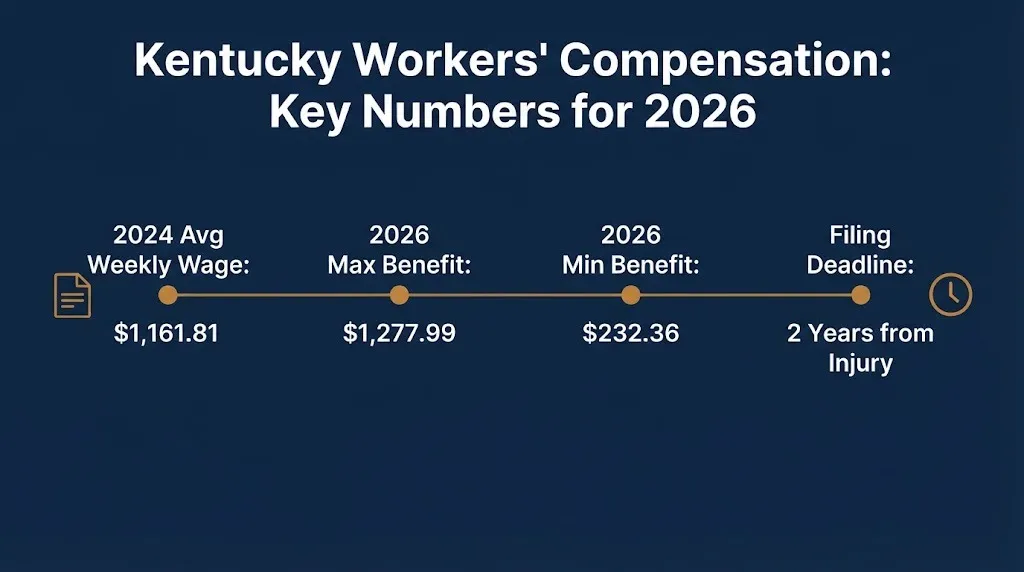
- The 2026 maximum weekly benefit for total disability is $1,277.99, and the minimum is $232.36.
- Most claims must be filed with the Department of Workers’ Claims within two years of the injury or last disability payment.
If you got hurt on the job in Kentucky, workers’ compensation is the state system built to cover your medical bills and part of your lost wages, regardless of who caused the accident. It’s not something you sue for in civil court in most cases, and it’s not tied to any settlement fund or class action.
Nearly every employer in Kentucky is legally required to carry this coverage, and the Department of Workers’ Claims in Frankfort sets updated benefit rates each year based on the state’s average weekly wage. For 2026, that average weekly wage was calculated at $1,161.81, which is what drives this year’s maximum and minimum payment figures.
This guide covers what the system actually pays in 2026, how the filing deadline works, and what happens if your employer or its insurer denies your claim. One detail that surprises a lot of workers: Kentucky’s is a no-fault system, so your own mistake on the job generally doesn’t disqualify you from benefits.
The Basics
| Program | Kentucky Workers’ Compensation, administered by the Department of Workers’ Claims |
| Status | Active, ongoing state program (not a lawsuit or settlement) |
| 2026 Max Weekly Benefit | $1,277.99 (total disability or death) |
| 2026 Min Weekly Benefit | $232.36 |
| Filing Deadline | 2 years from date of injury or last TTD payment |
| Administering Agency | Department of Workers’ Claims, Frankfort, Kentucky |
| Proof Needed | Employer notice of injury, medical documentation, wage records |
Is Kentucky Workers’ Compensation Legit?
Yes, it’s a legally mandated state insurance system, not a scam or a settlement you have to search for online. Kentucky Revised Statutes Chapter 342 requires almost all employers to carry workers’ compensation coverage, either through a private insurer, the state-affiliated Kentucky Employers’ Mutual Insurance (KEMI), or approved self-insurance.
The Department of Workers’ Claims, part of the state’s Education and Labor Cabinet, oversees the entire system from Frankfort. It handles claim filings, resolves disputes through administrative law judges, and publishes updated benefit rates every year under KRS 342.143.
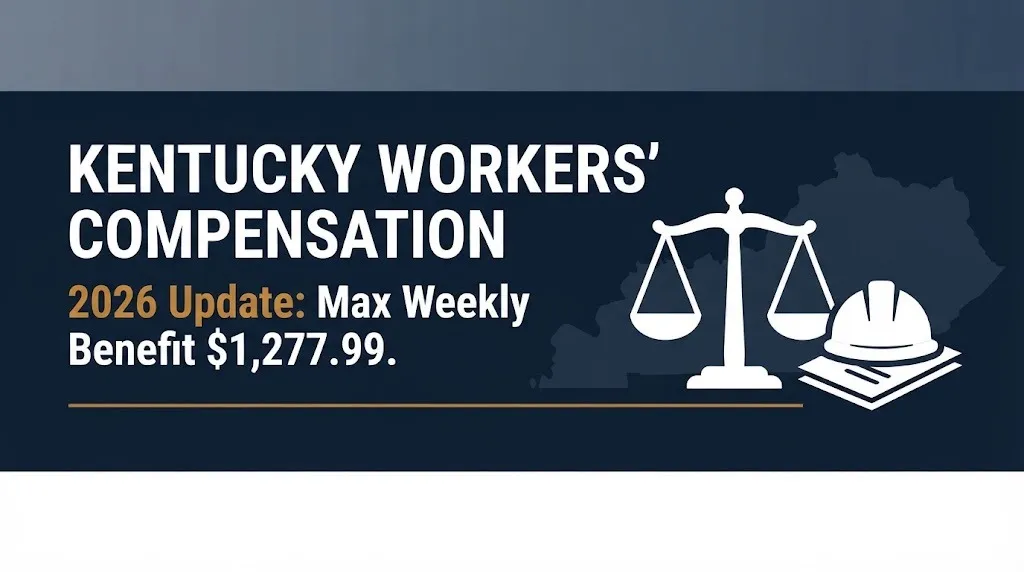
Key Takeaway: Kentucky workers’ compensation is a mandatory state insurance system administered by the Department of Workers’ Claims, not a lawsuit you opt into.
How Much Does Kentucky Workers’ Compensation Pay in 2026?
Kentucky’s 2026 benefit amounts depend on your average weekly wage before the injury, capped at a state maximum and floored at a state minimum. For total disability or death claims, the maximum weekly benefit is $1,277.99, and the minimum is $232.36.
These numbers come directly from the Department of Workers’ Claims’ 2026 Workers’ Compensation Benefit Schedule, which is recalculated each year using the state’s certified average weekly wage. That wage was $1,161.81 for 2024, the figure used to set this year’s rates.
2026 Kentucky Weekly Benefit Rates
| Type of Disability | 2026 Rate |
|---|---|
| Maximum, total disability or death | $1,277.99 |
| Minimum, total disability | $232.36 |
Permanent partial disability and other benefit categories are calculated differently based on the type and percentage of impairment. Not yet determined for any individual case: your specific weekly payment depends on your actual wages and the nature of your injury, and only the Department of Workers’ Claims or an administrative law judge can confirm your exact rate.
How Do You File a Workers’ Compensation Claim in Kentucky?
You file by reporting the injury to your employer and then submitting a claim with the Department of Workers’ Claims if benefits aren’t paid voluntarily. The general steps look like this:
- Report the injury to your employer as soon as possible.
- Get medical treatment and keep all records.
- Confirm your employer’s insurer has been notified.
- Track any wage benefits or medical payments you receive.
- If benefits are denied or disputed, file a claim with the Department of Workers’ Claims.
- Attend any required hearings before an administrative law judge.
- Contact the Department’s Ombudsman at 800-554-8601 if you have questions along the way.
Key Takeaway: Most claims start with a report to your employer, and only escalate to a formal filing with the state if benefits are denied or disputed.
What Is the Deadline to File a Workers’ Compensation Claim in Kentucky?
The deadline is two years from the date of injury, or two years from the date of your last temporary total disability payment, whichever applies to your situation. This comes directly from Kentucky’s workers’ compensation statute of limitations.
Missing that window can bar your claim entirely, even if the injury itself was clearly work-related. If you’ve already been receiving disability payments, the clock can reset from your last payment date rather than the original injury date, so it’s worth tracking both dates carefully.
Think of it like a warranty claim on a major appliance: once the window closes, it generally doesn’t matter how legitimate the underlying problem is.
Who Is Covered by Kentucky Workers’ Compensation?
Coverage generally extends to employees injured while performing job duties, regardless of fault, with a few notable exceptions written into state law. Independent contractors, certain agricultural workers, and some small business exemptions can fall outside standard coverage requirements.
Because it’s a no-fault system, you typically don’t need to prove your employer did anything wrong, only that the injury happened in the course of your job. That’s a meaningful difference from a personal injury lawsuit, where proving fault is central to the case.
Reality Check: No one is going to text or email you saying you’re owed a Kentucky workers’ compensation payout out of nowhere. Filing is done directly through your employer and the Department of Workers’ Claims, it costs nothing to file, and there’s no third-party “claim processor” you need to pay to get the process started.
What Happens If Your Kentucky Workers’ Compensation Claim Is Denied?
A denial doesn’t end your options, since Kentucky lets injured workers appeal through the Department of Workers’ Claims’ hearing process. An administrative law judge reviews disputed claims and can order benefits paid if the evidence supports your case.
Many denials involve disagreements over whether the injury is actually work-related, or disputes over the extent of disability. Medical documentation and a clear timeline connecting the injury to your job duties tend to matter most in these hearings.
Key Takeaway: A denied claim in Kentucky isn’t final, it can go before an administrative law judge for review.
Who Provides Workers’ Compensation Insurance in Kentucky?
Most Kentucky employers buy coverage from private insurance carriers, though the state also supports Kentucky Employers’ Mutual Insurance (KEMI) as a major carrier, and larger employers can qualify for self-insurance. Every carrier operating in the state must file proof of coverage with the Department of Workers’ Claims.
If your employer turns out to be uninsured, Kentucky has mechanisms in place to still pursue benefits, though the process differs from a standard claim against an insured employer. Confirming your employer’s coverage status early can save significant time if a dispute arises later.
What Happens Next
- Ongoing: The Department of Workers’ Claims continues processing new claims and disputes under the current 2026 benefit schedule.
- Annual: Benefit rates are recalculated each year under KRS 342.143 using the state’s certified average weekly wage; the 2027 schedule will be set using 2025 wage data.
- 2026 legislative session: Kentucky lawmakers passed changes affecting the structure of the Department of Workers’ Claims, including its judges and compliance staffing, according to state legislative records.
- Ongoing: Injured workers can contact the Department’s Ombudsman line at any time for help navigating an open claim.
Frequently Asked Questions
Is Kentucky workers’ compensation mandatory for employers?
Yes, nearly all Kentucky employers are legally required to carry workers’ compensation insurance.
Exceptions apply to a limited number of employer types and worker classifications under state law.
What is the maximum workers’ compensation payment in Kentucky in 2026?
The 2026 maximum weekly benefit for total disability or death is $1,277.99.
This figure is set annually by the Department of Workers’ Claims based on the state’s average weekly wage.
How long do I have to file a workers’ compensation claim in Kentucky?
Most claims must be filed within two years of the date of injury or the last temporary total disability payment.
Missing this deadline can bar the claim, so tracking both possible start dates matters.
Do I need a lawyer to file a Kentucky workers’ compensation claim?
No, you can report an injury and file directly with the Department of Workers’ Claims without an attorney.
Many injured workers do consult an attorney once a claim is denied or disputed, since hearings involve legal procedure.
What if my employer doesn’t have workers’ compensation insurance?
Kentucky has processes for pursuing benefits even when an employer lacks required coverage.
Contact the Department of Workers’ Claims Ombudsman at 800-554-8601 for guidance specific to that situation.
Does Kentucky workers’ compensation cover all workplace injuries?
It generally covers injuries and illnesses arising from job duties, under a no-fault system.
Certain worker categories, like some independent contractors and agricultural workers, may fall outside standard coverage.
Can my workers’ compensation claim be denied?
Yes, claims can be denied over disputes about whether an injury is work-related or how severe it is.
Denied claims can be appealed and reviewed by an administrative law judge through the Department of Workers’ Claims.
If you’ve been hurt on the job in Kentucky, the first step is notifying your employer and getting medical treatment on record right away. Keep every document tied to the injury, and remember the two-year filing clock that governs most claims.