Class Action Lawsuit Attorney: How to Find One and What They Actually Cost in 2026
Quick Answer
- Hiring a class action attorney almost never costs you money upfront: fees come out of the settlement fund, not your pocket.
- Court-approved attorney fees typically run 25% to 35% of the total recovery, sometimes higher in complex or long-running cases.
- If you’re already covered by an existing class action, you usually don’t need to “hire” anyone: you just file a claim before the deadline on the official settlement site.
If you’ve searched “class action lawsuit attorney” or “class action attorneys near me,” you’re probably in one of two situations. Either you think a company wronged you and want to start a case, or you got a notice about a lawsuit and want to know if you need a lawyer at all. The short answer for both: it depends on where you are in the process, and it’s almost always free to find out.
Most people who type this into Google are trying to avoid two things: paying money they don’t need to pay, and missing a deadline. Attorney fees in most class actions come straight from the settlement fund, approved by a judge, not billed to your card. The deadline that actually matters is the claim filing deadline on whatever specific settlement affects you.
This article covers how class action attorneys get paid, how to find one for a new claim, how to tell if you’re already part of an existing case, and the scams to watch for. One detail that surprises a lot of people: judges, not the law firm, set the final fee percentage, and class members can formally object to it.
The Facts
| Item | What’s Confirmed |
|---|---|
| Typical attorney fee | 25% to 35% of the settlement fund, court-approved |
| Cost to join a class action | Not yet determined per case, but generally $0 out of pocket |
| Who sets the final fee | The presiding judge, at a fairness hearing |
| Deadlines | Vary by case, always posted on the official settlement website |
| How to check status | Federal cases are searchable on PACER; settlement claims are posted on the official administrator site |
| Free directories | State bar referral services, official settlement notice sites |
This table describes the general legal process, not one specific lawsuit. Individual case numbers, fund sizes, and deadlines vary and should always be checked on the official settlement site tied to that case.
Is It Free to Join a Class Action Lawsuit?
Joining an existing class action almost always costs you nothing out of pocket. You don’t hire the attorney; the attorney already filed the case on behalf of the whole class.
Class counsel fronts the litigation costs, filing fees, expert witnesses, depositions, and only gets paid if the case settles or wins. Law firms handling class action cases typically receive between 25% and 35% of the total settlement or judgment as their fee, deducted from the common fund before checks go out.
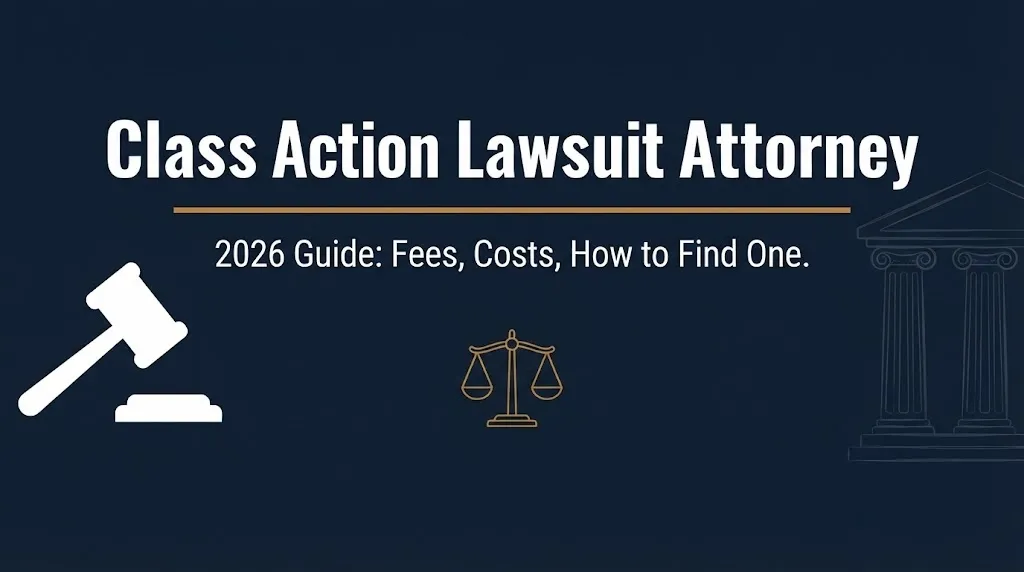
That means your payout is already net of fees by the time you see an estimate. If someone contacts you asking for money upfront to “process” your claim, that’s a red flag, not a normal part of the system.
Key Takeaway: You never pay a class action attorney directly out of your own wallet; fees come out of the settlement fund and require a judge’s sign-off.
How Much Do Class Action Attorneys Charge?
Class action attorney fees typically fall between 25% and 35% of the total recovery, though the exact number depends on case size and complexity.
Judges often approve fees in the 25% to 33% range of the common fund for class actions, distinct from the higher percentages sometimes seen in individual personal injury cases. Larger, multi-hundred-million-dollar funds often see lower effective percentages because courts scrutinize big paydays more closely.
Two fee methods show up in practice:
| Method | How It Works | Common In |
|---|---|---|
| Percentage-of-fund | Attorney takes a set percentage of total settlement | Most consumer class actions |
| Lodestar | Hours worked times hourly rate, sometimes with a multiplier | “Mega-fund” settlements over $100 million |
In mega-fund settlements over $100 million, courts often use the lodestar method instead of a flat percentage, which can produce a lower effective rate for class members.
Reality Check: No legitimate class action attorney asks you to pay a retainer, wire a fee, or send gift cards before you receive settlement money. Legitimate fees come out of the fund after court approval, and you’ll see the requested percentage disclosed in your settlement notice before it’s finalized.
How Much Could I Actually Get From a Class Action?
Your payout depends entirely on the specific case, the size of the fund, and how many people file valid claims. There’s no universal number.
Some settlements pay a flat amount per claimant. Others scale based on documented losses, purchase history, or how long you were affected. A case with a $5 million fund split among 500,000 claimants pays very differently than one with 5,000 claimants.
Because this varies case by case, treat any specific dollar figure quoted before an official notice as an estimate, not a promise. Check the official settlement administrator’s site for the real number tied to your claim.
How Do I Find a Class Action Attorney Near Me?
Finding a class action attorney to start a new case takes five basic steps.
- Search your state bar’s lawyer referral service for consumer or class action practice areas.
- Check established plaintiff-side firms that specialize in the type of harm you experienced (data breach, defective product, wage violation).
- Ask for a free consultation and confirm the fee structure in writing before signing anything.
- Verify the attorney is licensed in your state through the state bar’s public attorney lookup.
- Get the retainer agreement in writing, including the contingency percentage and who covers litigation costs if the case loses.
Local search results for “class action attorney near me” often surface firms that specialize in mass torts, wage and hour disputes, or consumer fraud. Location matters less than practice area experience since many class actions get filed and litigated outside your home state anyway.
How Do I Find a Class Action Lawyer Near Me for an Existing Case?
If a company already faces a class action over something that affected you, you typically don’t need to search for a lawyer at all.
Class counsel is already assigned. Your job is finding the case, not hiring anyone. Search the company name plus “class action settlement,” check the official settlement website, and look for a claim form and deadline.
Key Takeaway: For most people who got a notice or heard about a lawsuit online, the real task isn’t finding an attorney, it’s finding the correct claim form before the deadline passes.
How Do I Check If I’m Part of a Class Action Lawsuit?
You can check by searching the defendant’s name alongside “class action settlement” and looking for the official notice or administrator site.
Federal case dockets are also searchable through PACER (Public Access to Court Electronic Records) for a small per-page fee. Many settlement administrators also run toll-free numbers and email lookups tied to your account or purchase history.
Watch for these signs a notice is real:
- It names an actual case number and court.
- It comes from a known settlement administrator (not a random email address).
- It never asks you to pay to participate.
- It gives a specific claim deadline, not vague urgency language.
What’s the Difference Between a Class Action Attorney and a Personal Injury Attorney?
A class action attorney represents a group of people harmed the same way by the same defendant, while a personal injury attorney represents you individually.
Personal injury contingency fees tend to run higher, often 33% before a lawsuit is filed and up to 40% once litigation starts, because the attorney is building a case around your specific injury and damages. Class action fees are usually lower per person because the cost of litigation is spread across an entire class.
If your harm is unique (a serious personal injury, a unique financial loss), an individual attorney-client case may get you more than joining a class. If your harm matches thousands of others exactly (a data breach, a defective product line, an illegal fee), a class action is often the more practical route.
How Long Do Class Action Lawsuits Take?
Most class actions take two to five years from filing to final settlement distribution, though timelines vary widely by complexity.
That range covers investigation, filing, class certification, discovery, settlement negotiation, and the court approval process. Cases commonly run two to five years before settlement, and the attorney fee compensates for that time and risk, not just the final outcome.
Simple, well-documented cases can resolve faster. Cases involving multiple defendants, contested class certification, or appeals can run considerably longer.
Can I Opt Out of a Class Action?
Yes. Every class action settlement notice includes an opt-out deadline, separate from the claim filing deadline.
Opting out means you keep the right to sue the defendant individually, but you give up your share of the class settlement. Most people don’t opt out unless they have unusually large, well-documented individual damages that a class payout wouldn’t cover.
Key Takeaway: The opt-out deadline and the claim filing deadline are two different dates on the same notice; missing either one closes off different options.
What Happens at a Fairness Hearing?
A fairness hearing is where a judge reviews the proposed settlement, including attorney fees, before final approval.
Class members can object at this hearing if they think the settlement amount or the attorney fee request is unreasonable. You’ll receive a notice explaining how much lawyers are requesting, along with instructions for filing an objection if you disagree with the proposed amount, and you don’t need to have been actively involved in the case to speak up.
Objections are rare in practice but are a real, formal part of the process, not just theoretical.
Are Class Action Text Messages and Ads Legit?
Some are, but the ones asking for payment or personal financial information upfront usually aren’t.
Legitimate settlement administrators contact class members through mail, email, or sometimes text if you’re already in their records, and they never ask for a fee to process your claim. Third-party “claim assistance” companies that charge a percentage to fill out a form you could file yourself add cost without adding legitimate value.
Reality Check: Filing a class action claim is always free through the official administrator. Anyone charging you a fee to “help” you file is selling you something the settlement site already gives away.
What Documents Do I Need to Hire a Class Action Attorney or File a Claim?
For starting a new case, bring anything that documents the harm: receipts, account statements, medical records, correspondence with the company, or product packaging.
For filing an existing claim, you typically need proof of purchase or account ownership, though many settlements now accept claims without proof, capped at a lower payout tier. Check the specific claim form for exactly what’s required, since this varies by case.
What Happens Next
Ongoing: Courts continue approving class action fees mostly in the 25% to 35% range, consistent with recent years.
Expected, ongoing: New consumer class actions get filed regularly across data breach, defective product, and hidden fee categories; check company-specific settlement sites for active deadlines.
If you’re searching for an attorney: Expect an initial consultation, a written contingency agreement, and no upfront billing if the firm works on contingency.
If you’re checking an existing case: Expect a claim form, a documented deadline, and a payout timeline that depends on how many valid claims get filed.
Frequently Asked Questions
Do I need a lawyer to join a class action lawsuit?
No.
If a class action already exists, you just file a claim form with the settlement administrator.
You don’t need to hire your own attorney to participate.
How much does it cost to start a class action lawsuit?
Starting a new case is typically free upfront if the attorney works on contingency.
The attorney covers litigation costs and gets paid only from the eventual settlement or judgment.
Always confirm the fee structure in writing before signing a retainer.
What percentage do class action lawyers take?
Most court-approved fees fall between 25% and 35% of the total settlement fund.
The exact figure depends on case size, complexity, and judicial review.
Mega-fund settlements sometimes use an hourly-rate method instead of a flat percentage.
How do I know if a class action settlement notice is real?
Real notices name a specific court, case number, and settlement administrator.
They never ask you to pay a fee to participate.
You can verify legitimacy by searching the case name plus the court name directly.
Can I be in more than one class action at a time?
Yes, as long as each case involves a different claim or defendant.
There’s no limit on how many separate settlements you can file claims in.
Each case has its own deadline and claim form.
What if I disagree with the attorney fee in a settlement?
You can object at the fairness hearing before the judge approves the fee.
Your settlement notice explains how to file an objection.
You don’t need to have participated actively in the case beforehand.
Is it too late to join a class action if I missed the notice?
It depends on the specific claim deadline for that case.
Some settlements accept late claims at the administrator’s discretion.
Check the official settlement website directly to confirm.
Do class action lawyers only take cases in their own state?
No.
Many class action firms litigate cases nationwide, since the class itself is often spread across multiple states.
Location matters far less than the firm’s experience in that specific type of claim.
If you’re evaluating whether to hire a class action attorney or you’re checking whether an existing case applies to you, start with the official source: the state bar for referrals, or the settlement administrator’s site for existing claims. The one number worth writing down is whatever deadline sits on your specific notice, since that’s the date that actually determines whether you get paid.