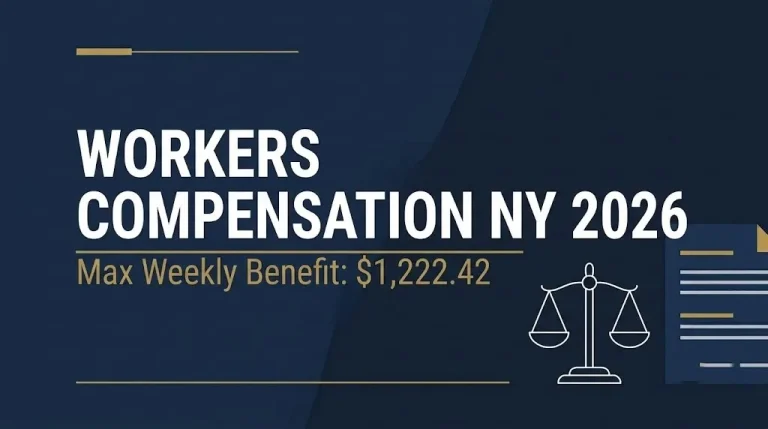
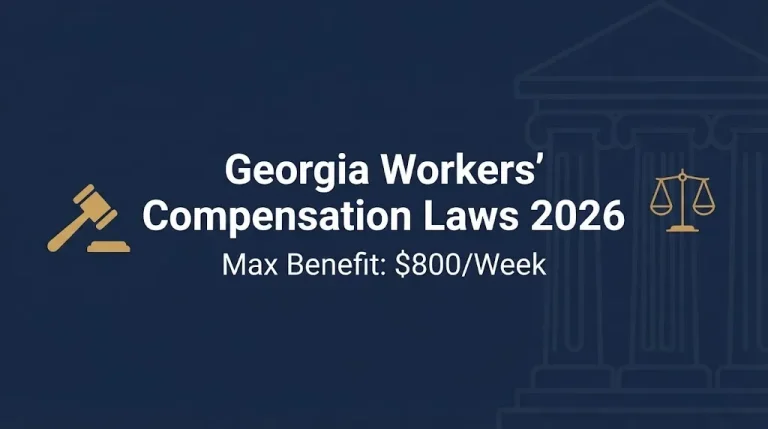
Workers Compensation Companies in 2026: State Requirements, Coverage Options, and What Employers Must Know
Quick Answer
- Workers compensation companies sell insurance that covers medical care and lost wages for injured employees.
- Requirements vary by state. Texas does not mandate coverage for most private employers.
- Costs depend on payroll, industry classification, and claims history. No single price applies.
You searched “workers compensation companies” because you either need coverage for your business or want to understand who provides it. Here is the direct answer: workers compensation insurance is a regulated product sold by private carriers, state-chartered funds, and assigned-risk pools. It pays for employee injuries that happen on the job.
Most states require it. Texas is the big exception. New York, Illinois, Kansas, and most others mandate coverage once you have employees. The rules, the insurers, and the penalties differ from state to state.
This article breaks down what workers compensation companies actually do, which states require coverage, what it costs, and where to buy it in 2026. One fact matters most: failing to carry required coverage can trigger fines, stop-work orders, and personal liability for business owners.
The Facts
| Detail | Verified Information |
| Product | Workers compensation insurance |
| Providers | Private carriers, state funds, assigned-risk pools |
| Mandatory States | Most states, including Illinois, New York, Kansas |
| Non-Mandatory State | Texas (private employers may opt out) |
| Cost Basis | Payroll, class code, claims history |
| Regulator | State insurance departments |
| Penalty for Noncompliance | Fines, stop-work orders, personal liability |
What Are Workers Compensation Companies?
Workers compensation companies are insurers that underwrite and pay claims for workplace injuries.
They fall into three main categories. Private carriers are commercial insurers like Travelers, The Hartford, and biBERK. State funds exist in some states as a public option or the exclusive provider. Assigned-risk pools take employers that private carriers reject.
Each type serves a different segment of the market. Private carriers compete for low-risk businesses. State funds often serve as the insurer of last resort. Assigned-risk pools handle high-risk employers who cannot find coverage elsewhere.
The common thread is the legal obligation they fulfill. Workers compensation insurance pays for medical treatment, partial wage replacement, disability benefits, and death benefits when an employee is hurt or killed on the job.
Is Workers Compensation Insurance Mandatory in 2026?
Yes, in most states.
Every state except Texas requires workers compensation insurance once a business has employees. Some states exempt very small employers or specific industries. But the general rule is clear: if you have employees, you need coverage.
Texas allows private employers to opt out of the system entirely. That is unique. Employers who opt out can be sued directly by injured workers in civil court. Many Texas employers choose to carry coverage anyway because the liability risk without it is severe.
The penalty for noncompliance varies. States can impose fines, issue stop-work orders, and hold business owners personally liable for injury costs. In some states, operating without coverage is a misdemeanor or felony.
What Is Business Workers Compensation Insurance?
It is a commercial insurance policy that covers employer liability for work-related injuries.
The policy has two main parts. Part A is workers compensation coverage. It pays benefits required by state law. Part B is employers liability coverage. It protects the business if an employee sues over a work injury in certain situations.
Most policies also include coverage for occupational diseases, repetitive motion injuries, and death benefits. The specific benefits are set by state law, not by the insurance company.
The policy is not a substitute for health insurance. It covers only work-related injuries and illnesses. A non-work injury is not covered.
Key Takeaway: Workers compensation insurance is a legal requirement in most states, not an optional business expense. The cost of not having it can exceed the cost of the premium.
What Does Workers Compensation Insurance Cover?
The coverage is defined by state law but follows a consistent pattern.
- Medical treatment for the injury or illness
- Temporary disability benefits for lost wages
- Permanent partial disability benefits for lasting impairments
- Permanent total disability benefits for career-ending injuries
- Vocational rehabilitation in some states
- Death benefits for surviving dependents
Each state sets its own benefit levels, waiting periods, and duration limits. The insurance company pays these benefits directly to the injured worker or their medical providers.
The employer pays premiums. The insurer handles claims. The state oversees the system.
How Much Does Workers Compensation Insurance Cost in 2026?
Cost varies by state, industry, and claims history.
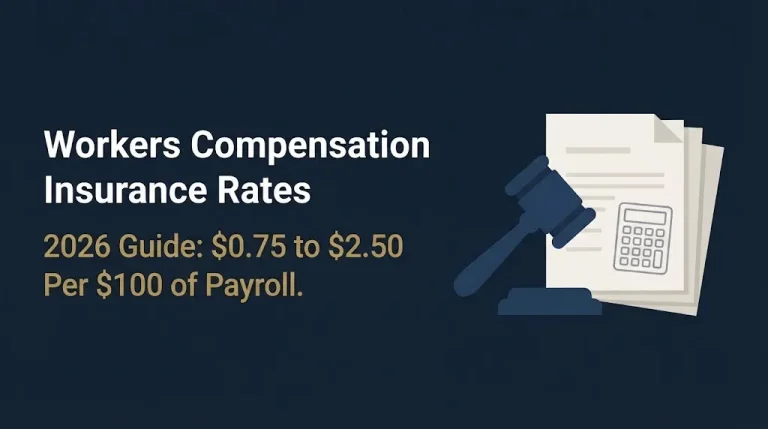
The base formula is simple: rate per $100 of payroll multiplied by your payroll, then adjusted by your experience modification factor. A business with a clean claims history pays less. A business with frequent claims pays more.
Here is how industry classification affects rates:
| Industry | Relative Risk | Typical Rate Range per $100 of Payroll |
| Clerical office | Low | $0.25 to $0.75 |
| Restaurant | Medium | $1.50 to $3.50 |
| Construction | High | $5.00 to $15.00 |
| Roofing | Very high | $15.00 to $30.00 |
These are illustrative ranges based on state filings. Your actual rate depends on your state, your class codes, and your loss history.
What Is Compensation Insurance and How Is It Different?
Compensation insurance is another term for workers compensation insurance.
The terms are used interchangeably. Some people say “workers comp insurance.” Others say “compensation insurance.” They mean the same product.
The confusion comes from the broader insurance market. Health insurance covers medical care. Disability insurance covers lost income. Workers compensation covers both, but only for work-related injuries.
It is a specific product with specific rules. You cannot substitute a general liability policy or a health plan for workers compensation coverage.
Do I Need Workers Compensation Insurance in NY?
Yes, if you have employees in New York.
New York requires workers compensation insurance for nearly all employers. Even a business with one part-time employee must carry coverage. The New York State Workers’ Compensation Board enforces this requirement.
Sole proprietors and partners without employees are generally exempt. But if you hire independent contractors, you must verify their status carefully. Misclassification can trigger penalties.
New York allows employers to buy coverage from private carriers, the New York State Insurance Fund, or through self-insurance if they qualify. The State Insurance Fund is the largest provider in the state.
Do I Need Workers Compensation Insurance in Illinois?
Yes, in nearly all cases.
Illinois requires workers compensation insurance for employers with one or more employees, including part-time and family members. The Illinois Workers’ Compensation Commission oversees the system.
There are narrow exemptions for sole proprietors, some agricultural workers, and certain corporate officers who opt out. But the default rule is coverage.
Illinois employers can buy from private carriers. The state does not have a monopolistic state fund. If private carriers decline coverage, employers can access the assigned-risk pool.
Key Takeaway: New York and Illinois both mandate coverage for nearly all employers. The thresholds are low: one employee triggers the requirement in most cases.
Reality Check: Workers compensation insurance is not a place to cut corners. A single uncovered injury can cost a business owner more than years of premiums. State regulators actively audit payroll and issue stop-work orders for noncompliance.
What Are the Workers Compensation Texas Requirements?
Texas is the only state where workers compensation is optional for private employers.
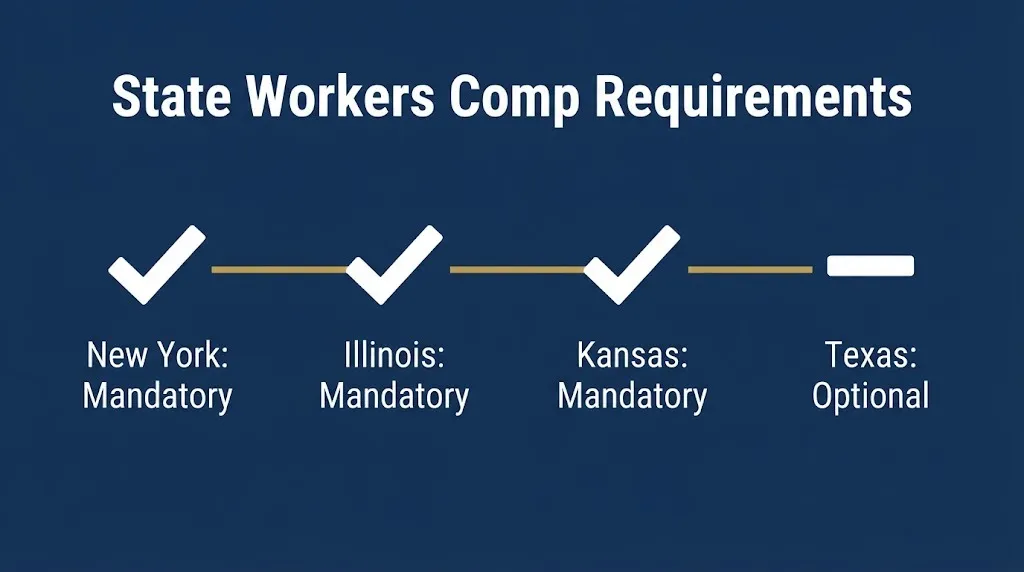
That means a private employer in Texas can choose not to carry coverage. If an employee is injured, the employer can be sued directly in civil court. There is no statutory cap on damages in that situation.
Employers who opt out lose important legal protections. In states with mandatory coverage, workers compensation is the exclusive remedy. An injured employee cannot sue the employer. In Texas, an opted-out employer faces full civil liability.
Public employers in Texas must provide coverage. Private employers who choose coverage buy from private carriers or self-insure. The Texas Department of Insurance regulates the market.
What Are the Kansas Workers Compensation Insurance Requirements?
Kansas requires coverage for employers with employees.
The Kansas workers compensation system is mandatory for most private and public employers. The threshold is low. Even one employee can trigger the requirement.
Kansas uses a competitive private market. Employers buy from private carriers. If declined, they can access the Kansas assigned-risk pool.
Kansas has specific rules on rates, class codes, and premium calculation. The Kansas Department of Insurance reviews and approves rate filings.
Who Are the Major Workers Compensation Companies in Illinois?
Illinois has a competitive private market with many carriers.
The largest workers compensation insurers in Illinois include Travelers, The Hartford, biBERK, Zurich, and AmTrust. Berkshire Hathaway’s biBERK focuses on small business coverage with direct online quoting.
Illinois does not have a state fund. Employers who cannot find coverage in the voluntary market use the National Council on Compensation Insurance assigned-risk pool or the Illinois assigned-risk plan.
Each carrier sets its own rates within approved ranges. Premiums vary significantly. Shopping around matters.
How Do I Buy Workers Compensation Insurance?
Buying coverage follows a clear process.
- Determine your state’s requirements and whether you need coverage.
- Calculate your payroll by class code.
- Gather your prior claims history if you have one.
- Get quotes from at least three carriers or a licensed agent.
- Compare rates, coverage terms, and claims service.
- Purchase the policy and provide proof of coverage to your state.
- Keep payroll records current and audit-ready.
An independent insurance agent can help you navigate class codes and coverage options. Some carriers sell direct online.
What Happens If You Do Not Have Workers Compensation Insurance?
The consequences are serious and vary by state.
- Fines that can reach thousands of dollars per day
- Stop-work orders that shut down your business
- Personal liability for the full cost of an employee’s injury
- Criminal charges in some states for willful noncompliance
- Inability to bid on government contracts
- Higher premiums when you do obtain coverage
The penalty is not just a fine. It is exposure to civil lawsuits that can bankrupt a small business.
Key Takeaway: The cost of noncompliance is almost always higher than the cost of coverage. State regulators do not treat this as a paperwork issue.
What Is an Experience Modification Factor?
It is a number that adjusts your premium based on your claims history.
An experience modification factor, or ex mod, compares your claims to other businesses in your industry. A factor of 1.00 is average. Below 1.00 means better than average and lower premiums. Above 1.00 means worse than average and higher premiums.
The ex mod is calculated using your payroll and loss history over a three-year period, excluding the most recent year. It is the closest thing workers compensation has to a credit score.
Controlling claims is the only way to improve your ex mod. That means safety programs, prompt injury reporting, and return-to-work programs.
What Are the Best Workers Compensation Companies in 2026?
There is no single best company for every business.
The right carrier depends on your industry, state, size, and claims history. A construction company needs a different carrier than a law firm.
Factors that matter in choosing a carrier:
- Financial strength rating from AM Best
- Claims handling reputation
- Premium competitiveness for your class codes
- Availability of safety and loss control services
- Ease of doing business, including online quoting
- Agent support if you use one
Carriers with strong national reputations include Travelers, The Hartford, Chubb, Zurich, and AmTrust. State funds and regional carriers may offer better value in specific markets.
How Do Workers Compensation Claims Affect Premiums?
Claims are the single biggest driver of future premiums.
Every claim enters your loss history and affects your experience modification factor. More claims mean a higher ex mod. A higher ex mod means higher premiums for three years or more.
Even small claims can hurt. Medical-only claims matter less than lost-time claims, but they still count. The best strategy is to prevent injuries before they happen and manage claims aggressively once they occur.
A good safety program can reduce claims and premiums. Many carriers offer discounts or free loss control services to policyholders who invest in safety.
What Is an Assigned Risk Pool?
It is the coverage of last resort for employers who cannot buy coverage in the voluntary market.
Every state has an assigned-risk pool or plan. It is funded by all carriers in the state. Employers who are declined by private carriers can access coverage through the pool.
Premiums in the assigned-risk pool are typically higher than the voluntary market. The pool exists to ensure that every employer who needs coverage can get it.
Being in the assigned-risk pool is not a permanent situation. Employers can improve their safety record and claims history, then move back to the voluntary market.
What Happens Next for Workers Compensation in 2026
The workers compensation market is stable but evolving.
- 2026: Continued rate moderation in most states. Some states see small increases.
- 2026 through 2027: More carriers offer direct online quoting and digital claims tools.
- 2026 through 2028: States continue to update class codes and wage thresholds.
- Ongoing: Regulators increase enforcement against misclassification and payroll underreporting.
No single deadline applies. The important date is the day you hire your first employee. That is when coverage obligations begin in mandatory states.
Frequently Asked Questions
What is workers compensation insurance?
It is insurance that covers medical care and lost wages for employees injured at work.
Do I need workers compensation insurance if I have no employees?
Generally no. Most states exempt sole proprietors with no employees.
Is workers compensation required in Texas?
Not for most private employers. Texas allows private employers to opt out.
How much does workers compensation cost per employee?
It depends on payroll, class code, and claims history. There is no flat per-employee rate.
What happens if I do not have workers compensation insurance?
You may face fines, stop-work orders, personal liability, and criminal charges.
Can I buy workers compensation insurance online?
Yes. Several carriers offer direct online quoting for small businesses.
What is the best workers compensation company?
There is no single best company. The right carrier depends on your industry and state.
Does workers compensation cover independent contractors?
Generally no. Independent contractors are not employees and are not covered.
Here is the bottom line. Workers compensation companies provide coverage that is mandatory in nearly every state. The rules are strict, the penalties are real, and the cost of noncompliance can destroy a business.
If you have employees, confirm your state’s requirements today. Get quotes from multiple carriers. Keep your payroll records accurate. Those three steps protect your business and your employees.